Skip to Content

All Articles

The Filter Bubble Fallacy: How Personalized Algorithms Undermine Source Evaluation

The Filter Bubble Fallacy: How Personalized Algorithms Undermine Source Evaluation

The modern digital landscape presents a paradox: never have we had more access to information, yet never have we felt more convinced of our own rightness.

The Lost Cause Myth: How Doubt Uncovers a Buried History

The Lost Cause Myth: How Doubt Uncovers a Buried History

For over a century, a seductive story has shaped how millions of Americans remember the Civil War.

The Process Paradox: Why Underdogs Win by Losing the Scoreboard

The Process Paradox: Why Underdogs Win by Losing the Scoreboard

For anyone who has ever stood at the starting line of a race they were expected to lose, the weight of outcome is a suffocating thing.

The Gentle Art of Watching Your Inner Critic Like Clouds

The Gentle Art of Watching Your Inner Critic Like Clouds

Imagine sitting on a hillside on a breezy afternoon.

The Art of Questioning Together Without Losing Yourself

The Art of Questioning Together Without Losing Yourself

When you begin to embrace doubt as a tool rather than a flaw, a strange loneliness often sets in.

Transforming Leadership Through Constructive Doubt

Transforming Leadership Through Constructive Doubt

Every leader has felt the unsettling twist in the stomach when a tough decision looms.

Survivorship Bias and the Hidden Shape of Evidence

Survivorship Bias and the Hidden Shape of Evidence

During World War II, statistician Abraham Wald was asked to help the U.S.

Affirmations as an Experiment, Not a Mantra: Turning Self-Doubt into Data

Affirmations as an Experiment, Not a Mantra: Turning Self-Doubt into Data

Repeating “I am worthy” feels like a lie when your inner critic fires back with a list of failures.

The Socratic Power of “I Don’t Know”

The Socratic Power of “I Don’t Know”

Every parent knows the relentless cascade of “why” that erupts from a child’s mouth, a stream of questions that can delight, exhaust, and sometimes terrify.

Doubt as a Compass for Setting Boundaries with Overly Critical People

Doubt as a Compass for Setting Boundaries with Overly Critical People

When an overly critical person enters your life, the first thing they attack is often not your work, your choices, or your appearance—it is your certainty.

The Anxiety of Ambiguity: How Intolerance of Uncertainty Drives Conspiracy Belief

The Anxiety of Ambiguity: How Intolerance of Uncertainty Drives Conspiracy Belief

Human beings are pattern-seeking creatures, and in the absence of clear explanations, the mind does not simply wait patiently for evidence.
The Approval Echo: How Childhood Conditioning Creates Adult Self-Doubt Triggers

The Approval Echo: How Childhood Conditioning Creates Adult Self-Doubt Triggers

Imagine a child who draws a picture and is met with a radiant smile and a tight hug only when the drawing is pristine.

The Paradox of Choice: How Doubting Free Will Can Liberate the Mind

The Paradox of Choice: How Doubting Free Will Can Liberate the Mind

The question of whether we possess free will has haunted philosophers for millennia, yet the most unsettling realization is not that we might lack it—but that doubting its existence can fundamentally reshape who we are.

The Anatomy of a Healthy Skeptic: How to Question Without Falling Into Conspiracy

The Anatomy of a Healthy Skeptic: How to Question Without Falling Into Conspiracy

The human mind craves certainty, and doubt is the uncomfortable friction that reminds us we do not yet have it.

The Threshold Between Inquiry and Absorption

The Threshold Between Inquiry and Absorption

Doubt is not a single phenomenon but a spectrum, and along that spectrum lies a decisive threshold where constructive questioning gives way to corrosive absorption.
Why Your Brain Overwrites Success and How to Build an Unshakeable Proof File

Why Your Brain Overwrites Success and How to Build an Unshakeable Proof File

Your inner critic is not a liar, but it is a ruthless editor.

The Dark Night of the Soul: When Doubt Becomes the Doorway to Deeper Faith

The Dark Night of the Soul: When Doubt Becomes the Doorway to Deeper Faith

There comes a moment in every sincere spiritual journey when the familiar landscape of belief turns strange and unrecognizable.

The Underdog’s Silent Weapon: How Radical Preparation Muzzles Doubt

The Underdog’s Silent Weapon: How Radical Preparation Muzzles Doubt

The clock is down to its final breath.

The Alchemy of Disbelief: How External Doubt Becomes Inner Fire

The Alchemy of Disbelief: How External Doubt Becomes Inner Fire

Every underdog knows the specific ache of being counted out.

The Tyranny of the Ideal: How Perfectionism Breeds Self-Doubt

The Tyranny of the Ideal: How Perfectionism Breeds Self-Doubt

Perfectionism is often mistaken for a virtue, a relentless drive toward excellence that separates the accomplished from the mediocre.

The Uncomfortable Gift of Questioning What We Were Taught to Believe

The Uncomfortable Gift of Questioning What We Were Taught to Believe

Every act of genuine faith begins with a crack.
When to Doubt a Partner’s Words and When to Believe Their Actions

When to Doubt a Partner’s Words and When to Believe Their Actions

Doubt in a relationship is not a defect of character or a sign that love is failing.

Doubt as a Compass: Reading Character Through Consistency

Doubt as a Compass: Reading Character Through Consistency

The human mind is a pattern-hunting engine, and nowhere does it work harder than in the tangled terrain of relationships.
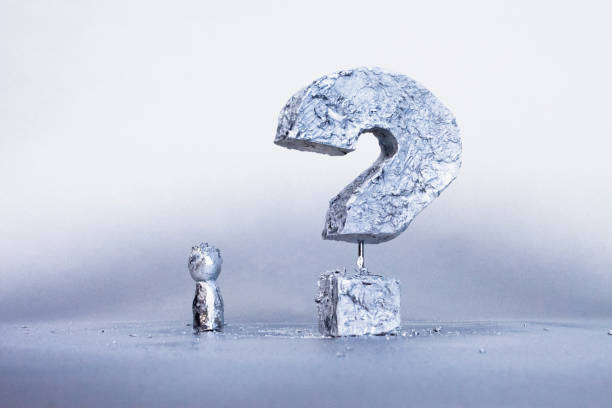
The Doubt That Deepens: How Healthy Skepticism Builds Stronger Relationships

The Doubt That Deepens: How Healthy Skepticism Builds Stronger Relationships

Most people treat doubt in relationships like a leak in a ship—something to plug quickly or deny entirely.

Seeds of Doubt

How do I handle self-doubt when a doubter dismisses my ideas?

First, internally separate the idea from your self-worth. Their dismissal is data about their perspective, not a verdict on your intelligence. Use it as a catalyst to refine your thinking: “Is there a kernel of valid critique here?“ Anchor in your own preparation and reasoning. Your confidence grows not from universal approval, but from trusting your process and knowing you can withstand disagreement.

Why do people often attack the person instead of the idea when confronted with doubt?

This is an ad hominem fallacy, a defense mechanism against cognitive dissonance. When someone’s deeply held belief is challenged, attacking the messenger feels easier than re-examining the belief itself, which can be psychologically painful. See this not as a personal failure, but as a signal of the other person’s emotional investment. Respond by calmly steering focus back to the idea’s merits, modeling how to separate personality from principle.

What are the signs that doubt is irreparably damaging the relationship?

Key signs include: a complete breakdown in communication, where attempts to address issues are abandoned; pervasive contempt or resentment replacing affection; one partner becoming emotionally or physically withdrawn indefinitely; and the continual violation of core boundaries despite agreements. When doubt fossilizes into a fixed, negative belief about the partner’s character (“you are a liar”), rather than about a specific event, and no evidence can alter this belief, the foundation for repair may be too damaged.

What role does critical thinking play in evaluating conspiracy claims?

Critical thinking is the essential tool for deconstructing conspiratorial logic. It involves questioning sources, checking evidence for credibility and reproducibility, and examining logical fallacies. It asks: Is this claim falsifiable? Does it rely on selective evidence? Are the alleged motives and capabilities of the conspirators realistic? By applying these consistent standards to all information—mainstream and alternative—you build intellectual resilience and avoid the trap of simply replacing one “authority” with another.

How can I engage a loved one stuck in harmful doubt without pushing them away?

Avoid direct confrontation on facts. Instead, use empathetic listening and ask curious, open-ended questions about their reasoning process, not the belief itself. Try, “What first got you interested in this?“ or “What would it look like if you were wrong?“ This builds rapport and models critical thinking without attack. Your goal isn’t to “win” but to strengthen your connection and gently introduce the concept of evaluating sources and evidence, making them feel heard, not attacked.