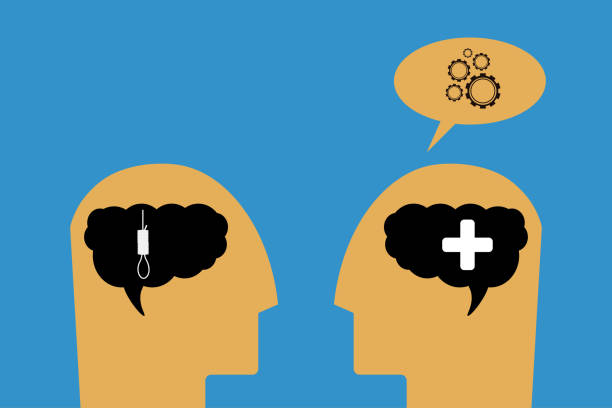
Your inner critic is a master storyteller. It spins predictions of failure, rejection, and humiliation with such conviction that you rarely stop to question them. But every one of those stories is a hypothesis—testable, falsifiable, and often spectacularly wrong. The most powerful tool in evidence-based thought challenging is not debating yourself in your head; it is designing a behavioral experiment that puts your inner critic’s claims to the test in the real world. This technique, drawn from cognitive behavioral therapy, transforms abstract doubt into concrete data, and data is the one language your inner critic cannot argue with.
To begin, you must identify a specific belief your inner critic has been selling you. Not a vague sense of inadequacy, but a testable prediction. For example: “If I speak up in the meeting, I will stumble over my words and everyone will think I am incompetent.” Or: “If I ask for a raise, my boss will laugh at me and I will feel humiliated.” Write that prediction down, word for word. Include the emotional intensity you expect, the physical sensations you anticipate, and the exact behavior you predict from others. This level of specificity is what separates an experiment from a vague exercise in positive thinking.
Next, design a small, manageable experiment that will generate real evidence. The key is to make it as close to your real-life situation as possible, yet small enough that you actually follow through. If your fear is public speaking, instead of signing up for a major presentation, volunteer to share a quick progress update in a team huddle. If your fear is social rejection, instead of attending a crowded party alone, start a brief conversation with a coworker at the coffee machine. The experiment should have a clear behavioral action—something you do, not just something you think about. You are not trying to prove your inner critic wrong; you are trying to find out what actually happens. That neutral stance is crucial. If you go in determined to disprove your belief, you will only see confirming evidence. Instead, adopt the mindset of a scientist: “Let me collect data and see what is true.”
Before you run the experiment, predict your outcomes in detail. Rate your expected anxiety on a scale from zero to one hundred. Write down what you think will happen to your voice, your heart rate, your ability to think clearly. Also predict how others will react—their facial expressions, their words, their body language. Then go do the thing. Notice that I say “go do” rather than “try to do.” A behavioral experiment requires action. You can plan and reflect forever, but the evidence only arrives when you act.
Afterward, sit down and review the data honestly. Compare your predictions to what actually occurred. Did you stumble over your words? If you did, did anyone even pause? Did your boss laugh, or did she ask a follow-up question that showed she was listening? Did your heart race? Possibly. But did you survive? Almost certainly. The most common discovery in behavioral experiments is that the emotional storm you predicted does happen, but it is far less intense and far shorter than expected. The second most common discovery is that other people are almost entirely focused on themselves, not on you. They are not keeping a scorecard of your verbal stumbles. They barely remember what you said five minutes later.
What makes this technique so deeply effective is that it builds a library of counter-evidence. One experiment does not silence your inner critic for good—that inner voice is stubborn. But each experiment adds a brick of proof to the foundation of a new belief. Over time, your mind begins to automatically reference these experiments. When the inner critic whispers, “You will embarrass yourself,” your memory now offers a counterexample: “Actually, last Tuesday I spoke up and the meeting moved on without a ripple.” This is not mere affirmations or positive self-talk; it is lived experience, which your brain treats as far more credible than hopeful thinking.
The most challenging part is starting. Your inner critic will tell you that you are not ready, that the experiment is too risky, that this time is different. That resistance is itself evidence of how powerfully your doubts have rigged the game. Acknowledge the fear, then do the experiment anyway—with a very small bet. If you fear asking for a promotion, first ask a colleague for feedback on a report. If you fear intimacy, first share a minor personal story with a friend. Each step generates data that weakens the inner critic’s monopoly on truth.
Ultimately, behavioral experiments teach you a profound lesson: doubt is not a barrier to action; it is a hypothesis generator. Your inner critic is not your enemy; it is a poorly calibrated alarm system. By testing its warnings, you transform it from an all-knowing judge into a fallible, often comically overprotective commentator. You become the scientist of your own life, and the evidence begins to point toward a conclusion you can finally trust: you are far more capable, resilient, and acceptable than your doubts ever led you to believe.