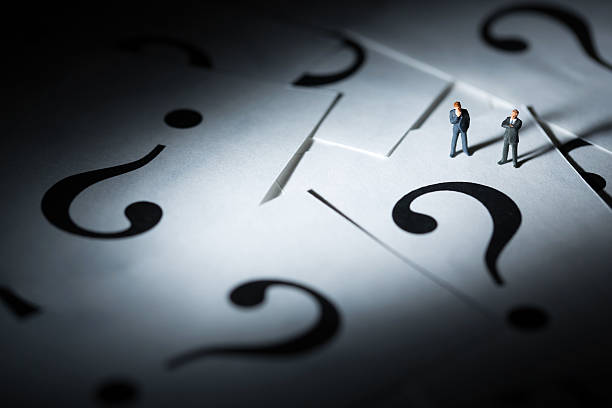
Countercultural movements are, at their core, massive public experiments in doubt. They are not about minor disagreements but a fundamental rejection of a society’s dominant operating system. To examine these historical moments is to watch collective doubt transform from a private unease into a public force, challenging everything from political authority and economic structures to the very definitions of happiness and a meaningful life. This process offers a powerful blueprint for how questioning the status quo can catalyze profound change, both in society and within the individual.
The mechanism is straightforward. A counterculture begins when a critical mass of people, often youth, start to experience a deep-seated cognitive dissonance. The promised narrative of their culture—be it the conformist “American Dream” of the 1950s or the rigid social hierarchies of the Victorian era—clashes violently with their lived experience or emerging values. This isn’t mere skepticism; it’s a systemic doubt. They don’t just question a single policy; they question the entire script. The Beat Generation of the 1950s, for instance, doubted the gospel of suburban materialism and silent compliance, choosing instead to explore consciousness, spontaneous creativity, and fringe existence. Their doubt was a direct precursor to the tidal wave of dissent that followed.
This collective doubt then manifests in deliberate opposition. It becomes performative. Symbols of the mainstream are rejected and replaced. The suit and tie give way to denim, long hair, and ethnic garments. Conventional career paths are swapped for communal living or artistic pursuit. The music changes, amplifying the new values of peace, love, or rage. This visible divergence is crucial. It makes the internal doubt external, creating a tangible alternative that others can see, join, or react against. The Hippie movement didn’t just privately doubt the Vietnam War and consumerism; they created a whole aesthetic and lifestyle—from psychedelic art to cooperative farms—that served as a living critique of the established order.
However, the true lesson from countercultures lies in their complex legacy, which teaches us about the maturation of doubt. Initial, pure rebellion often faces co-option, internal contradiction, and eventual fading. The radical styles of yesterday become the fashion trends of tomorrow. The corporations once despised now sell rebellion back as a commodity. This isn’t necessarily a failure; it’s a dynamic. It shows that while wholesale, angry rejection is a potent starting engine, it is rarely a sustainable destination. The most enduring ideas from these movements—environmentalism, gender equality, mindfulness, digital freedom—are those that evolved from raw doubt into refined, actionable principles. They moved from saying “no” to the old to building a new “yes.“
For an individual seeking to harness doubt, countercultures offer a masterclass. They demonstrate that personal doubt, when examined, might connect to a larger historical current. Your unease with a hyper-competitive work culture or shallow social interactions echoes the existential doubts of movements past. The key takeaway is not to blindly imitate the trappings of hippies or punks, but to understand their process: first, the courageous act of identifying the source of dissonance; second, the search for alternative values and communities that resonate more deeply; and third, the critical work of building something new from that space of questioning.
Ultimately, exploring countercultures strips doubt of its stigma as a mere weakness or negativity. It reframes it as the essential first spark of autonomy. These movements prove that the most significant cultural leaps forward begin not with confident certainty, but with a brave and collective question: “Is this really all there is?“ By studying them, we learn to see our own doubts not as something to suppress, but as the potential seed of a personal counterculture—a deliberate, examined life built on our own terms, not on a script we never agreed to write.