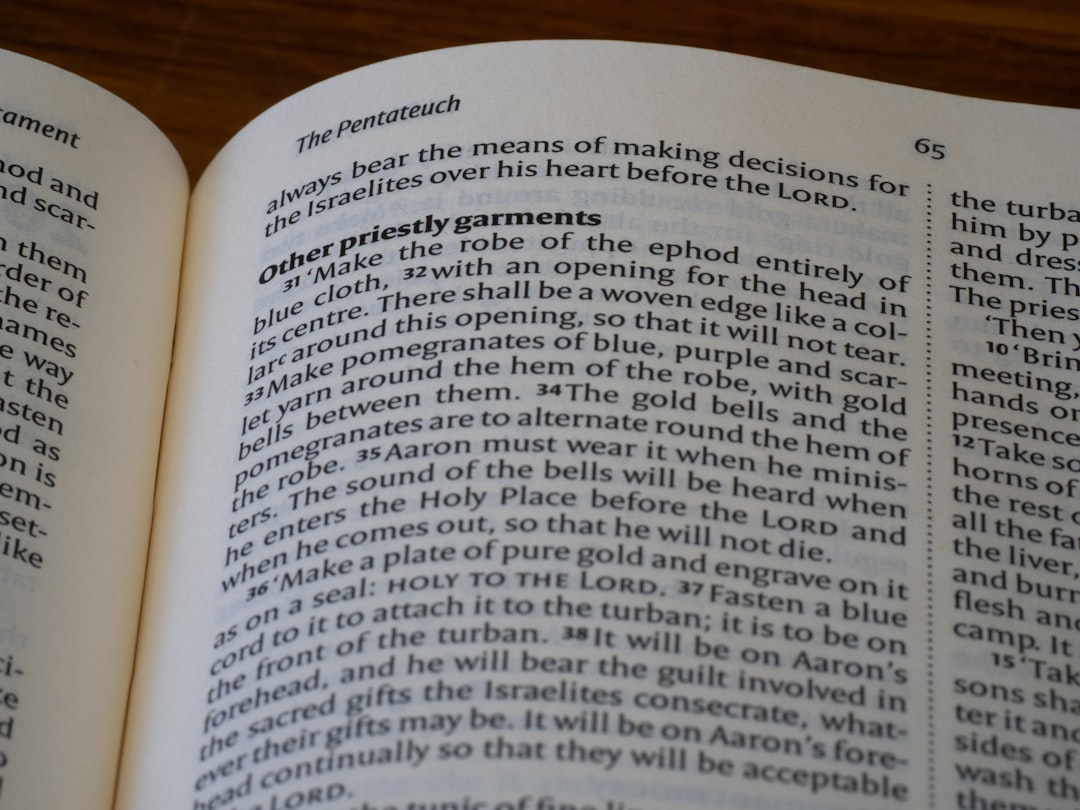
The most transformative libraries are not those that affirm what you already believe, but those that quietly dismantle it. For anyone seeking to build a healthy identity as a questioner, the bookshelves become a mirror of intellectual courage. A personal library of doubt resources is not a collection of easy answers; it is a curated arsenal of uncomfortable questions, carefully chosen to destabilize complacency and sharpen the mind. The practice begins with a single, unsettling recognition: that certainty is often the enemy of growth, and that the most valuable texts are those we instinctively want to put down.
To curate such a library, one must first confront the psychological bias known as confirmation bias—the tendency to seek out information that reinforces existing views. A library of doubt deliberately subverts this instinct. It includes books that contradict your worldview, that challenge your political leanings, that question your spiritual assumptions, and that undermine your cherished intellectual heroes. This is not about adopting contrarianism for its own sake, but about training the mind to hold two opposing ideas without collapsing into paralysis. The goal is not to become perpetually uncertain, but to become comfortable with the process of revising and refining what you think you know.
Start with the classics of philosophical skepticism. René Descartes’ Meditations on First Philosophy is a foundational text because it models the radical act of doubting everything that can possibly be doubted. Descartes does not remain in doubt—he builds a new foundation—but the method itself is the lesson. Reading his work is like watching a master carpenter dismantle a house board by board, then rebuild it with stronger timber. Other philosophers, such as David Hume, push skepticism further, questioning causality, the self, and the reliability of human reason. Hume’s A Treatise of Human Nature is a difficult book, but it offers a permanent inoculation against intellectual arrogance. To read Hume is to see your own reasoning as fragile, provisional, and deeply human.
Beyond philosophy, a doubt library must include works that expose the limits of expert knowledge. In The Death of Expertise, Tom Nichols argues that the real crisis is not a lack of information, but a rejection of the very idea of expertise. Reading this book forces the questioner to ask: When should I trust authority, and when should I resist? The answer is never simple. Pair Nichols with The Structure of Scientific Revolutions by Thomas Kuhn, which shows that even science—the most rigorous of knowledge systems—advances through paradigm shifts that are as social as they are rational. Kuhn’s concept of incommensurability suggests that two scientists looking at the same data may see entirely different worlds. For the doubter, this is both humbling and liberating.
The most challenging section of a doubt library will always be the books that directly attack your own identity. If you are religious, include works of atheist critique—Christopher Hitchens, Richard Dawkins, Sam Harris—not to convert you, but to force you to defend your beliefs with clarity. If you are secular, read theologians like Kierkegaard or contemporary apologists like Alvin Plantinga. The point is not to endorse either side, but to inhabit the tension. Kierkegaard’s Fear and Trembling, for example, explores the paradox of faith through the story of Abraham and Isaac, asking whether a leap beyond reason can ever be justified. To read it as a skeptic is to grapple with the limits of rationality; to read it as a believer is to confront the terrifying core of commitment.
Conspiracy theories present a unique challenge because they often contain grains of truth buried under layers of distortion. A healthy doubt library should include serious works that examine how conspiracist thinking works, such as The Paranoid Style in American Politics by Richard Hofstadter or Conspiracy Theories: A Philosophical Approach by David Coady. These books help distinguish between healthy skepticism—questioning official narratives when evidence is thin—and pathological distrust, which rejects all authority indiscriminately. Reading them teaches the questioner to navigate the razor’s edge between gullibility and cynicism.
Finally, the library must include texts on the psychology of belief and doubt itself. Daniel Kahneman’s Thinking, Fast and Slow reveals the cognitive biases that distort judgment, from anchoring to availability heuristics. Julia Galef’s The Scout Mindset offers a practical framework for adopting an attitude of active curiosity rather than defensive reasoning. And The Art of Thinking Clearly by Rolf Dobelli provides a catalog of mental errors that can be revisited like a diagnostic manual. These are not books to be read once and shelved; they are reference works to be consulted whenever you feel your certainty hardening into dogma.
The act of curating such a library is itself an exercise in identity formation. Every book you add represents a choice to prioritize growth over comfort. Over time, the physical arrangement of spines on the shelf becomes a map of your intellectual journey—books you agreed with, books you hated, books that changed your mind, books you still haven’t finished because they seemed too threatening. A healthy identity as a questioner does not mean abandoning all conviction; it means holding convictions lightly, with one hand always ready to pick up a volume that might prove them wrong.
The final piece of advice is this: read the most difficult book on your shelf first. Do not save it for later. Because later never comes. The library of doubt is not a collection to be completed; it is a practice to be sustained. Each new title is a conversation with a stranger who may upend your world. Welcome that stranger. Offer them a chair. And when they leave, thank them—even if they took something valuable with them. That is the cost of genuine growth.