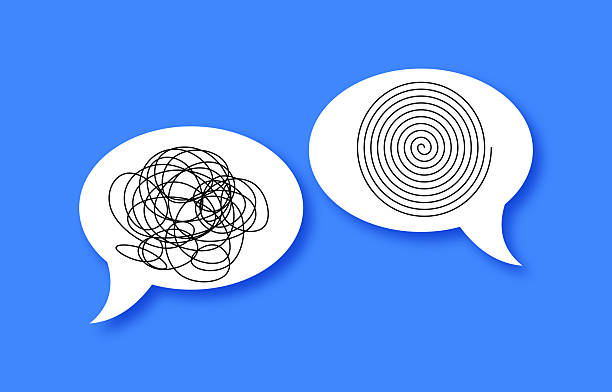
The human mind is a battlefield where two opposing generals constantly vie for command. One is the skeptic, armed with evidence, logic, and the sharp blade of critical analysis. The other is the intuitive, guided by gut feelings, patterns sensed beneath consciousness, and the quiet hum of accumulated experience. For most of your life, you have likely been taught to favor one over the other. Schools reward the skeptic; romantic advice celebrates the intuitive. But the deeper truth is that neither can govern alone, and the person who learns to integrate these two forces into a single, fluid identity becomes far more than the sum of their parts. This integration is not about compromise. It is about recognizing that doubt itself can be the very ground where both skeptic and intuition meet, allowing you to move through uncertainty with both clarity and openness.
Consider the moment you stand before a major decision. Perhaps it is a career change, a relationship choice, or whether to accept a piece of information that contradicts everything you believe. Your skeptical side immediately demands hard data. It wants numbers, studies, predictive models, and logical chains that cannot be broken. It distrusts feelings because feelings can be manipulated by bias, wishful thinking, or past trauma. Your intuitive side, meanwhile, offers a different kind of knowing. It does not present a spreadsheet. Instead, it gives you a physical sensation in your chest, a sudden clarity that seems to arise from nowhere, or a subtle sense that something is “off” even when all evidence appears sound. Both voices are legitimate. The problem arises when you silence one entirely.
The skeptic’s greatest gift is its ability to filter out noise and deception. It protects you from charismatic frauds, from conspiracy theories that prey on emotional vulnerability, and from your own tendency to see only what you want to see. Without skepticism, intuition becomes a loose cannon, firing at shadows and mistaking coincidence for destiny. Yet a life ruled by skepticism alone is brittle. It can lead to paralysis, to endless analysis that never culminates in action, and to a kind of emotional starvation where you never trust your own experiences. The intuitive side offers speed, creativity, and the capacity to sense truths that have not yet been fully articulated. It picks up on body language, on the texture of a conversation, on the subtle energy of a room. It is the part of you that knows a painting is beautiful before you can explain why.
The integration of these two sides begins with a simple shift in how you view doubt. Most people treat doubt as an enemy to be defeated. They either attack it with logic until it surrenders, or they suppress it with blind faith. But productive uncertainty reframes doubt as a signal, not a failure. When a decision triggers doubt, it means you are at a threshold. That threshold is the exact place where both skeptic and intuition can work together. The skeptical mind can ask, “What would it take to prove this wrong?” The intuitive mind can ask, “If I ignored all external proof, what does my deepest self sense?” Neither question is more valid. They are two halves of a single inquiry.
Practically, you can cultivate this integration through a habit of deliberate pause. When you feel a strong intuitive pull toward something, pause and test it with a skeptical question. What evidence exists that contradicts this feeling? Conversely, when you have assembled a logical argument that seems airtight, pause and check your body. Does this conclusion sit well in your gut, or does it leave a residue of unease? Over time, this dialogue becomes less adversarial and more collaborative. You learn that your intuition often incorporates information your conscious mind never registered, and your skepticism often reveals blind spots your intuition glossed over. Each side corrects the other, not by overpowering but by refining.
One of the most powerful outcomes of this integration is unshakeable confidence. It sounds paradoxical because confidence usually implies the absence of doubt. But true confidence is not the absence of uncertainty. It is the willingness to be uncertain without falling apart. When you have integrated your skeptic and your intuitive self, you no longer need to pretend you have all the answers. You know that you have a process for arriving at answers that respects both reason and feeling. This process makes you resilient because it is not attached to any single conclusion. You can change your mind when new evidence appears, and you can trust your gut when the evidence is ambiguous, all without losing your center.
Conspiracy theories, for instance, thrive on a fractured relationship between skepticism and intuition. They often appeal to someone’s intuitive sense that something is hidden or unjust, then hijack that feeling by rejecting all skeptical inquiry as part of the conspiracy. By learning to integrate the two sides, you can honor the intuitive sense that something is off while still applying skeptical reasoning to evaluate the specific claims. This prevents you from falling into either trap: blind trust in authority or blind rebellion against it. You become a sovereign thinker, one who can hold a question open without needing it to be resolved instantly.
In the end, the goal is not to silence either voice but to let them dance. The skeptic keeps your feet on the ground. The intuition points toward the horizon. Together, they guide you through the fog of everyday life, where most decisions are made with incomplete information and where certainty is a luxury you cannot always afford. By embracing productive uncertainty, you stop trying to eliminate doubt and start using it as the raw material for wisdom. You become a questioner who does not just ask questions but lives them, moving through the world with a kind of grace that comes from knowing you are whole, not divided against yourself.