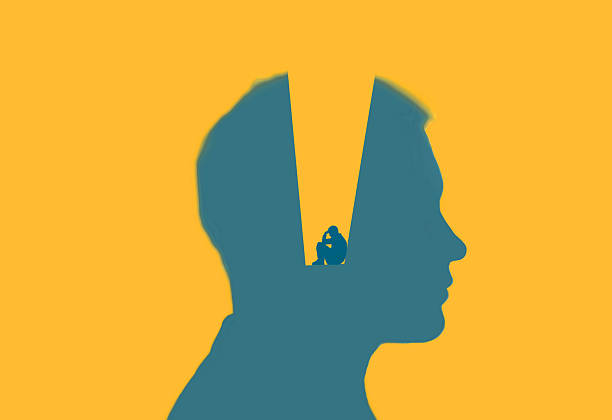
Doubt is not a weakness to be eradicated but a powerful engine for change. To understand its role in social progress, we must look past the personal unease it causes and see it as the fundamental spark that has challenged stagnant systems, toppled unjust authorities, and propelled humanity forward. Every cherished right, every scientific truth, and every social reform we now take for granted began not with a statement of certainty, but with a profound and disruptive question: “What if we are wrong?“
History is not a straight line built by the confident; it is a jagged path carved by the doubtful. When Martin Luther nailed his 95 Theses to the church door, he was acting on a deep theological and institutional doubt. He doubted the selling of indulgences, and by extension, the unchecked power of the Catholic Church. This single act of public doubt didn’t just reform a religion; it shattered a monolithic power structure, empowered individual interpretation, and ignited transformations across European society. Similarly, the abolitionist movement was built on a moral doubt: the doubt that any human could rightly own another. This doubt, once a radical fringe belief, systematically dismantled the economic and social foundations of empires and nations.
Science, the very framework of our modern world, is a formalized system of productive doubt. The scientific method is essentially a machine for generating and testing doubts. Galileo doubted the Earth-centric universe. Darwin doubted the fixed nature of species. Curie doubted that the only known elements had been discovered. Each of these doubts directly contradicted the cultural, religious, and scientific “truths” of their day. They faced ridicule, persecution, and ostracism. Yet, by refusing to silence their doubt, they redefined reality itself. Progress in science is not the accumulation of facts, but the relentless correction of previous misunderstandings, driven by skeptical inquiry.
Cultural shifts follow the same pattern. Every wave of feminism began with women doubting the inevitability of their prescribed roles. The simple, dangerous doubt—“Why can’t I vote?“ “Why is my pay less?“ “Why is the burden of domestic life mine alone?“—eroded centuries of tradition. The LGBTQ+ rights movement sprang from the doubt that biological sex must dictate gender identity and love. These movements did not ask for permission; they voiced a doubt so powerful it demanded the world reconfigure its laws, its language, and its very understanding of family and personhood.
This process is never clean or comfortable. The doubt that drives progress is inherently disruptive. It is labeled heresy, treason, or madness before it is ever recognized as vision. The establishment—whether religious, political, or scientific—always defends its certainty. The doubter’s path is one of immense social risk. Yet, this friction is not a bug in the system; it is the system working. A society that cannot be doubted is a society that cannot grow.
Therefore, to harness doubt for progress is not to blindly believe every skeptical claim, but to recognize its potential energy. It means cultivating the courage to question not just external authorities but the internalized narratives we’ve been taught. It requires the critical thinking to distinguish between doubt rooted in evidence and reason, and doubt born of fear or manipulation. The goal is not a world of perpetual skeptics, but a world where good ideas are rigorously tested by doubt, and bad ideas are not protected from it.
Ultimately, social progress is the story of minority doubts becoming majority truths. The comfort of today’s consensus was yesterday’s blasphemy. By examining history through this lens, we see that our collective duty is not to eliminate doubt, but to create a culture brave enough to listen to it, test it, and be transformed by it. The future belongs not to the unquestioning, but to those who have the courage to ask, “What if there is a better way?“ and then dare to find out.