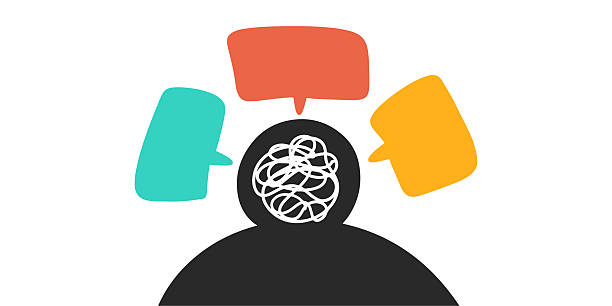
Imposter syndrome is the quiet thief in your career. It’s that nagging voice insisting you’re a fraud, that your success is luck, and that you’re one mistake away from being exposed. In the workplace, this doubt is a powerful brake on growth. But here’s the direct truth: imposter syndrome is not a life sentence. It’s a common experience, and overcoming it isn’t about erasing doubt, but about harnessing it to build unshakeable confidence.
First, you must call it what it is and recognize its game. That feeling of being underqualified despite evidence to the contrary is not a reflection of your ability, but a distortion in your self-perception. High achievers and experts are often its prime targets. The moment you label that voice as “imposter syndrome” and not “truth,“ you strip it of its power. You externalize the enemy. This is not you being weak; this is a predictable psychological pattern trying to derail you. Acknowledge the feeling, then firmly tell it to get in the back seat. You are driving.
Next, you must weaponize the evidence. Imposter syndrome thrives on emotion and ignores facts. Your job is to become a relentless collector of proof. Did you just finish a project? That’s evidence. Did a colleague ask for your advice? Evidence. Did you solve a problem last week? More evidence. Keep a physical or digital “success file” and update it regularly. When the doubt creeps in, you don’t argue with feelings—you present the facts. This isn’t about arrogance; it’s about building an objective case for your own competence based on reality, not fear. Your track record is a far more reliable narrator than your anxiety.
A crucial, often overlooked, step is to reframe your relationship with competence. Imposter syndrome often hinges on the false belief that you must know everything. This is nonsense. Competence in the modern workplace is not about omniscience; it’s about resourcefulness, learning agility, and problem-solving. Shift your metric from “knowing all the answers” to “knowing how to find or figure out the answers.“ When you face a gap in your knowledge, see it not as proof of your fraudulence, but as the next target for your growth. The doubt that says “you don’t know this” can be the very catalyst that pushes you to learn a new skill, making you more valuable.
Furthermore, you must break the silence. Talk about it. You will be stunned how many people you respect in your organization feel the same way. A simple, direct conversation with a trusted mentor or colleague—“I sometimes struggle with feeling like I don’t belong here, especially when tackling X”—is profoundly liberating. It normalizes the experience, provides perspective, and often leads to practical advice. It also reveals that the polished confidence you see in others is often hard-won, not innate. This shatters the illusion that you are alone in your doubt.
Finally, redefine failure. For the imposter, a mistake is catastrophic, final proof of their inadequacy. For the confident professional, a mistake is data. It is feedback. It is an inevitable part of doing anything worthwhile. Start viewing your work as a series of experiments and iterations, not a performance where you must be flawless. When you remove the life-or-death stakes from a single outcome, you free yourself to take the strategic risks that lead to major career growth. The doubt that warns of failure can be transformed into a tool for meticulous preparation and contingency planning.
Overcoming imposter syndrome is not a one-time event. It is the daily practice of choosing evidence over emotion, competence over perfection, and dialogue over isolation. That very doubt you feel is not your enemy. It is a signal—a signal that you care, that you’re pushing your boundaries, and that you’re in a position to grow. Stop fighting the feeling and start using it. Let it be the catalyst that forces you to prepare more thoroughly, to learn more relentlessly, and to build a career not on shaky illusions of perfection, but on the solid, documented foundation of your actual capability. Your doubt is the raw material. Your confidence is the finished product. Now get to work building it.