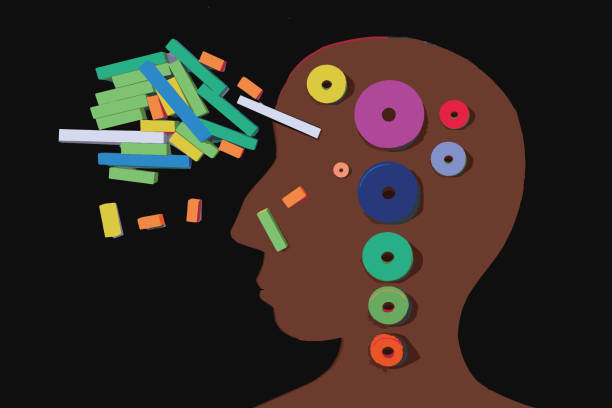
The internal tug-of-war between fear and intuition is a universal human experience. Standing at a crossroads, whether in relationships, career moves, or personal leaps, we often feel a gnawing in our gut or a whisper in our mind. But is that whisper the wise guidance of our inner knowing, or the paralyzing chatter of our anxieties? Learning to differentiate between the two is a critical skill for navigating life with clarity and courage, and it begins by understanding their distinct origins, sensations, and effects.
At its core, fear is a reaction to a perceived threat. It is a survival mechanism, hardwired into our biology, designed to protect us from danger. Fear is often rooted in the past—drawing on previous wounds, failures, or conditioning—or it projects catastrophically into an imagined future. It speaks in loud, persistent, and frantic tones. Its language is absolute, filled with “what ifs” that spiral into worst-case scenarios: “What if I fail?“ “What if they reject me?“ “What if I lose everything?“ Fear feels urgent and pushy, demanding immediate action to escape or avoid. Physically, it manifests as contraction: a clenched stomach, tight shoulders, a racing heart, and shallow breath. Its ultimate goal is to keep you safe, but often at the cost of keeping you small, stuck, and within the confines of the familiar.
Intuition, on the other hand, is a form of subconscious intelligence. It is the quiet integration of all our knowledge, experience, and perception, offering guidance that our conscious mind may not yet have processed. Unlike fear, intuition is not rooted in past trauma; it is present-moment awareness. Its voice is typically calm, neutral, and compassionate. It arrives as a gentle nudge or a sudden flash of insight—a clear “knowing” without a lengthy rationale. While fear shouts, intuition whispers. Its message is straightforward and often repetitive, presenting itself without a lengthy emotional narrative. You might feel a sense of expansion, a “rightness,“ or a feeling of being grounded. Physically, it can be felt as a release of tension, a deep breath, or a sense of openness in the chest or gut—hence the term “gut feeling.“
The aftermath of each feeling provides another powerful clue. Fear, when obeyed, typically leads to relief in the short term but regret in the long term. You avoid the difficult conversation, stay in the unfulfilling job, or bypass the opportunity, and while the immediate anxiety dissipates, a lingering sense of stagnation or misalignment often remains. Intuition, even when it guides you toward a challenging path, brings a sense of peace and alignment upon action. The decision may be difficult, but there is an underlying current of confidence and clarity. You may not know the exact outcome, but you feel you are moving in the right direction for your growth and integrity.
To practice discernment, create space for quiet reflection. In the midst of a decision, pause and breathe deeply. Ask yourself: Is this message based on a genuine threat or an imagined one? Is it loud and frantic, or calm and steady? Does it feel like it’s coming from a place of love for my well-being or a place of panic about potential pain? Journaling can help externalize the voices; often, seeing the words on paper makes their nature starkly clear. Fear will list chaotic, hypothetical dramas. Intuition will offer simple, direct statements.
Ultimately, distinguishing between fear and intuition is a lifelong practice of self-awareness. Fear constricts, while intuition directs. Fear obsesses over the outcome; intuition trusts the process. By learning to quiet the noise of anxiety, we can better hear the wise, steady voice within. It is not about eliminating fear—that is impossible—but about recognizing its presence and choosing not to let it drive the car. By honoring the quiet whisper of intuition, we learn to move through the world not from a place of avoidance, but from a place of authentic, empowered alignment.