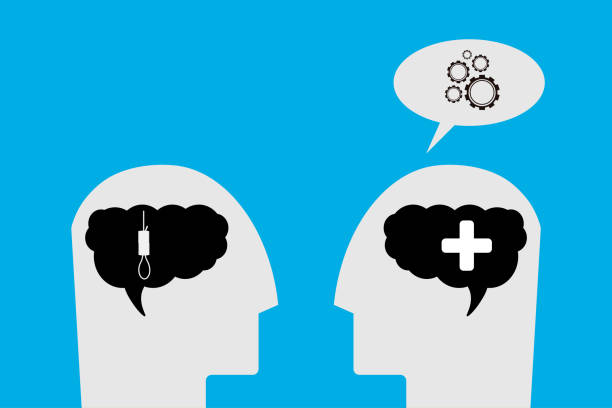
The impulse to question a vaccine recommendation is not a symptom of stupidity or malice. It is often a sign that something rare and precious is working inside a mind: the desire to protect oneself and one’s family from harm. When a parent pores over a packet insert, when a patient asks the doctor for the third time about long-term side effects, they are not rejecting science. They are begging for it to make sense on terms they can trust. The tragedy is that this healthy skepticism, left without a framework, can curdle into the very thing it fears most: a surrender to an alternative authority that offers certainty without evidence. The task, then, is not to silence the questioner but to teach them how to question well, especially when the authority in question is backed by decades of rigorous research.
Respecting expertise does not mean abandoning doubt. It means understanding the difference between an assertion from a position of power and a conclusion drawn from a process that is designed to be wrong. Scientific expertise, at its best, is not a command from on high. It is the product of a community that has institutionalized doubt. Peer review, replication studies, conflicting hypotheses, and the relentless pressure of falsification are all mechanisms that force experts to prove their claims again and again. To respect this expertise is to respect a system of organized skepticism, not a priesthood of infallible individuals. When a virologist states that a vaccine is safe, they are not saying “believe me because I have a title.” They are saying “this conclusion has survived more attempts to prove it false than any of us could ever attempt on our own.”
The doubter who rejects this framework often makes a subtle error: they treat every authority as equally suspect. A government health agency, a pharmaceutical executive, and a lone blogger with a biochemistry degree from an online university are all placed in the same category of “people who might be lying.” But this flattening of credibility is not skepticism; it is cynicism. True skepticism demands that we evaluate the strength of the evidence behind the claim, not merely the identity of the claimant. The vaccine produced after a decade of clinical trials, reviewed by multiple national regulators, and monitored by an independent global safety network deserves a different kind of scrutiny than the herbal remedy sold by a podcast host who has never run a single controlled study.
This does not mean the doubter must accept everything the expert says without question. On the contrary, the most productive path is to respect the process enough to engage with it critically. If a vaccine’s mechanism of action seems unclear, ask for the mechanistic data. If long-term safety is a concern, look for the post-marketing surveillance studies that follow millions of recipients over years. The goal is not to prove the expert wrong but to satisfy your own standard of evidence by pulling back the curtain on how the conclusion was reached. This is how doubt becomes a catalyst rather than a wall. It drives you deeper into the literature, not away from it.
There is also a profound psychological shift involved. When a person doubts a vaccine, they are often terrified of being duped. That terror is real, and it deserves compassion. But the antidote to being duped is not to trust no one. The antidote is to understand the nature of the expertise being offered. A doctor cannot guarantee that any medical intervention is perfectly safe for every individual; that is not how science works. Science deals in probabilities, population-level benefits, and known risks. To respect expertise is to accept that uncertainty is part of the deal. The expert is not a false god; they are a guide who has walked the terrain before. The doubter does not have to follow blindly, but they should listen closely enough to understand why the guide chose this path over the others.
When we learn to question authority while respecting expertise, we escape the false binary of gullibility and rebellion. We become capable of holding two truths at once: that the system is imperfect and sometimes corrupted, and that it remains the best tool humanity has ever built for distinguishing fact from fantasy. The vaccine debate is ultimately not about needles or adjuvants. It is about whether we can learn to trust a process without surrendering our own judgment. The answer is yes, but only if we teach ourselves to doubt the right things in the right ways. That is the art of the doubter, and it is the only unshakeable confidence worth having.