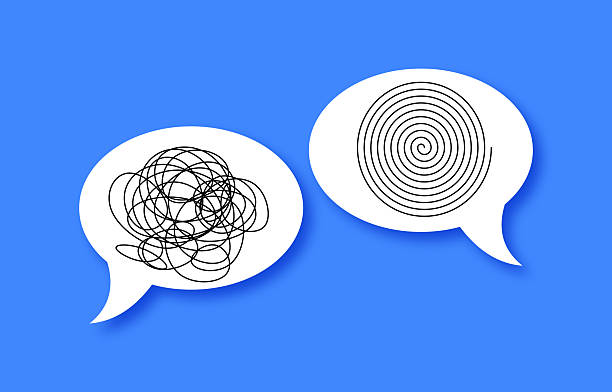
The human mind craves certainty. When faced with a question—Is this vaccine safe? Will that investment pay off? Is my partner lying?—the default response is to seek a yes or no. We want the world to be a tidy collection of true and false statements, because binary answers feel efficient and final. Yet reality rarely cooperates. Almost every claim we encounter exists not in a simple true/false dichotomy, but on a spectrum of likelihood. Developing a probabilistic mindset means training yourself to replace the question “Is it true?” with the more honest and useful question “How confident should I be, and what evidence would change that confidence?” This shift is the foundation of genuine critical thinking and a direct antidote to the paralysis and confusion that doubt so often produces.
At first glance, thinking in probabilities feels unnatural. We are not born with an intuitive grasp of Bayes’ theorem or conditional probability. Our brains evolved to make quick, categorical judgments: safe or dangerous, edible or poisonous, friend or foe. In modern contexts, this binary instinct leads us astray. Consider a common example: a medical test for a rare disease that is 99 percent accurate. If you test positive, what is the chance you actually have the disease? Most people instinctively answer 99 percent. But the correct answer depends heavily on the base rate—how rare the disease is in the population. If only one in a thousand people have the disease, then even a 99 percent accurate test will produce many false positives. The true probability of having the disease after a positive test might be less than 10 percent. This is the base rate fallacy, a cognitive error that disappears once you adopt a probabilistic lens.
A probabilistic mindset forces you to hold multiple possibilities in your head simultaneously, each weighted by its likelihood. Instead of asking “Is this conspiracy theory false?” you ask “Given the available evidence, what is the probability that this theory is true, and how does that probability compare to alternative explanations?” This is not a wishy-washy refusal to take a stand; it is a more precise and honest way of engaging with uncertainty. It acknowledges that confidence is a continuum, not a toggle switch. The goal is not to eliminate doubt—doubt is the engine of inquiry—but to calibrate it accurately.
One powerful tool for this calibration is Bayesian reasoning, which provides a formal framework for updating beliefs as new evidence arrives. In everyday terms, Bayesian thinking means starting with a prior probability—your initial degree of belief based on what you already know—and then adjusting that belief upward or downward as you encounter new information. The strength of the adjustment depends both on the reliability of the new evidence and on how surprising it is under your current model. If you are 99 percent sure that the Earth is round, a single flat-Earth YouTube video should barely budge your confidence. But if you are 50-50 on whether a new dietary supplement works, a well-designed randomized trial showing a significant effect should shift your belief substantially. This dynamic, evidence-responsive approach prevents you from latching onto a position and defending it against all comers, a trap that plagues both skeptics and believers alike.
Probabilistic thinking also helps you recognize the difference between statistical significance and practical importance. In science, a p-value of 0.03 does not mean there is a 97 percent chance that a hypothesis is true; it means that, under a specific set of assumptions, the observed data would occur by chance only 3 percent of the time. That is a useful piece of information, but it is not a verdict. A probabilistic mindset treats p-values, confidence intervals, and effect sizes as inputs into a broader calculus of uncertainty rather than as binary pass-fail results. This prevents the common error of mistaking a statistically significant finding for a certain truth, or a non-significant result for a complete refutation.
Perhaps the most liberating aspect of adopting a probabilistic mindset is that it transforms doubt from a weakness into a strength. Doubt is not the enemy of confidence; excessive certainty is. When you think in probabilities, doubt becomes a signal that you need more information, that your current model is incomplete, or that you should assign lower confidence to a claim. This is not a cause for shame or paralysis. It is an invitation to keep learning. The most confident people are not those who never question themselves, but those who have thoroughly tested their beliefs against evidence and know exactly where the edges of their knowledge lie. They can say “I am 95 percent confident that climate change is primarily caused by human activity, but I remain open to new evidence that could shift me to 90 percent or 99 percent.” That statement is far stronger, far more honest, and far more resilient to challenge than a simple “I believe it is true.”
In daily life, you can practice probabilistic thinking in small ways. When you read a news headline, ask yourself: What is the probability that this headline accurately reflects the underlying study? When a friend shares a rumor, ask: How likely is this to be true given what I know about the source and the base rate of such events? When you feel sure about a political opinion, ask: What evidence would change my mind, and by how much? These exercises build the mental muscle of uncertainty quantification. Over time, they replace the anxiety of not knowing with the quiet confidence of knowing exactly how much you don’t know—and being comfortable with that.
A probabilistic and evidence-based mindset is not a cold, dispassionate rejection of intuition or emotion. It is a tool for integrating intuition with data, for moving beyond the prison of binary thinking into a world of nuanced, graded judgments. It acknowledges that most important questions do not have neat answers, but they do have better and worse ways of being approached. By learning to think in probabilities, you transform doubt from a source of confusion into a precise instrument for navigating complexity. And that is the kind of confidence that no oversimplified certainty can ever provide.