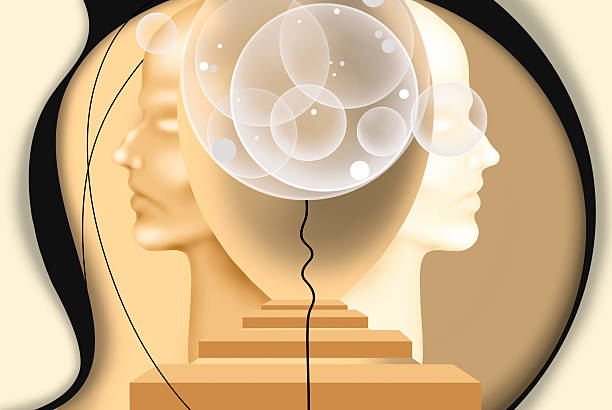
The underdog carries a peculiar burden: not just the weight of external skepticism, but the crushing echo of their own inner critic. Self-doubt whispers that the odds are too steep, the talent insufficient, the timing wrong. Yet history is littered with underdogs who defied prediction—not because they ignored doubt, but because they learned to reprogram the brain’s response to it. At the heart of this transformation lies a deceptively simple practice: visualization. Far more than daydreaming or positive affirmations, deliberate visualization harnesses the brain’s neuroplasticity to convert the raw energy of doubt into a precise, executable blueprint for victory. For the underdog, this is not mere mental gymnastics; it is a survival mechanism that rewires neural circuits to expect success rather than fear failure.
The scientific foundation is compelling. When you vividly imagine performing a physical or cognitive task, the same regions of the brain activate as if you were actually doing it—the motor cortex, the parietal lobes, the basal ganglia. This phenomenon, known as functional equivalence, means that the brain cannot fully distinguish between a vividly imagined experience and a real one. For the underdog, this offers a profound shortcut. Instead of needing hundreds of real-world repetitions to build confidence and skill, visualization allows the brain to rehearse victory in a safe, controlled environment. Each time an underdog visualizes stepping onto the court, delivering a presentation, or making a decisive move, they are strengthening synaptic connections that will later fire during the actual event. This process slowly erodes the neural pathways associated with fear and hesitation, replacing them with pathways of competence and calm.
Yet doubt is not merely an absence of confidence; it is an active, often loud, neurological pattern. The underdog’s brain has been conditioned by past failures, societal messages, and personal insecurities to anticipate negative outcomes. The amygdala, the brain’s threat detector, becomes hypervigilant, sending stress hormones that cloud judgment and tighten muscles. Visualization works to counteract this by activating the prefrontal cortex—the seat of planning, executive control, and rational self-talk. When an underdog visualizes a successful outcome with full sensory detail—the roar of the crowd, the feel of the tool in their hand, the scent of the air—they are essentially training the prefrontal cortex to override the amygdala’s alarm signals. Over time, this practice builds what neuroscientists call top-down regulation: the ability to consciously choose a calm, focused state even under pressure.
The underdog’s unique advantage in this process is the intensity of their motivation. Those who have been told they cannot succeed often possess a deeper appetite for proof than those who have always won. This emotional charge can supercharge visualization. When doubt triggers a visceral fear of failure, that same energy can be redirected into the visualization of success. The key is not to suppress the doubt but to use it as the raw material for the mental rehearsal. Imagine an aspiring entrepreneur who has been rejected by investors repeatedly. The doubt whispers that they lack pedigree. Instead of trying to silence that voice, they visualize themselves in the boardroom, feeling the doubt arise, and then watching themselves calmly answering each objection with data and poise. The brain begins to associate the feeling of doubt not with paralysis, but with a cue to access a practiced response. This is the essence of reprogramming: turning a trigger into a signal for action.
Practical application for the underdog requires more than casual daydreaming. The most effective visualization is structured, multisensory, and emotionally vivid. Start by identifying one specific doubt that frequently arises—perhaps the fear of choking under pressure. Close your eyes and build the scenario in precise detail: the environment, the sounds, the physical sensations. Then introduce the doubt as it normally appears, noticing where it sits in your body. Instead of pushing it away, imagine it transforming into a source of energy—a warm, focused current. Then run the entire sequence of success, from your first move to the final outcome, in first-person perspective. Repeat this rehearsal daily for at least five minutes, progressively increasing the complexity and stakes. Over weeks, the brain’s neural architecture shifts. The once-automatic fear response becomes a conscious, manageable signal, and the once-impossible victory begins to feel inevitable.
The underdog who masters visualization does not eliminate doubt—they repurpose it. They learn that doubt is not an enemy to be vanquished but a teacher that points to the areas most in need of mental rehearsal. By reprogramming the brain through vivid, repeated visualization, the underdog transforms uncertainty into anticipation, fear into focus, and external odds into internal certainty. The result is not just winning against the odds, but the unshakeable confidence that comes from knowing you have already run the race in your mind a thousand times before your feet ever touched the starting line.