Loading...
Skip to Content

Knowing When to Doubt and When to Decide: The Core of a Healthy Identity

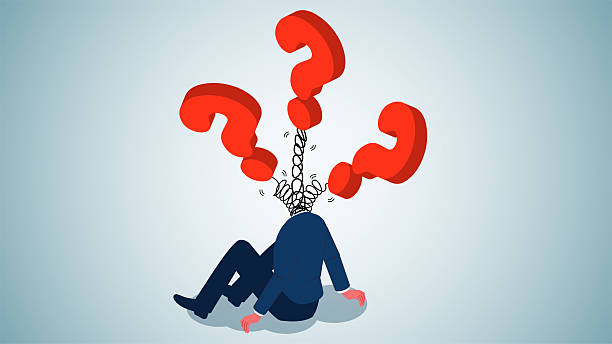
Doubt gets a bad rap. It’s seen as weakness, as indecision, as a failure of nerve. But raw, unmanaged doubt is just a tool lying on the ground. The real power isn’t in the doubt itself, but in the person wielding it. Building a healthy identity as a questioner isn’t about living in perpetual uncertainty. It’s about mastering the critical rhythm of when to lean into doubt and when to move past it into decisive action. This is the difference between being paralyzed by questions and being propelled by them.

A healthy questioner uses doubt as a scalpel, not a sledgehammer. When new information arrives—a shocking headline, a piece of advice, a personal criticism—the instinct isn’t to immediately accept or reject. It’s to engage the first, crucial filter of doubt: source and motive. You ask where this is coming from and why it’s being presented to you now. This isn’t cynical; it’s sensible. This form of doubt is your intellectual immune system, quietly scanning for inconsistencies and biases before an idea gets too far inside. It protects your core beliefs from infection by nonsense without walling you off from the world.

But doubt must have a limit. Its purpose is to clear the field for decision, not to occupy the field indefinitely. The unhealthy questioner makes doubt a home. They confuse endless questioning with intelligence, mistaking a lack of commitment for superior understanding. This is where growth stops. Life demands decisions—what career path to take, whom to trust, what to believe about yourself, how to act. At some point, you must synthesize your questions, weigh the best evidence you have at that moment, and choose a direction. Deciding, despite residual uncertainty, is the act that builds confidence and forges identity. You stop being just a thinker and become a doer.

The pivot from doubt to decision hinges on a key distinction: is your doubt still productive? Productive doubt asks, “What evidence would change my mind?” or “What is the next step to test this?” It has a direction. Unproductive doubt just loops, asking “But what if…?” on an endless, paralyzing reel. When you hit that loop, it’s a signal. It means you’ve likely gathered enough data for now, and further hesitation is no longer about seeking truth—it’s about fearing consequence. That’s when you must consciously shift gears from questioning to choosing.

This rhythm builds an unshakeable identity. You are not the person who knows everything; you are the person who knows how to figure things out. Your confidence comes not from never being wrong, but from trusting your process. You were doubtful enough to avoid obvious traps, and decisive enough to move forward and learn from the results. Sometimes you’ll decide and be wrong. A healthy questioner’s identity can absorb that, because the same tools that led to the decision—the critical filters—are now used to analyze the failure. The doubt returns, productively, to dissect what happened and inform the next, better decision.

Ultimately, harnessing doubt is about agency. Mindless certainty hands your agency over to dogma. Mindless doubt hands your agency over to chaos. But the conscious, rhythmic application of doubt and decision puts you firmly in the driver’s seat. You question the map, you check the engine, but then you drive. You own the route, the speed, and the destination. That is the empowered identity of a true questioner: not a permanent skeptic, but a discerning navigator, using questions as a compass to move confidently through an uncertain world.

Doubters Blog

Why Changing Science Is a Sign of Trustworthiness, Not a Flaw

March 1, 2026
The experience is common: one day, coffee is a health risk, the next it is a source of antioxidants.

Developing Media Literacy: Your Shield Against Misinformation

February 14, 2026
In a world saturated with information, the ability to think critically about what you see and hear is no longer a soft skill—it’s a survival tool.

Philosophical and Existential Doubt: The Engine of a Conscious Life

February 14, 2026
Philosophical and existential doubt is not a problem to be solved but a condition to be inhabited.

Seeds of Doubt

How can I use doubt to build stronger critical thinking skills?

Frame doubt as a systematic inquiry. Instead of “This is wrong,“ ask: “What is the evidence for this claim? What are the alternative explanations? What are the sources, and what is their credibility? What might I be missing?“ This transforms vague skepticism into a disciplined process. By routinely applying these questions, you train your brain to default to analysis over anxiety, building mental muscles for discernment. Doubt becomes the engine of learning, not the anchor of indecision.

How can I set boundaries with chronic doubters who drain my energy?

Recognize when a discussion is no longer productive. You can set boundaries politely but firmly: “I appreciate you sharing your views. I think we understand each other’s positions, and I don’t think more discussion will change either of our minds right now. Let’s agree to disagree.“ Protect your mental energy by limiting time spent in circular debates. It’s okay to disengage; you are not obligated to be everyone’s unpaid debate partner.

How Can I Address My Own Doubts Before Confronting External Doubters?

Begin by rigorously interrogating your own uncertainty. Ask: “What specific evidence fuels this doubt? What are its potential origins—is it based on a gap in data, a past experience, or an emotional trigger?“ By mapping the doubt’s anatomy, you transform it from a vague feeling into a defined set of questions. This self-clarity is your foundation; it prevents you from projecting internal confusion outward and allows you to articulate the core of the issue rather than just the anxiety around it. You then engage doubters from a place of structured inquiry, not defensive uncertainty.

What role does evidence play in silencing persistent doubt?

Persistent doubt demands evidence, not just positive statements. Affirmations work best when paired with evidence-based action. Instead of just repeating “I am capable,“ create a “proof log.“ After completing a task, note: “I handled that client call calmly.“ This builds a factual portfolio against which doubt has less power. Your lived experience becomes the most compelling counter-argument. The goal is to shift from arguing with the doubter to presenting it with a growing body of contrary evidence.

Why do I feel like an imposter, and how can I overcome it?

Imposter syndrome is common during transitions, arising from comparing your internal uncertainty to others’ external confidence. Remember that competence is built, not inherent. Keep an “evidence file” of positive feedback, completed tasks, and new skills mastered. Talk about your feelings with mentors; you’ll find most experienced people have felt this way. Focus on contributing value and learning, rather than needing to know everything immediately. You are not an imposter; you are a capable person in a phase of growth.