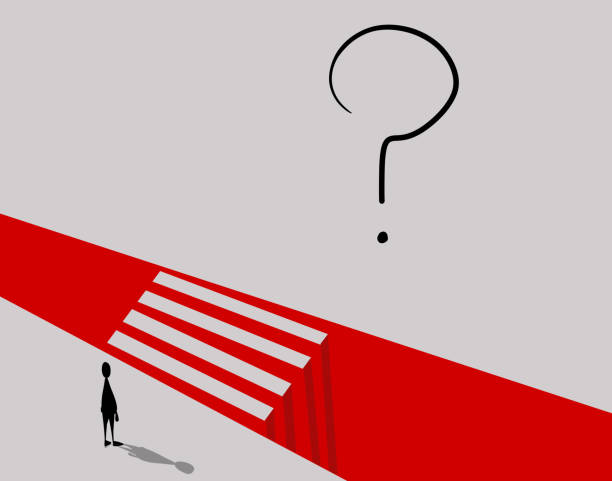
In a world that often prizes certainty and swift answers, the concept of doubt can seem like a weakness, a hesitation to be overcome. For parents and educators, however, cultivating a specific kind of uncertainty—productive doubt—is among the most powerful gifts we can offer the next generation. Productive doubt is not cynical disbelief or paralyzing indecision; it is an active, curious stance of questioning that drives deeper understanding, intellectual humility, and resilient thinking. Modeling this process requires a deliberate shift from being the sole source of answers to becoming a fellow inquirer, openly navigating the fertile space between “I know” and “I wonder.“
The foundation of modeling productive doubt is verbalizing our own thought processes. When a child or student poses a challenging question, instead of immediately providing a textbook answer, an adult can authentically engage with the complexity. This might sound like, “That’s a fascinating question. My understanding is that glaciers melt due to rising temperatures, but I’m not entirely sure about the different rates of melt in various parts of the world. Let’s see what we can find out together.“ This simple act does several things: it validates the question’s worth, demonstrates that knowledge has limits even for authorities, and frames the pursuit of information as a collaborative journey. It transforms a moment of potential ignorance into an opportunity for shared discovery.
Furthermore, adults can model productive doubt by intentionally engaging with diverse perspectives and updating their own views in real-time. An educator discussing a historical event might say, “The narrative in our textbook emphasizes political causes, but I just read an article that argues economic factors were more critical. This challenges my previous understanding, and I’m trying to reconcile these viewpoints.“ Similarly, a parent watching the news might comment, “This report presents a very clear case, but I’m doubtful we’re getting the full story. Let’s look for how another outlet is covering it.“ These examples show that thinking is not static, that credible sources can conflict, and that responsible cognition requires wrestling with ambiguity rather than retreating to easy conclusions.
Crucially, modeling productive doubt also means celebrating “productive failure”—the mistakes and dead ends that are inherent to learning and experimentation. When a science project yields unexpected results, the focus should shift from a “wrong” outcome to the questions it raises: “Why didn’t it work as we hypothesized? What does this unexpected result tell us?“ When a parent makes a mistake, such as misjudging a situation, openly acknowledging it is powerful: “I doubted your account of what happened at school, and I was wrong to dismiss it so quickly. I should have listened more carefully.“ This models that doubt can and should be turned inward, that intellectual integrity involves scrutinizing one’s own assumptions, and that errors are not shameful but are central to growth.
Finally, fostering an environment where questions are prized over rote answers is essential. This means responding to a child’s “Why?“ not with fatigue, but with, “What a great question. What do you think?“ It involves designing classroom activities that pose genuine problems without single, clear-cut solutions, requiring students to weigh evidence and argue from reasoning. In such spaces, the adult’s role is to guide the process of inquiry—asking deeper meta-questions like “What evidence would change your mind?“ or “How might someone with the opposite view see this?“—rather than merely judging the final product.
Ultimately, by modeling productive doubt, parents and educators do not create uncertain individuals, but rather intellectually agile ones. We teach that the world is complex, that understanding is often provisional, and that the confidence to say “I don’t know, but let’s find out” is a sign of strength. We equip young people not with a fragile arsenal of facts, but with a durable toolkit for thinking—a toolkit they will use to navigate future complexities we cannot yet imagine. In embracing and demonstrating thoughtful doubt, we build the foundation for a lifetime of curious, critical, and compassionate engagement with the world.