
Skip to Content

Navigating Doubt in Faith and Spirituality

The Spiritual But Not Religious Doubt Circle: Navigating Faith Without Dogma

The Spiritual But Not Religious Doubt Circle: Navigating Faith Without Dogma

For millions of people today, the phrase “spiritual but not religious” has become a refuge—a way to acknowledge a thirst for meaning without committing to the institutional structures that so often...

Finding Ground in the Fog: Embracing the Dark Night of the Soul as Spiritual Growth

Finding Ground in the Fog: Embracing the Dark Night of the Soul as Spiritual Growth

There are moments in every believer’s journey when the sky goes silent.

Exploring the Silence: Divine Hiddenness as an Intellectual Doubt

Exploring the Silence: Divine Hiddenness as an Intellectual Doubt

For those who have walked a path of faith, a quiet question often emerges in moments of solitude or crisis: if God exists and desires a relationship with humanity, why does He remain so conspicuously...
The Dark Night of the Soul: How Spiritual Emptiness Becomes the Gateway to Unshakable Faith

The Dark Night of the Soul: How Spiritual Emptiness Becomes the Gateway to Unshakable Faith

The most terrifying moment in any spiritual journey is not the loss of belief, but the sudden absence of feeling.

The Value of Interfaith Dialogue for Those Questioning Their Beliefs

The Value of Interfaith Dialogue for Those Questioning Their Beliefs

Doubt often arrives unannounced in the spiritual life.
Questioning Religious Authority While Honoring Ancestral Practices

Questioning Religious Authority While Honoring Ancestral Practices

The tension between inherited tradition and personal spiritual inquiry often feels like a choice between loyalty and authenticity.

The Hiddenness of God: An Intellectual Doubt That Deepens Faith

The Hiddenness of God: An Intellectual Doubt That Deepens Faith

For many believers and seekers, one of the most persistent intellectual doubts about religious faith is the problem of divine hiddenness.

The Fellowship of the Uncertain: Building Community Through Shared Spiritual Doubt

The Fellowship of the Uncertain: Building Community Through Shared Spiritual Doubt

The spiritual questioner walks a lonely road.
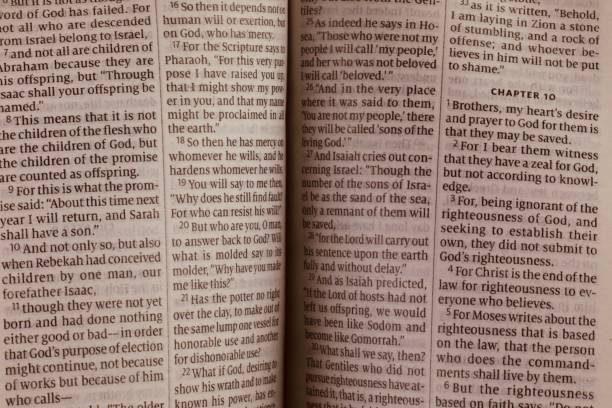
The Role of Sacred Texts: Infallible Guide or Living Conversation?

The Role of Sacred Texts: Infallible Guide or Living Conversation?

For centuries, sacred texts have served as the bedrock of faith traditions, offering believers a fixed point of reference in a shifting world.

The Problem of Evil: Reconciling Suffering with a Benevolent God

The Problem of Evil: Reconciling Suffering with a Benevolent God

For many people of faith, the most persistent and piercing intellectual doubt arises not from abstract theology or historical criticism, but from the raw reality of suffering.

The Hiddenness of God: How Intellectual Doubt Can Deepen Spiritual Conviction

The Hiddenness of God: How Intellectual Doubt Can Deepen Spiritual Conviction

The silence of heaven has troubled believers and skeptics alike for millennia.

The Wreckage of Faith: A Resource for the Deconstructing Believer

The Wreckage of Faith: A Resource for the Deconstructing Believer

The slow, quiet collapse of a faith you once built your life upon is not a crisis of belief.

Seeds of Doubt

Can doubt really be a catalyst for growth?

Yes, unequivocally. Doubt disrupts complacency, forcing a re-examination of beliefs, values, and assumptions. This friction is the engine of growth. By consciously navigating doubt, you develop critical thinking, intellectual humility, and emotional resilience. You move from inherited beliefs to personally held convictions, leading to deeper authenticity and unshakeable confidence. Growth occurs not in spite of doubt, but through its deliberate and supported engagement.

How did ancient philosophers contribute to religious doubt?

Ancient philosophers like Socrates, Epicurus, and Lucretius laid foundational critiques by questioning the nature of the gods, divine intervention, and the problem of evil. They advocated for reason and natural explanations over myth, challenging traditional religious narratives. Their inquiries established doubt as a legitimate intellectual stance, emphasizing empirical observation and logical consistency. Studying their arguments shows that questioning religious claims is a long-standing human tradition, essential for developing a reasoned worldview and separating philosophical inquiry from dogma.

How do I address doubts about suffering and evil in a world created by a good God?

This is a profound existential doubt. Many find resolution not in a logical “answer” but in a theological response: a God who enters into suffering with us. Others see suffering as a necessary consequence of a world with free will and natural laws. Engage this doubt honestly; it can transform a simplistic faith into a mature, compassionate one. The struggle itself can deepen empathy and commitment to being a force for good, harnessing doubt for growth.

What if my doubt is more about feeling than thinking?

This is a common and valid experience. Emotional doubt often stems from grief, trauma, or a perceived absence of the divine in hardship. It’s less about intellectual arguments and more about a disconnect between expected spiritual experiences and current reality. Address this by acknowledging the feelings without judgment. Explore contemplative practices like prayerful journaling or nature walks to reconnect with a sense of awe. Often, processing the underlying emotion with a trusted guide can be more transformative than seeking purely rational answers.

How can I question my beliefs without losing my faith entirely?

Approach questioning as a process of “stress-testing” your faith, not demolishing it. Engage with trusted sources, historical context, and diverse perspectives within your tradition. Separate cultural practices from core tenets. Understand that many spiritual giants throughout history have experienced profound doubt. Faith that survives honest inquiry is often more resilient and personal. The goal is not to avoid doubt, but to build a faith that can withstand it, leading to a more authentic and owned belief system.