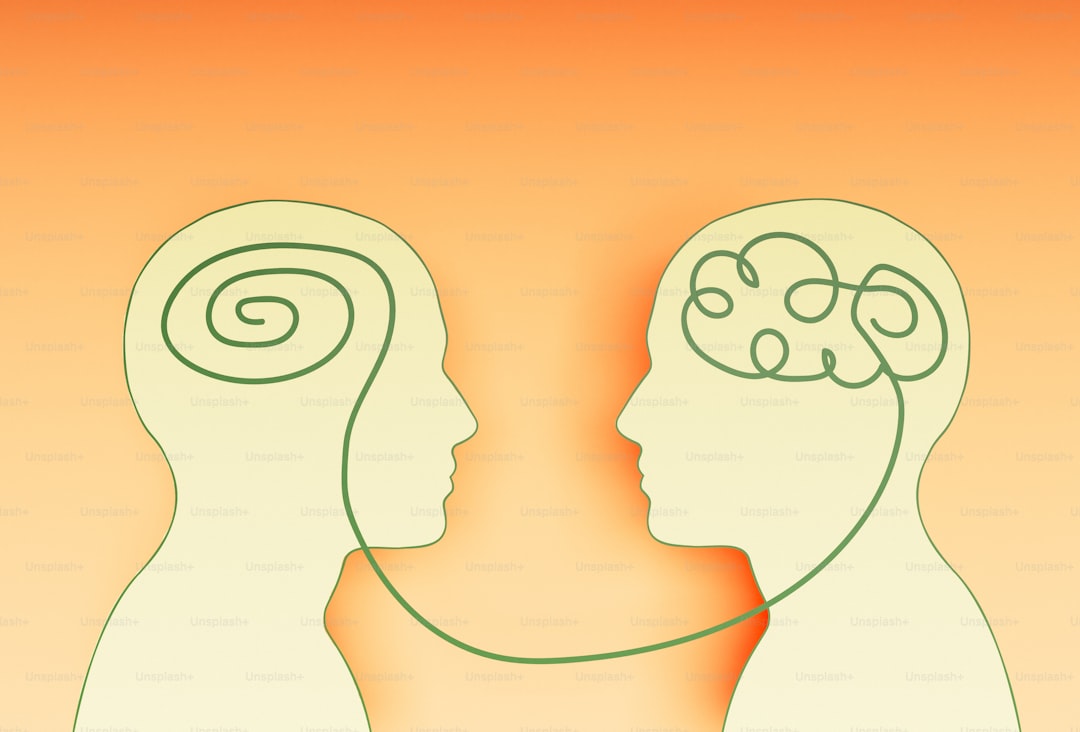
Historical skepticism is not a barrier to understanding but a vital tool for achieving it. When confronted with a historical narrative that raises your doubts, the most productive approach is to channel that skepticism into a structured, evidence-based investigation. This process transforms passive doubt into active inquiry, moving from a feeling of disbelief to a position of informed critique or revised understanding. The journey begins not with dismissal, but with a deliberate and curious unpacking of the claim itself.
First, articulate the precise nature of your skepticism. Is it the factual accuracy of an event, the interpretation of its causes, the portrayal of a historical figure, or the weighting of its significance? For instance, you might doubt the simplicity of a textbook’s claim that a single incident caused a major war. This precision guides your research, turning a vague unease into a targeted question. Following this, you must identify the source of the narrative you question. Is it a popular documentary, a scholarly monograph, a museum exhibit, or political rhetoric? Each medium has its own conventions, constraints, and potential biases. Understanding the provenance of the claim is the first step in evaluating its credibility.
With your target in focus, the core of your approach becomes engaging with the evidence. This requires seeking out primary sources—the documents, artifacts, and contemporary accounts from the period in question. These materials are the raw data of history. Read letters, examine statistics, study photographs, and listen to oral histories. Do they support the narrative you question? More importantly, what context might be missing? A single inflammatory speech may be cited as a cause for conflict, but does the broader correspondence reveal a longer, more complex chain of miscalculations? Simultaneously, you must immerse yourself in the historiography—the history of the history. Investigate how scholars have debated this topic over time. You will likely find that the narrative you questioned is already contested, with different schools of thought offering varying interpretations based on the same evidence. This reveals that history is not a fixed story but an ongoing conversation.
As you gather this information, a critical analysis of bias and perspective is essential. Every source, primary or secondary, is created by someone with a viewpoint. Your task is not to find “unbiased” sources, an impossible ideal, but to identify the biases. Ask who created a document, for what audience, and with what purpose. A government proclamation serves a different function than a private diary. Similarly, recognize your own perspective. Your skepticism may be rooted in your contemporary values, which are themselves products of history. The goal is to understand historical actors within their own context, not to judge them solely by modern standards. This empathetic leap, while challenging, is crucial for avoiding presentism—the distortion of the past by viewing it through a purely contemporary lens.
Finally, synthesize your findings to construct a nuanced understanding. Your initial skepticism may be confirmed, leading you to reject an oversimplified narrative. Alternatively, you may find that the evidence complicates your doubt, revealing a kernel of truth within a poorly presented claim. Often, the result is a synthesis that acknowledges complexity: “While Factor X played a role, it was interconnected with deeper economic and social tensions Y and Z.“ This conclusion, informed by evidence and aware of perspective, holds more intellectual value than either naive acceptance or reflexive denial.
Ultimately, approaching a historical topic with skepticism is a hallmark of rigorous thinking. By methodically investigating sources, engaging with scholarly debates, analyzing bias, and contextualizing evidence, you do not merely satisfy your doubt. You participate in the historical process itself, contributing to a more accurate and thoughtful understanding of the past. Healthy skepticism, therefore, is not the end of learning but its very engine, driving you toward a history that is robust, contested, and alive.