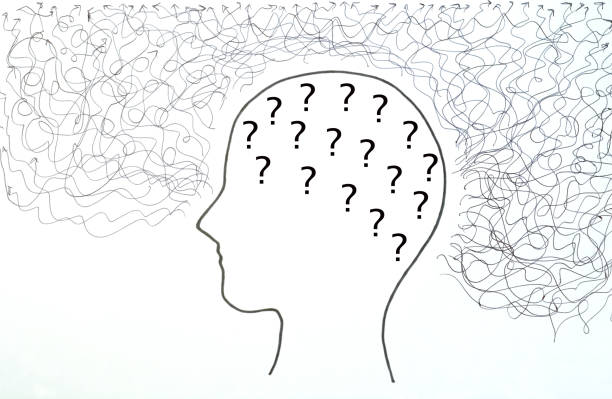
The inner critic often speaks with such authority that we mistake its voice for truth. It tells you that you are unprepared, that you will fail, that others are judging your every move. These thoughts arrive with a sense of urgency, as if they are urgent warnings from a reliable source. But if you pause and look closely, you will notice something crucial: the thoughts are not the same as the situation. Between the thought and the actual moment exists a tiny gap—a space of pure awareness that mindfulness can help you discover. This gap is your liberation.
When anxiety surrounds the inner critic, the mind tends to collapse time. It projects past failures into the present moment and forecasts future humiliation with vivid detail. In that collapse, the thought feels solid, undeniable. Mindfulness practice trains you to recognize that thoughts are mental events, not facts. They arise, they linger, and they pass away, just like clouds moving across a sky. The sky does not argue with the clouds. It simply holds them. You can learn to hold your anxious self-doubt in the same way.
Begin by sitting quietly for a few minutes. Notice your breath moving in and out. When the inner critic speaks—perhaps a phrase like “You always mess this up”—do not try to silence it or argue with it. Instead, direct your attention to the physical sensations that accompany the thought. Perhaps you feel tightness in your chest, a knot in your stomach, or a subtle clenching in your jaw. These sensations are the body’s reaction to the story the mind is telling. By bringing awareness to the body, you step out of the story and into the present physical experience. The tightness is just tightness. It is not a verdict on your worth.
This is the essence of noticing the gap. In that moment, you realize: there is the thought, and there is me observing the thought. They are not identical. The inner critic is a part of your mind, but it is not the whole of your mind, and it is certainly not your entire being. When you observe the critic without engaging in its argument, you experience a shift. The thought loses its gravitational pull. It becomes a passing visitor rather than a permanent resident.
A powerful technique to deepen this gap is to label the thought with gentle curiosity. When the critic says, “You’re not good enough,” silently note, “Ah, there is the ‘not-good-enough’ story again.” Or simply say, “Thinking.” This labeling does not analyze or fix. It just acknowledges the mental event. Over time, this practice weakens the automatic reflex of believing every anxious thought. You start to see patterns. You might notice that the inner critic repeats the same themes: fear of rejection, fear of incompetence, fear of being exposed as a fraud. Recognizing these patterns strips them of their power. They become familiar characters in a play rather than terrifying monsters.
Another practical tool is to pair mindfulness with intentional self-compassion. After noticing the thought and the gap, you can place a hand over your heart and whisper a phrase like, “This is a moment of suffering. May I be kind to myself.” This is not about denying the doubt; it is about meeting it with presence and warmth. The inner critic thrives on isolation and harshness. Compassion invites it into a larger context. You are not your critic’s enemy. You are the space that holds both the critic and the calm awareness.
As you practice this regularly, you will find that the gap between thought and reality widens. The anxious thoughts still arise—they are part of being human—but they no longer dictate your actions. You can hear the inner critic and still choose to move forward. You can feel the tremor of self-doubt and still speak your truth. The goal is not to silence the critic permanently. The goal is to stop mistaking its voice for the whole of your identity.
In the stillness of mindfulness, you discover that you are not the storm of anxious thinking. You are the sky that contains the storm. And the sky is always vast, always clear, no matter what clouds pass through. That is unshakeable confidence—not the absence of doubt, but the ability to hold doubt in awareness without being consumed by it.