
Skip to Content

Philosophical and Existential Doubt Exploration

Skepticism and the Ethics of Belief: How Philosophical Doubt Informs Moral Responsibility

Skepticism and the Ethics of Belief: How Philosophical Doubt Informs Moral Responsibility

The relationship between doubt and moral action is a terrain that philosophers have navigated with caution, often treating the two as separate domains: epistemology on one side, ethics on the other.

The Self as Fortress: How Personal Identity Fuels Resistant Doubt

The Self as Fortress: How Personal Identity Fuels Resistant Doubt

At the heart of our most stubborn uncertainties lies not just a question about the world, but a question about ourselves.

The Constructive Power of Doubt: How Questioning Strengthens Society

The Constructive Power of Doubt: How Questioning Strengthens Society

Doubt, often maligned as a corrosive force that undermines faith and stalls progress, is in fact an indispensable engine for a healthy, resilient, and evolving society.

The Grateful Mind: Why Your Inner Critic Deserves Thanks, Not Silence

The Grateful Mind: Why Your Inner Critic Deserves Thanks, Not Silence

We often imagine our inner critic as a relentless saboteur, a voice that whispers doubts and magnifies flaws in the shadowy corners of our minds.

How Self-Doubt Can Become Your Secret Superpower

How Self-Doubt Can Become Your Secret Superpower

Self-doubt is often portrayed as a crippling adversary, a whispering voice that undermines confidence and paralyzes potential.

The Essential Dance: How Doubt Fuels the Creative Fire

The Essential Dance: How Doubt Fuels the Creative Fire

Doubt and creativity are often perceived as opposing forces, locked in a battle for the artist’s soul.
How Healthy Doubt Can Be the Cornerstone of Stronger Relationships

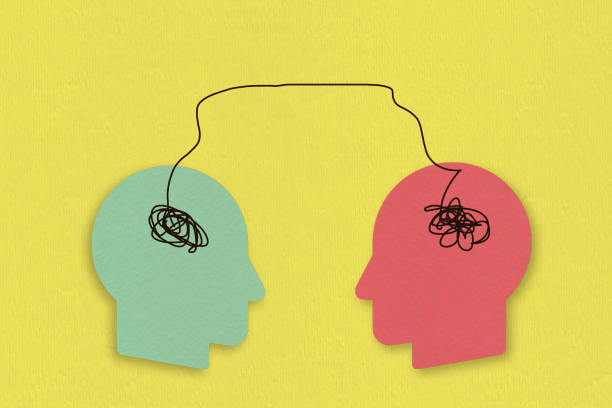
How Healthy Doubt Can Be the Cornerstone of Stronger Relationships

We often view doubt as a corrosive force, a silent saboteur lurking in the shadows of trust.

The Transformative Power of Embracing Uncertainty

The Transformative Power of Embracing Uncertainty

In a world that often prizes unwavering conviction, the act of embracing doubt can feel like a surrender.

The Shadow of Uncertainty: Are Conspiracy Theories a Form of Existential Doubt?

The Shadow of Uncertainty: Are Conspiracy Theories a Form of Existential Doubt?

In an age of overwhelming complexity and rapid change, conspiracy theories have surged from the fringes to the mainstream of public discourse.
The Dilemma of Blame: Moral Responsibility Without Certain Free Will

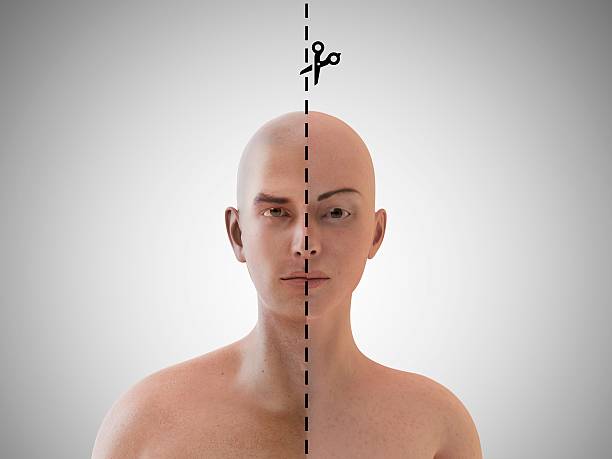
The Dilemma of Blame: Moral Responsibility Without Certain Free Will

The question of whether we can hold people morally responsible if free will is doubtful strikes at the very heart of ethics, justice, and our understanding of the human condition.

How to Question Conspiracy Theories Without Causing Defensiveness

How to Question Conspiracy Theories Without Causing Defensiveness

In an era of profound information saturation, conversations about conspiracy theories have moved from the fringe to the family dinner table.

The Anxiety of the Abyss: Why We Fear Existential Doubt

The Anxiety of the Abyss: Why We Fear Existential Doubt

Existential doubt, that unsettling confrontation with life’s biggest questions, is a universal human experience.

Seeds of Doubt

How can embracing doubt lead to personal transformation?

Embracing doubt means willingly stepping into the discomfort of not-knowing. This is where growth happens. It forces you to dismantle unexamined beliefs, inherited assumptions, and fragile self-concepts. By investigating these doubts, you rebuild your worldview and identity consciously, with stronger materials. You transition from being shaped by unchallenged thoughts to becoming the author of your own convictions. The result is an authentic, resilient self built on inquiry rather than dogma, leading to unshakeable, earned confidence.

How do I know when to stop doubting and make a decision?

Doubt must serve action, not prevent it. Set decision deadlines based on available information, not perfect certainty. Ask: “Do I have enough data to make a reasonably good choice? What is the cost of delaying?“ Use the “doubting window” for diligent research, then commit. Recognize that most decisions are reversible or correctable. Perfectionism is often paralyzing doubt in disguise. The final question is: “Is further doubt adding value, or is it now just fear of responsibility?“ At that point, act and learn from the outcome.

What role does doubt play in personal identity formation?

Doubt is the engine of identity formation. By questioning inherited beliefs, societal norms, and personal values, we move from a default identity to a chosen one. Existential doubt—“Who am I really?“—forces us to define our principles and purpose. This uncomfortable process is essential for developing an authentic, integrated self. Without doubting, we remain unexamined; through navigating doubt, we construct a more conscious and resilient identity, turning confusion into self-authorship.

What is the core value of philosophical skepticism?

Philosophical skepticism is not about cynical disbelief but about rigorous inquiry. It challenges us to examine the foundations of our knowledge, beliefs, and assumptions. By systematically doubting, we move beyond passive acceptance to active understanding. This process strengthens reasoning, exposes biases, and builds intellectual resilience. When harnessed, it becomes a powerful tool for personal growth, transforming uncertainty from a source of anxiety into a disciplined method for achieving more confident and justified convictions.

How can doubting free will be empowering rather than discouraging?

Understanding that your choices are shaped by prior causes can foster self-compassion and reduce harsh self-blame for past actions. It shifts focus from judging a mythical “free self” to understanding the causes (genes, environment, habits) that drive behavior. This empowers you to deliberately reshape those causes—changing your environment, building new habits—to become the person you want to be. Doubt becomes a tool for taking responsibility for your programming.