
Skip to Content

Reexamining Biased or Incomplete Histories

The Invisible Mathematicians: How Doubt Unlocks the Erased Histories of Knowledge

The Invisible Mathematicians: How Doubt Unlocks the Erased Histories of Knowledge

The history you learned in school was never the whole story.

The Lost Cause Myth: How Doubt Uncovers a Buried History

The Lost Cause Myth: How Doubt Uncovers a Buried History

For over a century, a seductive story has shaped how millions of Americans remember the Civil War.
The Manufactured Darkness: How Renaissance Propaganda Created the Myth of the Medieval Era

The Manufactured Darkness: How Renaissance Propaganda Created the Myth of the Medieval Era

For centuries, schoolchildren have been taught a simple narrative: after the fall of Rome, Europe stumbled into a thousand-year intellectual blackout, only to be rescued by the sunny humanism of the Renaissance.

The Myth of the “Dark Ages”: How Renaissance Spin Doctors Invented a Thousand Years of Ignorance

The Myth of the “Dark Ages”: How Renaissance Spin Doctors Invented a Thousand Years of Ignorance

When most people hear the phrase “Dark Ages,” they picture a Europe plunged into superstition, filth, and intellectual stagnation between the fall of Rome and the flowering of the Renaissance.

The Myth of the “Dark Ages”: Reexamining a Biased Historical Narrative

The Myth of the “Dark Ages”: Reexamining a Biased Historical Narrative

For centuries, the term “Dark Ages” has conjured images of a Europe plunged into intellectual stagnation, superstition, and cultural decay following the fall of the Roman Empire.
The Columbus Myth: How a Flawed Hero Became a Symbol of Doubt

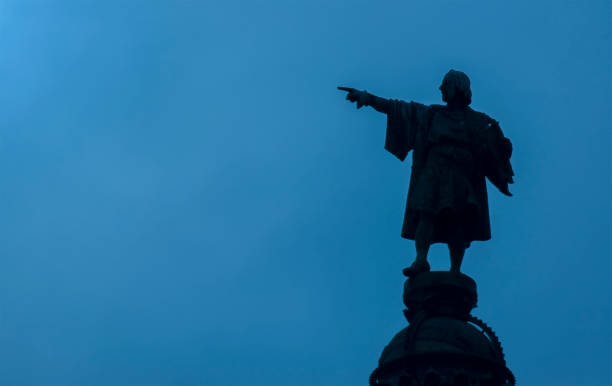
The Columbus Myth: How a Flawed Hero Became a Symbol of Doubt

For centuries, the story of Christopher Columbus was taught as a triumphant narrative of discovery, bravery, and the unstoppable march of European civilization.
The Invention of the ‘Dark Continent’: Reexamining Colonial Narratives of Africa

The Invention of the ‘Dark Continent’: Reexamining Colonial Narratives of Africa

Few historical myths have proven as stubborn as the image of pre-colonial Africa as a “dark continent”—a land without civilization, written history, or complex political structures.
The Columbus Myth: Reexamining the Narrative of Discovery and Its Indigenous Counterparts

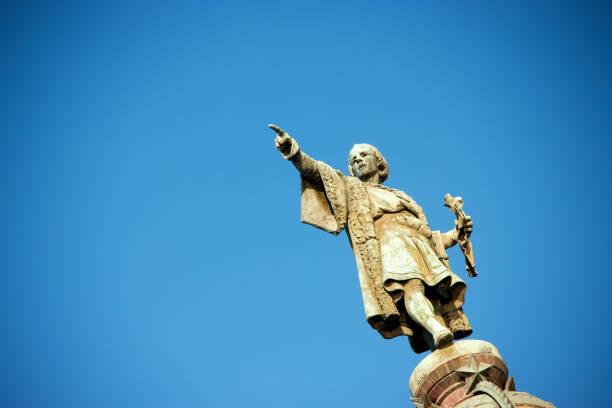
The Columbus Myth: Reexamining the Narrative of Discovery and Its Indigenous Counterparts

For centuries, schoolchildren across the Western world have memorized a tidy verse: “In fourteen hundred and ninety-two, Columbus sailed the ocean blue.” The story that follows is equally neat—a...

The Erased Legacy of the Library of Alexandria: Reexamining the Myth of Its Destruction

The Erased Legacy of the Library of Alexandria: Reexamining the Myth of Its Destruction

Few images in Western historical consciousness carry more symbolic weight than the burning of the Library of Alexandria.
The Myth of the Dark Ages: How Doubt Reveals a Hidden Renaissance

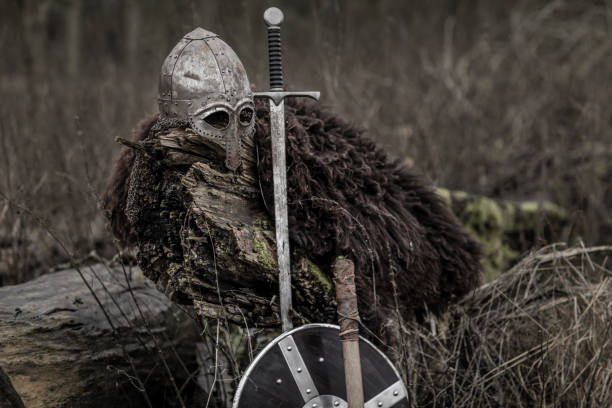
The Myth of the Dark Ages: How Doubt Reveals a Hidden Renaissance

For centuries, the term “Dark Ages” has hung over the period of European history from roughly the fall of the Western Roman Empire in the fifth century to the dawn of the Renaissance in the fourteenth century.
How Conspiracy Theories Function as a Manifestation of Doubt

How Conspiracy Theories Function as a Manifestation of Doubt

In an age of overwhelming information and complex global events, conspiracy theories have emerged as a potent cultural and psychological force.

Navigating Historical Conversations: Bridging the Gap with Empathy and Evidence

Navigating Historical Conversations: Bridging the Gap with Empathy and Evidence

Attempting to communicate with someone who doubts a well-established historical fact, such as the Holocaust, the moon landing, or the historical figure of Jesus of Nazareth, can feel like a...

Seeds of Doubt

How does confirmation bias affect a doubter’s research?

Confirmation bias is the tendency to seek and favor information that confirms existing beliefs. A doubter researching a contested event may only consume sources from one side, seeing them as “doing their own research.“ This creates an echo chamber. Harnessing doubt requires actively seeking out credible opposing viewpoints and evaluating evidence based on source quality, not just alignment with pre-existing doubts.

What is the “paradox of doubt” in personal growth?

The paradox is that to build unshakeable confidence, you must first seriously entertain doubt. Avoiding doubt creates fragile certainty. By courageously facing doubts—about your abilities, beliefs, or history—you test and refine your understanding. The process of investigating and resolving doubt, through evidence and reason, forges a confidence that is resilient because it has been challenged. Doubt is the fire that tempers confidence.

How can conspiracy theories be a form of doubt?

Conspiracy theories often stem from a doubt in official narratives or powerful institutions. They provide an alternative, seemingly coherent story that explains complex events, offering a sense of control and certainty in an uncertain world. Harnessing this requires recognizing the underlying need for agency and truth. Redirecting that investigative energy toward verifiable evidence and critical thinking skills can transform paranoid doubt into empowered, rational inquiry.

Why is it crucial to examine the sources of our own doubts?

Our doubts are not always born of pure logic; they can spring from fear, trauma, social influence, or a desire to belong. Examining the emotional and social roots of your doubt is empowering. Ask yourself: “Does this doubt protect me from something? Where did I first hear this?“ This self-awareness allows you to separate reactive doubt from rational skepticism, leading to more confident, self-directed beliefs.

How can harnessing doubt lead to greater empathy?

Investigating why you or others doubt reveals fundamental human needs: for security, fairness, and understanding. When you see a doubter not just as wrong but as someone seeking these needs, empathy follows. This doesn’t require agreement. By understanding the emotional landscape of doubt, you navigate conflicts with more compassion, build bridges across divides, and strengthen your own capacity for complex thought—turning ideological clashes into opportunities for mutual growth.