There comes a moment, often in the quiet hours, when the floor of certainty gives way. You ask yourself: What am I actually doing here? Is this life I have built mine, or simply a script handed to me by family, culture, and circumstance? These questions do not arrive as gentle curiosities. They land like stones dropped into still water, sending ripples through every assumption you have ever held. The natural instinct is to push them away, to bury them under distractions, or to panic and cling to the first reassuring answer. But what if the doubt itself is not the threat? What if the fear of questioning is the real paralysis, and the method of asking—not the finding—holds the key to an unshakeable self?
This is where Socratic questioning enters, not as a dusty classroom exercise, but as a practical lifeline for the soul. Socrates understood that the examined life is not one where all mysteries are resolved. It is one where we become intimate with our own ignorance, and in that intimacy, we discover something more durable than borrowed beliefs. The method is deceptively simple: begin with a claim, then dismantle it with relentless, humble inquiries. What do I mean by that? How do I know it is true? What would change if I were wrong? Each question strips away a layer of assumption, revealing the raw architecture of our thinking.
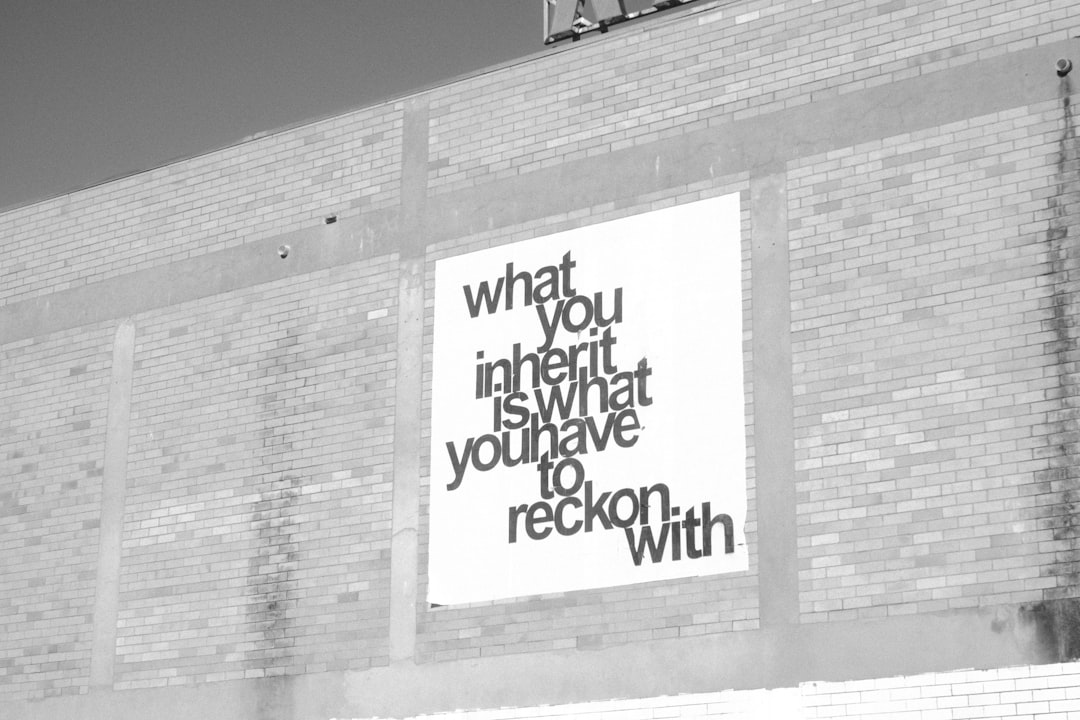
Apply this to the most piercing existential doubt: “My life lacks meaning.” At first, this feels like a verdict. But Socrates would not let the statement stand. He would ask: What exactly do you mean by “meaning”? Are you referring to a sense of direction, a contribution to others, a feeling of connection, or something else entirely? Immediately, the monolithic ache fragments into smaller, addressable pieces. Then he would ask: By what standard are you judging that your life is deficient? Who set that standard, and do you actually agree with it? This is uncomfortable, because we often inherit standards without consenting to them. We measure our lives against a career ladder, a social media feed, or a parent’s unspoken expectation, and then we wonder why we feel hollow.
Socratic questioning does not stop at definition. It moves into evidence. What experiences in your past have genuinely made you feel alive, purposeful, or engaged? If those moments exist, what do they share in common? Could they be repeated, expanded, or deepened? This shifts the inquiry from abstract despair to concrete autobiography. You begin to see that “my life lacks meaning” is often a shorthand for “I have forgotten the moments that mattered.” The doubt, when questioned, turns out to be a mask for a more specific grief—a lost relationship, an abandoned passion, a fear of mortality.
The next layer of Socratic questioning addresses the consequences of belief. Suppose you continue to believe that your life is meaningless. What behaviors follow from that belief? Perhaps you disengage, procrastinate, or sabotage opportunities. Then ask: If you temporarily adopted the opposite belief—that your life is inherently meaningful because you choose to create meaning—how would your behavior change? What could you try, even if you felt no enthusiasm initially? This is the pragmatic heart of Socratic inquiry: it does not ask you to pretend certainty. It asks you to experiment with perspective, to test which beliefs lead to a more flourishing existence.
Here lies the radical empowerment. Most people assume that confidence comes from eliminating doubt, from reaching a final, fortified position. Socratic questioning reveals that confidence is actually a relationship with doubt—a willingness to hold questions open without being paralyzed by them. The person who can ask “What if I am wrong?” and sincerely investigate that possibility is far more resilient than the person who must defend every answer to the death. Existential doubts about death, freedom, isolation, and meaning are not problems to be solved once and for all. They are permanent features of being human. The only choice is whether to let them terrify us into rigidity or enlist them as ongoing teachers.
Imagine sitting across from Socrates. You confess your fear that nothing you do will outlast the stars. He does not offer consolation. Instead, he tilts his head and asks: Why must your actions outlast the stars for them to matter to you right now? What is the source of this requirement? Do you apply the same requirement to a meal, a laugh, a kiss? In that moment, you see that your arbitrary demand for cosmic permanence is strangling your appreciation for temporal beauty. The doubt does not vanish, but it is reframed. You are no longer a victim of the question. You are a participant in a dialogue, and that is where agency returns.
The practice is simple to begin but requires courage. Write down your deepest existential doubt as a single sentence. Then interrogate it as if it were spoken by a stranger. Define every term. Challenge every premise. Imagine the opposite and follow where it leads. This is not intellectual gymnastics for its own sake. It is a method for metabolizing dread into clarity. Each question you ask is a small act of self-authorship. You are no longer merely inheriting your beliefs; you are co-creating them moment by moment. And that, paradoxically, is the only unshakeable confidence available to a finite mind. Not the confidence of having arrived, but the confidence of being willing to ask the next question.