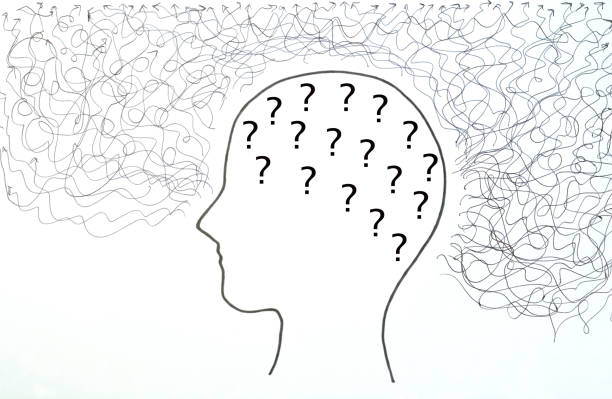
In the vast, indifferent expanse of existence, doubt often arrives not as a whisper but as a thunderclap. It shatters the comfortable narratives we build around purpose, morality, and selfhood. Nowhere is this more acutely felt than in the confrontation with existentialism’s core realization: that the universe offers no preordained meaning, no cosmic blueprint, and no inherent justification for our being. For many, this revelation breeds despair, paralysis, or a frantic search for artificial certainty. Yet within this very void lies an extraordinary opportunity. The philosophical tradition of absurdism, particularly as articulated by Albert Camus, proposes a radical reframing: doubt about meaning is not a weakness to be overcome, but the very foundation of a liberated, courageous, and deeply authentic life. To become an absurd hero is to harness existential doubt as the engine of personal growth and unshakeable confidence.
The journey begins with the recognition of what Camus called the absurd. This is not a state of confusion or indecision, but a specific tension between two irreconcilable facts: the human desire for clarity, purpose, and absolute answers, and the universe’s silent, indifferent refusal to provide them. We long for a reason to get out of bed each morning, a cosmic why that justifies our suffering and joys. Yet when we search the stars or the depths of our own consciousness, we find only silence. This collision—the demand for meaning and the absence of meaning—is the absurd. It is a wound, but also a revelation. The moment we truly accept that no external authority, no divine plan, no universal moral law will tell us how to live, we are faced with a profound choice. We can retreat into denial, clinging to religious dogma, ideological certainty, or the shallow comforts of consumerism. Or we can step into the void and allow doubt to become a creative force.
This is where doubt transforms from a source of anxiety into a catalyst for growth. Existential doubt strips away the scaffolding of inherited beliefs—beliefs about who we are supposed to be, what success looks like, what love should feel like. Without that scaffolding, we stand exposed. But exposure is also liberation. The person who has genuinely doubted the meaning of their career, their relationships, or their very identity is no longer a passenger on a predetermined route. They become the driver. Every choice, every value, every commitment must now be consciously forged. This process is daunting, but it cultivates a muscle that certainty never can: the muscle of deliberate, reflective agency. Doubt forces us to ask the hardest questions: If there is no ultimate meaning, what meaning will I create? If no one is watching, what kind of person do I choose to be? If death is the end, how shall I spend the time I have? Answering these questions not once but repeatedly, with honesty and courage, builds a resilience that no external validation can match.
The confidence that emerges from this crucible is unlike the brittle confidence of the dogmatist. It is not founded on the belief that one is right, but on the willingness to live with uncertainty. The absurd hero does not claim to have solved the riddle of existence; they claim only to have accepted that the riddle has no answer. And in that acceptance, they find a paradoxical power. Camus illustrated this through the myth of Sisyphus, condemned to roll a boulder up a hill only to watch it fall back down for eternity. Most see this as a punishment, a symbol of futility. But Camus urged us to imagine Sisyphus happy. Why? Because Sisyphus, in full awareness of his absurd condition, could find meaning in the struggle itself. The push, the sweat, the progress—these become meaningful not because they lead to a permanent summit, but because they are his own. The same is true for us. We do not need a cosmic reason to love, to create, to fight for justice, or to laugh with friends. The act itself, performed with full consciousness of its impermanence, becomes its own reward.
This perspective directly empowers individuals to navigate the subtler forms of doubt that permeate modern life—self-doubt, relational doubt, even the pull of conspiracy theories. The absurd hero knows that certainty is a mirage. When self-doubt whispers, “You are not good enough,” the existential response is not to seek proof of worthiness, but to ask, “Good enough for whom? By what standard? And why must that standard be absolute?” Similarly, when conspiracy theories offer neat, all-encompassing explanations for a chaotic world, the absurd hero recognizes them as desperate attempts to banish doubt by inventing false meaning. True confidence does not come from having all the answers; it comes from being comfortable with unanswered questions. It comes from repeatedly choosing to act, to love, to commit, despite knowing that nothing is guaranteed.
In the end, embracing existential doubt is not about wallowing in uncertainty; it is about building a life on the only foundation that cannot crumble: the honest acknowledgment of our freedom. We are free because no predetermined meaning binds us. We are responsible because we must choose our own path. And we are heroic when we choose to live fully, passionately, and rebelliously in the face of that freedom. The absurd hero does not need the universe to make sense. They need only the courage to keep pushing the boulder, to keep asking the questions, and to keep creating meaning out of nothing. That is the unshakeable confidence born from doubt.