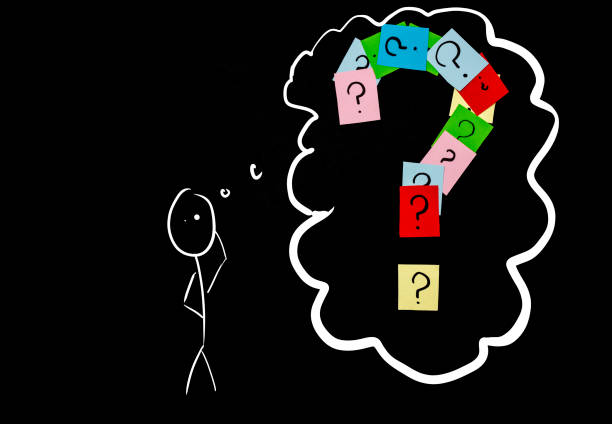
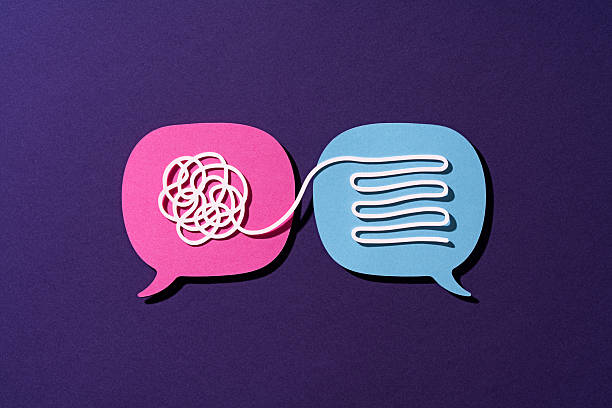
Every human being wakes into a world that offers no instruction manual. We are born into a reality where the answers to life’s deepest questions remain stubbornly silent. Why are we here? What is the purpose of existence? Should we strive, love, suffer, or simply surrender? These questions do not arrive with neat solutions. They arrive as a form of doubt—a persistent, unsettling whisper that tells us we are free, and that our freedom is terrifying. This is the existential doubt that lies at the heart of the human condition, and it is precisely this doubt that can become the most powerful engine for genuine self-discovery.
The twentieth-century philosopher Jean-Paul Sartre captured this dilemma with his famous dictum that we are “condemned to be free.” Condemnation suggests a prison, yet freedom is supposed to be liberating. The contradiction reveals the truth: we are not free to choose whether we will choose. We must choose. Every morning we decide what to wear, what to eat, what work to do, whom to love, and what to believe. Behind these mundane decisions lies a cosmic vertigo. If there is no preordained purpose, no divine script, then every choice we make is an act of creation. We invent ourselves with each breath, and we are wholly responsible for the person we become. This responsibility is crushing. It is easier to flee into distraction, conformity, or the comforting arms of dogma. We outsource our choices to parents, to culture, to social media algorithms, and to the loudest voices in our echo chambers. But the doubt remains. It gnaws at the edges of every borrowed belief.
To harness this doubt rather than be paralyzed by it, we must first recognize that the absence of an external meaning is not a void to be filled with despair. It is a blank canvas. The existential philosopher Albert Camus compared the human struggle to the myth of Sisyphus, who is condemned to push a boulder up a hill only to watch it roll back down for eternity. Camus argued that Sisyphus, in full awareness of his absurd fate, could find meaning in the very act of pushing. The struggle itself, the conscious effort, is enough to fulfill a life. In the same way, we do not need to discover a pre-existing purpose. We create it through our choices, our commitments, and our passionate engagement with the world. The doubt that first appears as a paralysis reveals itself as the very condition of freedom.
This shift in perspective requires a radical reorientation of how we relate to uncertainty. Most of us treat doubt as an enemy to be vanquished. We seek certainty in career paths, in relationships, in religious or political ideologies, and in the reassuring narratives of conspiracy theories that claim to expose hidden truths. But these are forms of escape. They offer temporary relief at the cost of authentic living. The conspiracy theorist, for instance, may feel powerful and knowledgeable by believing they have uncovered a secret order behind chaos. Yet that belief is a fortress built from fear. It avoids the messy, creative labor of facing an unknowable world. True empowerment comes not from eliminating doubt but from learning to stand within it, to let it breathe, and to let it guide us toward more honest questions.
Consider the simple act of choosing a career. Many people suffer from a paralyzing fear of making the wrong choice. They worry that a wrong step will lead to a wasted life. This fear is a form of existential doubt about the meaning of their labor. But what if we reframed the doubt as an invitation to experiment? Instead of asking, “What am I meant to do?” we could ask, “What am I willing to commit to today, knowing that tomorrow I might change my mind?” This is the essence of existential authenticity: owning the fluidity of the self. Doubt becomes a compass that points toward what truly matters to us, not because it is eternal, but because it resonates now.
The search for meaning, then, is not a destination but a continuous process of questioning. It is a muscle that strengthens with use. Each time we confront our uncertainty and decide anyway, we build confidence—not the brittle confidence of certitude, but the unshakeable confidence that comes from knowing we can handle our own freedom. This is the confidence of the person who can say, “I do not know why I am here, but I choose to be here fully, and I will create meaning through action.” It is a confidence that does not require the world to cooperate. It requires only that we remain awake to our own agency.
In an age of information overload, algorithm-driven echo chambers, and global crises that defy simple answers, existential doubt is more relevant than ever. It is the human birthright. To suppress it is to live a borrowed life. To embrace it is to step into the wild, unpredictable, magnificent freedom of being alive. The doubt itself becomes the catalyst for growth, for compassion, for art, for love, for every act that makes a life worth living. And in that embrace, we discover that the search for meaning is not about finding a hidden treasure. It is about learning to dig, to sweat, to fall, and to rise again—knowing full well that the hole will always be deeper than our shovel. That is enough.