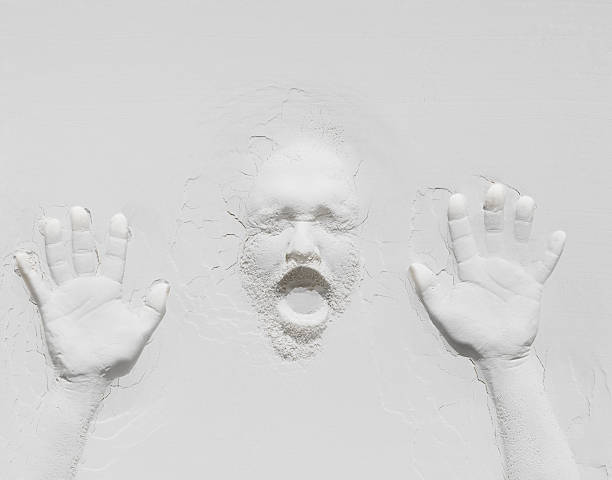
In every underdog story, there is a moment when the world’s skepticism meets the team’s own trembling uncertainty. The loudest voices outside doubt the mission, but the most corrosive whispers come from within. Teams that ultimately triumph do not silence these whispers; they transform them. The alchemy of shared doubt is not about pretending fear does not exist, but about converting individual hesitation into a collective fuel that forges resilience and unshakeable belief. When a group of underdogs learns to doubt together, they discover that their very uncertainty becomes the cornerstone of an unbreakable bond.
Doubt, in its rawest form, is a signal. It alerts a team to blind spots, unexamined assumptions, and overlooked risks. A team that treats doubt as a forbidden emotion builds walls that hide cracks in their strategy. But a team that invites doubt to the table, that gives each member permission to voice their worst fears, gains a panoramic view of the challenges ahead. This shared vulnerability does not weaken the group; it creates a kind of intimacy that is essential for high-stakes cooperation. When an engineer admits she is unsure the new design will hold, and a sales lead confesses he has never pitched to such a skeptical client, the team can actually address those gaps instead of stumbling into them later. The doubt becomes a map, and the collective relief is palpable.
The most powerful underdog teams develop what might be called a ritual of doubt. These are structured moments where every single member is invited to share one thing that is shaking their confidence. The ritual is sacred because it removes hierarchy and ego from the equation. A rookie’s unease about the game plan carries as much weight as a veteran’s misgiving about the opponent’s momentum. In these moments, doubt is not a weakness to hide, but a gift to offer. The team listens without judgment, then translates each doubt into a specific action. That fear of an upcoming deadline becomes a revised schedule. That anxiety about a competitor’s new feature becomes a brainstorming session. By performing this ritual regularly, the team learns that doubt is not a verdict, but a raw material.
Out of this practice emerges a strange and beautiful paradox: the more the team acknowledges its doubts, the more confident it becomes. This is not the fragile confidence of denial, but the robust confidence of preparedness. Underdogs understand that belief is not a pre-existing condition, but a constant re-creation. Every time a concern is voiced and collectively addressed, the team rewires its own narrative. They start to see themselves not as naive dreamers, but as pragmatic warriors who have already wrestled with the worst-case scenario and found a way through. That shared memory of overcoming doubt becomes the emotional bedrock of unshakeable belief. They no longer need external validation because they have internal proof of their own resourcefulness.
Crucially, this process requires psychological safety. A team cannot cultivate shared belief if its members fear punishment for expressing uncertainty. Leaders of underdog teams must model doubt first. They need to say, “I am not sure we can pull this off, but I am certain that together we can figure it out.“ That singular admission releases everyone else from the pressure of false certainty. It creates a culture where resilience is not about being unmoved, but about moving through doubt with grace. When a team fails, and underdogs often do before they win, the shared history of facing doubt means the failure becomes data, not defeat. The team can say, “We doubted that would happen, and it did. Now we know better.“ That is the essence of a learning culture built on trust.
The journey from self-doubt to shared belief is not linear. There are dark mornings when the whole team questions why they ever started. But the magic of collective doubt is that it multiplies hope in the same way it multiplies vulnerability. One person’s moment of despair is intercepted by another’s memory of a previous success born from uncertainty. This interdependence is the true antidote to the loneliness of doubt. An underdog team that fights for each other’s confidence becomes a fortress that external critics cannot penetrate. Their unshakeable belief is not loud or arrogant; it is quiet, persistent, and earned through countless small acts of shared courage.
In the end, cultivating team resilience is not about eliminating doubt, but about raising it together. The most ordinary group of underestimated individuals becomes extraordinary when they learn to give voice to their fears and then use those fears as kindling for their fire. They understand that doubt is not the opposite of belief; it is the forge where belief is hammered into steel. So let the doubt pour in, let every question and every hesitation be spoken, and watch as a team of underdogs rises with a confidence that cannot be shaken—because it was built on the very thing that once threatened to break them.