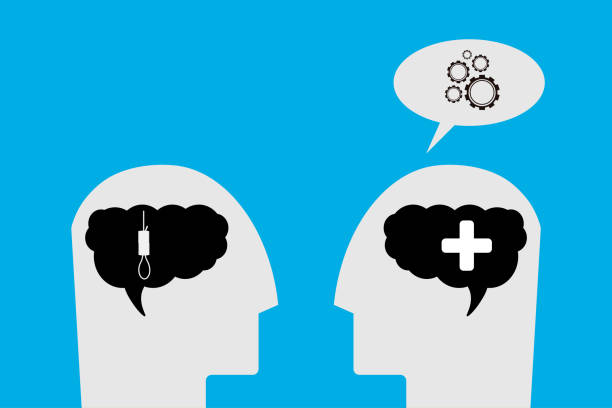
The solitary questioner often finds themselves chasing shadows, their doubts echoing in empty rooms where no one pushes back, no one refines the edges of their curiosity, no one offers the gift of a better question. To build a healthy identity as a questioner, you must eventually step out of the echo chamber of your own mind and into the dynamic, sometimes uncomfortable, but ultimately fertile ground of a community of fellow questioners. This is not about finding people who agree with you—that is the refuge of the already convinced. It is about finding people who are equally committed to the process of inquiry itself, who understand that doubt is not a weakness to be cured but a muscle to be exercised, and who will hold you accountable to intellectual honesty even when it stings.
The most transformative communities of questioners are those that practice collaborative skepticism. Unlike competitive argument, which seeks to win, or adversarial debate, which often entrenches positions, collaborative skepticism treats doubt as a shared resource. When you bring a tentative conclusion to such a group, the goal is not to dismantle it for sport but to stress-test it. Your fellow questioners will ask you, “What evidence would change your mind? What assumptions are you making? Can you articulate the strongest possible version of the opposing view?” These inquiries are not attacks; they are acts of solidarity. They reveal that the community values truth over comfort and growth over validation.
Yet building this identity requires a particular posture: intellectual humility. No one joins a vibrant questioning community already certain. You must arrive with the recognition that your current understanding is incomplete, that your biases are invisible to you, and that the most valuable gift another questioner can give is a perspective that shatters your certainty. This is profoundly uncomfortable. The human brain craves closure, and a community that refuses to offer it feels like a betrayal of the very purpose of thinking. But that discomfort is the signal that you are in the right place. A healthy community of questioners does not resolve your doubt; it deepens it, refines it, and gives it direction.
Consider the difference between solitary questioning and group inquiry. Alone, you might circle a question endlessly, mistaking repetition for progress. In a group, someone will notice the circularity and call it out. Someone will introduce an analogy from a different field that reframes the entire issue. Someone will gently point out the emotional attachment you have to a particular answer, allowing you to see the line where honest doubt ends and motivated reasoning begins. This is not possible in isolation. The community becomes a kind of externalized consciousness, helping you see what you cannot see about your own thinking.
But finding such a community is itself an act of discernment. Not every group that claims to value questioning actually does. Some are merely echo chambers for a specific flavor of doubt—the doubt that rejects mainstream narratives wholesale without the discipline of evidence. Others are spaces where questioning is performative, where the goal is to appear clever rather than to actually wrestle with uncertainty. The healthiest communities share a few key features. They have norms around respectful disagreement—not politeness for its own sake, but a commitment to engaging with ideas rather than attacking identities. They embrace fallibilism: the explicit acknowledgment that every member, including the most respected, can be wrong. And they cultivate a shared vocabulary for talking about doubt itself, distinguishing between productive skepticism and corrosive cynicism.
To build your identity as a questioner within such a community, you must also become a contributor. Do not merely consume the insights of others; offer your own uncertainties, your half-formed hypotheses, your wild stabs. The community will sharpen them. The act of articulating your doubt to others forces you to organize it, to find the edges of what you do and do not know. And when you offer your doubt genuinely, you give others permission to do the same. You build a culture where it is safe to say, “I don’t know,” and where that admission is not the end of conversation but the beginning of deeper inquiry.
Ultimately, the community of fellow questioners becomes a mirror—not a flattering one, but a clarifying one. It reflects back to you the gaps in your reasoning, the emotional investments that cloud your judgment, and the assumptions you had mistaken for facts. But it also reflects your capacity for growth, your courage in facing uncertainty, and your connection to others who share the same hunger for understanding. In that reflection, you find not just a better version of your questions but a more honest version of yourself.