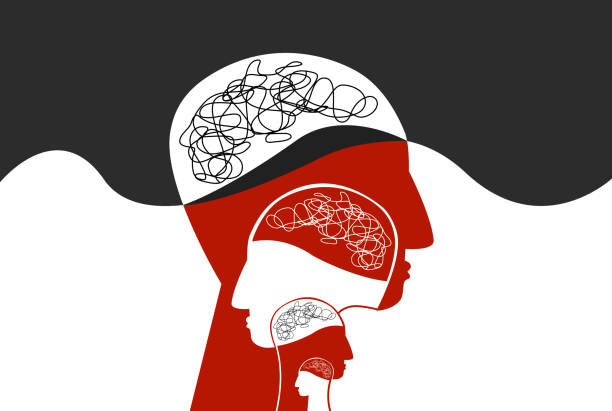
In every intimate partnership, doubt arrives like an uninvited guest. It whispers questions about a partner’s fidelity, motives, or long-term intentions. It can corrode the foundation of a relationship, feeding insecurity and distance. Yet dismissing doubt outright is not the answer either. A relationship without any trace of questioning may drift into complacency or unexamined patterns. The key lies not in eliminating doubt but in transforming it into a tool for deeper connection. This is the art of productive doubt—a disciplined practice of using healthy skepticism to strengthen, rather than weaken, the bonds of personal partnership.
Productive doubt begins with a crucial distinction: the difference between paranoid suspicion and attentive curiosity. Paranoid suspicion assumes the worst, searching for evidence to confirm a pre-existing fear. It is rigid, reactive, and rooted in past wounds. Attentive curiosity, on the other hand, asks open-ended questions: “What is this feeling teaching me about my needs?” or “What might my partner be experiencing that I do not yet see?” This form of doubt does not accuse; it explores. When a partner is late without explanation, paranoid suspicion whispers “They do not care about me,” while attentive curiosity wonders “Could there be something else going on that I need to understand?” The latter creates space for a conversation, not a confrontation.
To practice productive doubt, both partners must first build a foundation of emotional safety. If doubt triggers immediate defensiveness or retaliation, no amount of questioning will be helpful. Couples can establish agreements: when one partner expresses unease, the other listens without interrupting, minimizes assumptions, and expresses appreciation for the vulnerability. This requires courage, because admitting doubt can feel like exposing weakness. But in a secure partnership, owning one’s doubt is an invitation to intimacy. Saying “I feel uncertain about X, and I want to talk through it together” signals respect for the relationship’s strength rather than doubt about its viability.
Another element of productive doubt is distinguishing between global doubt and local doubt. Global doubt questions the entire relationship: “Is this person right for me? Do we have a future?” Local doubt concerns a specific event or pattern: “Why did they forget our anniversary? What does that silence mean?” Catastrophic thinking often globalizes a small doubt into an existential crisis. The antidote is to isolate the specific concern and examine it without emotional exaggeration. Ask: “What concrete evidence do I have for this doubt? What evidence is missing? Could there be an alternative explanation that does not imply betrayal or disinterest?” This practice quiets the amygdala’s alarm system and engages the prefrontal cortex’s ability to reason.
Productive doubt also requires an awareness of projection. Often, the doubt we feel about a partner actually reflects unresolved doubt about ourselves. Am I afraid my partner will leave because I secretly doubt my own worthiness of love? Do I suspect they are hiding something because I struggle with my own transparency? Before confronting a partner, the wise doubter turns inward. Journaling, meditation, or talking with a trusted friend can reveal whether the doubt originates from outside or from within. Partners who share this self-reflective process build a culture of mutual accountability rather than blame.
When doubt is communicated constructively, it can catalyze growth. For example, a partner who expresses doubt about the division of household labor may spark a conversation that leads to a fairer system, ultimately increasing trust. A doubt about emotional availability may encourage a couple to schedule regular check-ins, deepening their connection. In this sense, doubt is not the enemy of trust but its guardian. Trust is not the absence of doubt; it is the willingness to hold doubt in one hand and commitment in the other, allowing them to dialogue.
Some of the most resilient partnerships are those where both individuals have learned to tolerate ambiguity. They understand that absolute certainty is an illusion in human relationships. People change, circumstances shift, and feelings evolve. Productive doubt acknowledges this reality and adapts. It asks: “How can we stay curious about each other even when our doubts arise? How can we use our unease as a signal to learn more, not to shut down?”
Ultimately, managing doubt in personal partnerships is less about silencing the inner critic and more about training it to be a thoughtful ally. When doubt appears, we can breathe, pause, and ask: Is this a signal to investigate or an old story replaying? Can I share this with my partner in a way that invites closeness rather than conflict? The couple that learns to welcome doubt as a teacher rather than a threat discovers that trust is not a fragile crystal but a muscle—strengthened by the very tensions that once seemed dangerous.