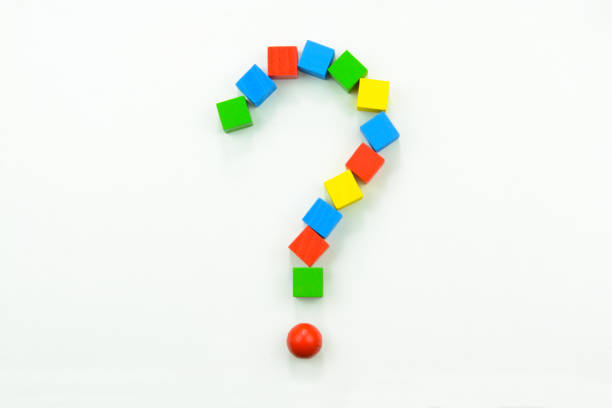
Every parent has faced the moment. A small voice pipes up from the back seat or across the dinner table, asking why the sky is blue, or how airplanes stay up, or where thoughts come from before we think them. The immediate instinct is to answer, to prove competence, to fill the silence with certainty. But what if the most powerful thing a parent can say in that instant is not an explanation, but three simple words: “I don’t know.“ This phrase, so often dreaded as a sign of weakness, becomes a gateway to the very skepticism and curiosity that build unshakeable confidence in a child’s mind. By admitting uncertainty, we model a relationship with doubt that transforms it from a threat into a tool.
When a parent says “I don’t know,“ they are not failing the child. They are teaching that knowledge is not a fixed commodity to be dispensed, but a living process to be engaged. The child learns that adults do not possess all answers, and that the absence of an answer is not a dead end. Instead, it is a beginning. The parent can follow up with “but let’s find out together,“ which turns an admission of ignorance into a collaborative adventure. This simple follow-up models healthy skepticism: the idea that claims should be tested, questions are valuable, and curiosity is the engine of discovery. Children who see their parents embrace uncertainty become comfortable with ambiguity, a crucial skill in a world overflowing with misinformation and oversimplified narratives.
The deeper lesson lies in what happens after “I don’t know” is spoken. A parent who then pulls out a book, opens a search engine, or simply reasons aloud through the problem demonstrates that skepticism is not about rejecting answers, but about examining them. For instance, when a child asks whether elephants can really paint, the parent might say, “I’m not sure. What would a painting by an elephant look like? How might an elephant hold a brush? Let’s think about what we know about elephant anatomy.“ This process of unpacking a question, breaking it into verifiable parts, and admitting what remains uncertain is the essence of critical thinking. It teaches the child that doubt is not a stopping point, but a starting point for deeper investigation. The parent’s own willingness to say “I don’t know” gives the child permission to say the same, freeing them from the pressure to appear perfect or all-knowing.
Yet saying “I don’t know” does not mean abandoning guidance. A parent can hold two things at once: uncertainty about a specific fact and confidence in a method for approaching that fact. This duality is exactly what healthy skepticism requires. It is the difference between saying “I don’t know” with a shrug and saying “I don’t know, but I trust we can figure it out.“ The tone, the follow-up, and the shared effort matter far more than the silent admission. Children are remarkably attuned to the emotional valence of their parents’ responses. If a parent says “I don’t know” with curiosity and excitement, the child absorbs that modeling and begins to associate not-knowing with possibility. If a parent says it with shame or irritation, the child learns to hide their own questions. Thus, the art of saying “I don’t know” requires deliberate practice, and it is practiced every time a question arises.
Consider how this approach reshapes a child’s relationship to doubt in other domains. When a child doubts a friend’s loyalty, a parent who models healthy skepticism might say, “I don’t know what your friend is thinking. How could we find out? What would you need to ask or observe to make a better guess?“ This invites the child to treat their doubt as a signal for inquiry, rather than a verdict. Similarly, when a child encounters a conspiracy theory or a startling claim on social media, the parent who models “I don’t know” can guide them through the process of questioning the source, seeking evidence, and tolerating uncertainty. This is not about spoon-feeding truth, but about equipping the child with the tools to navigate a world where truth is often contested. The parent’s honest admission of not knowing becomes a shield against the dangerous allure of absolute certainty, whether that certainty comes from a loud voice on the internet or an inner voice of fear.
Ultimately, the art of saying “I don’t know” teaches children that confidence does not come from never being wrong. It comes from knowing how to handle being wrong, how to update beliefs, and how to remain open to new information. A child who has seen their parent ponder, shrug, and then dive into research understands that intelligence is not a fixed trait but a flexible muscle. That child will not panic when they face a difficult exam or a complex moral dilemma. Instead, they will embrace the discomfort of not knowing as a sign that they are on the verge of growing. They will ask better questions, resist easy answers, and trust their own ability to learn. In a culture that often rewards certainty and punishes hesitation, this is a radical gift. By saying “I don’t know” with love and curiosity, a parent does not admit defeat. They unleash a lifelong ally: the child’s own wondering mind, equipped to harness every form of doubt as a catalyst for strength.