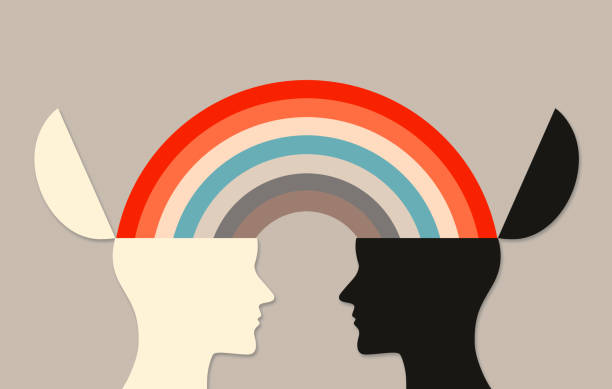
The Doubter’s Guide to Science and Evidence: How to Think, Not What to Think
True confidence isn’t born from blind faith. It’s forged in the fire of questioning. In a world awash with conflicting claims, from health fads to grand conspiracy theories, the most empowering skill you can develop is the ability to navigate doubt using the tools of science and evidence. This isn’t about memorizing facts or bowing to authority in a lab coat. It’s about adopting a mindset—a doubter’s guide—that transforms uncertainty from a source of anxiety into a powerful engine for clear thinking.
At its core, science is not a collection of settled truths. It is a rigorous, self-correcting process for asking questions about the natural world. Its power lies in a simple, brutal rule: ideas must face the evidence and can be overturned by better evidence. This means a scientific claim comes with its own receipt—the methodology. How was the data gathered? Can the experiment be repeated by a skeptic in another lab? Who funded the research? A claim without a transparent, testable process is just an opinion dressed up. When you encounter a new piece of information, your first question should not be “Do I believe this?“ but “How do they know this?“
This leads directly to the bedrock concept of evidence. Not all evidence is created equal. Anecdotes—powerful, personal stories—are the weakest form. They are emotionally compelling but prove nothing, as they are isolated, unverified, and prone to every bias. Stronger evidence comes from systematic observation and controlled experiments, especially when reviewed and replicated by independent parties. The gold standard is the preponderance of evidence—the collective weight of numerous studies from different angles all pointing to the same conclusion. This is why we trust that gravity is real or that vaccines work; not because of one perfect experiment, but because mountains of diverse evidence leave no other plausible explanation.
Your doubt is your first line of defense, but it must be applied evenly. This is the principle of intellectual honesty, and it’s the hardest part. It’s easy to be skeptical of a pharmaceutical company’s study, and you should be. But you must apply the same fierce scrutiny to the wellness influencer selling a miracle tea. Doubt your own cherished beliefs with the same vigor you doubt your opponent’s. This is not self-defeat; it is intellectual strength. Ask yourself: “What evidence would change my mind?“ If the answer is “nothing,“ then you are not engaged in critical thinking—you are holding a belief.
Finally, harness the power of “I don’t know.“ In our rush for certainty, we often fill gaps in our knowledge with comfortable stories, however poorly supported. Conspiracy theories, for instance, thrive in these gaps, offering a neat, if sinister, narrative that replaces the messy, complex, and often unsatisfying answers that real evidence provides. The scientific mindset embraces “I don’t know” as a starting point for inquiry, not an endpoint of failure. It requires the humility to accept that some questions are not yet answered and the patience to await better evidence.
Ultimately, this guide is about building unshakeable confidence from the inside out. Confidence that doesn’t come from having all the answers, but from trusting your process for finding them. When you learn to weigh evidence, spot weak methodology, and apply doubt consistently, you are no longer a passive consumer of information. You become an active investigator of your own reality. You navigate headlines, social media claims, and life’s big decisions not with confusion, but with a clear, discerning filter. Your doubt stops being a source of fear and becomes your most reliable tool. In the end, you are not just doubting the world around you; you are building a mind that can withstand it.
Doubters Blog
Shielding Your Self-Worth from the Impact of Doubting Comments

The Art of Finding Constructive Critics: A Guide to Intellectual Growth