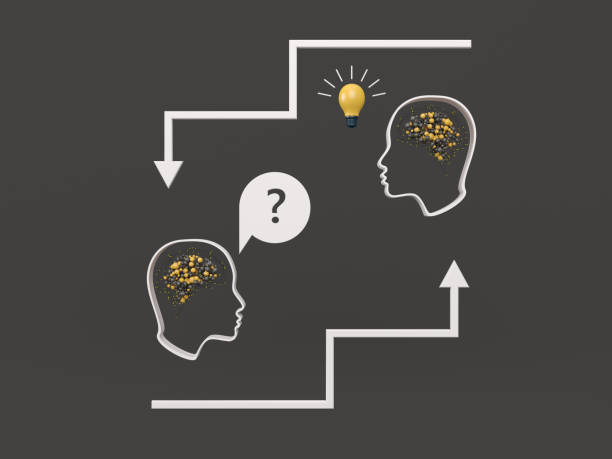
Doubt is often perceived as a weakness, a state of paralyzing indecision that stalls progress. Yet, a closer examination of history reveals a profound truth: doubt is not the antithesis of progress but its essential catalyst. Social and ethical advancement has rarely sprung from unwavering certainty; instead, it has been propelled by the courageous individuals and societies that dared to question the foundations of their world. Doubt operates as the engine of progress by challenging entrenched norms, fostering intellectual humility, and creating the necessary space for empathy and new moral frameworks to emerge.
The most visible contribution of doubt to social progress is its role in dismantling unjust systems. Every major reform movement began with a seed of skepticism. When abolitionists first doubted the morality of chattel slavery, they were opposing an economic and social institution centuries old, defended by religious and scientific “certainties.“ Their doubt was not an abstract philosophical exercise but a dangerous ethical stance that ultimately unraveled a global atrocity. Similarly, the fight for gender equality was born from women doubting the “natural order” that confined them to domestic spheres, and the civil rights movement grew from a fundamental doubt in the legitimacy of segregationist laws. In each case, progress was initiated by refusing to accept the prevailing dogma, using doubt as a tool to expose the contradictions between professed values and lived reality. Without this capacity to question, societies would remain statically bound to their past injustices, mistaking tradition for truth.
On an ethical level, doubt is the bedrock of intellectual humility, a quality indispensable for moral growth. Certainty breeds absolutism, often leading to dogma, intolerance, and the suppression of dissent. History is littered with tragedies—from witch hunts to ideological purges—perpetrated by those utterly convinced of their own righteousness. Doubt, in contrast, introduces a necessary pause. It asks us to consider that we might be wrong, that our perspective is limited, and that others may possess valid experiences. This Socratic posture opens the door to dialogue, compromise, and the evolution of more nuanced ethical understandings. The scientific method, arguably one of humanity’s greatest ethical frameworks for pursuing truth, institutionalizes this productive doubt. It requires hypothesis testing, peer review, and a willingness to abandon theories in the face of new evidence. This model of provisional understanding has bled into social discourse, encouraging evidence-based policies and a healthy skepticism of absolute claims, thereby protecting societies from the perils of unchallenged authority.
Furthermore, doubt creates the cognitive and emotional space for empathy, which is fundamental to ethical expansion. When we are certain about a group of people—that they are inferior, dangerous, or incapable—we close ourselves off to their humanity. Doubt disrupts this certainty. It prompts questions like, “What if their experience is different from mine?“ or “Could my perception be flawed?“ This internal questioning is the first step toward recognizing the subjectivity of one’s own worldview and acknowledging the validity of another’s. The progressive extension of rights to marginalized communities—based on race, sexuality, or disability—has followed this pattern. It required a critical mass of people to doubt the stereotypes and prejudices they were taught, to listen to lived experiences, and to ultimately expand their circle of moral concern. Doubt, therefore, acts as the solvent that breaks down the rigid barriers of “us versus them,“ allowing for a more inclusive ethical landscape.
In conclusion, far from being an obstacle, doubt is the indispensable catalyst for a healthier, more just society. It is the force that questions the unquestionable, softens the hard edges of dogma, and bridges the gap between isolated individuals and a common humanity. While certainty offers the comfort of simplicity, it is doubt that provides the rigor for truth and the compassion for justice. To embrace doubt is not to advocate for cynicism or inaction, but to champion a mindset of perpetual curiosity, humility, and openness. The path of social and ethical progress is not a straight line illuminated by the blinding light of conviction; it is a winding road navigated by the sober, questioning, and ultimately transformative lamp of doubt.