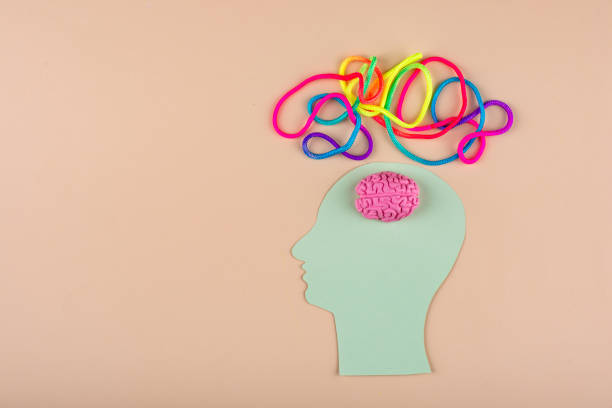
Doubt is often cast as the enemy of progress, a shadowy force that undermines confidence and paralyzes action. We are conditioned to seek certainty, to project unwavering conviction, and to view doubt as a sign of weakness or intellectual failure. Yet, when examined not as a destination but as a tool, doubt reveals itself to be one of the most potent catalysts for genuine personal growth. Far from being an obstacle, thoughtful doubt is the engine of critical thinking, the gateway to deeper understanding, and the necessary precursor to authentic, self-directed evolution.
At its core, productive doubt is the willingness to question assumptions—both those imposed by the external world and, more importantly, those we hold about ourselves. Personal growth stagnates in the soil of unchallenged beliefs. When we unquestioningly accept our limitations, our ingrained narratives about who we are and what we can achieve, we build a prison of our own making. Doubt acts as a liberator, asking, “Is this truly my belief, or one I inherited?“ or “Is this limitation real, or simply a story I keep telling myself?“ This internal skepticism dismantles complacency. It pushes us to re-evaluate our values, our goals, and our paths, ensuring that our lives are built on a foundation of conscious choice rather than unconscious habit. The person who never doubts their chosen career may wake up at fifty realizing they lived a life designed by others. The doubt that nags at them earlier is not a foe, but a guide.
Furthermore, doubt is the indispensable partner of intellectual and emotional maturity. Blind faith in information, ideologies, or leaders leaves us vulnerable and shallow. Doubt drives inquiry; it compels us to seek evidence, to listen to opposing viewpoints, and to refine our perspectives. This process builds resilience and adaptability. A person who has doubted and examined their beliefs holds them with more strength and flexibility than one who has never questioned. They understand the nuance, the counter-arguments, and the complexity of their position. This cultivated open-mindedness, born of doubt, allows for empathy and reduces rigid dogma. In relationships, doubting our initial reactions—questioning whether our anger is justified or if we have misunderstood a loved one’s intent—can prevent conflict and foster deeper connection. It is the tool that allows us to move from black-and-white thinking into the nuanced landscape of human experience.
However, the utility of doubt hinges crucially on its application. There is a profound distinction between corrosive doubt and constructive doubt. Corrosive doubt is cyclical, self-focused, and paralyzing. It whispers, “You are not capable,“ and offers no path forward. Constructive doubt, the tool for growth, is question-focused and action-oriented. It asks, “How can I become capable?“ and seeks answers. The former undermines the self; the latter challenges the method. The goal of using doubt effectively is not to descend into perpetual skepticism where nothing is ever trusted, but to pass through a refining fire toward a more robust and earned understanding. It is a means, not an end.
Ultimately, personal growth is not the accumulation of unchallenged certainties, but the evolving wisdom to navigate life’s inherent uncertainties. Doubt, when wielded with courage and intention, is the mechanism that makes this possible. It breaks down outdated versions of the self to make room for new growth. It replaces fragile certainty with resilient understanding. To embrace doubt as a tool is to commit to a lifelong journey of learning and re-evaluation. It acknowledges that the unexamined life is not worth living, and that the examined life is necessarily punctuated by questions. In this light, doubt is not the darkness that hinders growth, but the fertile ground from which a more authentic, thoughtful, and adaptable self can continually emerge.