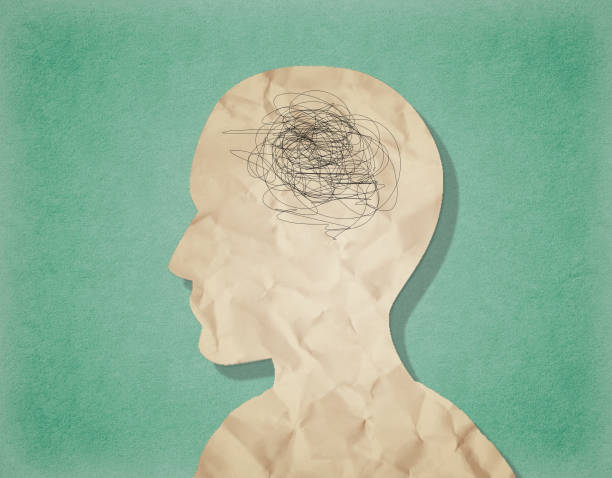
A household governed by black-and-white thinking is one where complexity is collapsed into simplistic dichotomies: good or bad, right or wrong, success or failure, with us or against us. This rigid cognitive framework, often employed by parents seeking to impose order, certainty, or control, creates a distinct psychological environment for a child. The impact of growing up in such an atmosphere is profound and multifaceted, shaping an individual’s emotional regulation, worldview, and interpersonal relationships long into adulthood.
The most immediate effect is on the child’s developing sense of self. In a black-and-white household, love and approval are frequently conditional, tied to specific behaviors or achievements deemed “good” or “right.“ A child who receives a B+ instead of an A may be labeled lazy; a moment of anger may be condemned as disrespectful rather than understood as an emotional response. This teaches the child that their worth is not intrinsic but contingent on perfect adherence to narrowly defined standards. Consequently, they often develop a fragile self-esteem, vulnerable to the slightest criticism or perceived failure. They may become perfectionists, driven by a fear of the “bad” category, or conversely, they may rebel entirely, adopting a self-identity as the “black sheep” because that role feels more attainable than an impossible ideal.
This binary framework also severely constricts emotional intelligence. Emotions themselves are often judged as either acceptable or unacceptable. Sadness might be dismissed as weakness, or frustration condemned as ingratitude. Children learn to suppress, deny, or pathologize any feeling that falls into the disapproved category, losing touch with their authentic emotional landscape. They fail to learn the crucial skill of navigating nuanced, mixed emotions—the sadness within a happy memory, the love intertwined with anger. As adults, they may struggle with emotional regulation, experiencing emotions as overwhelming, all-or-nothing events, or they may become emotionally distant, having internalized the message that complexity is unsafe.
Furthermore, this upbringing warps one’s perception of the world and others. The external world is seen as a series of either/or choices and threats. People are quickly categorized as friends or foes, trustworthy or suspect, based on limited information. This mindset breeds judgmentalism and a lack of empathy, as there is little room for understanding mitigating circumstances, differing perspectives, or the gray areas of human motivation. Social interactions become minefields, as the individual fears saying the “wrong” thing or aligning with the “wrong” person. This can lead to social anxiety, isolation, or a pattern of unstable, intense relationships where others are idealized initially and then entirely devalued at the first disappointment—a classic feature of black-and-white thinking applied to partners and friends.
Perhaps one of the most insidious legacies is the impairment of critical thinking and resilience. Life’s challenges are rarely solved with absolute solutions. Yet, a child raised in a binary household is not equipped to tolerate ambiguity, weigh pros and cons, or craft compromises. Setbacks are catastrophic failures, not learning opportunities. This creates significant anxiety when facing complex decisions in education, career, or personal life, as the individual feels paralyzed without a clear “right” answer. The cognitive rigidity makes adapting to change exceptionally difficult, as new information that doesn’t fit the established schema can feel world-breaking.
Ultimately, growing up in a black-and-white thinking household installs a harsh internal critic that perpetuates the parent’s dichotomies. The world inside one’s own mind becomes as divided as the childhood home. However, understanding this impact is the first step toward healing. Through therapy, conscious effort, and new relational experiences, individuals can learn to recognize and challenge these ingrained patterns. They can practice self-compassion, embrace ambiguity, and discover the rich, challenging, and beautiful spectrum of gray that defines the human experience, finally freeing themselves from the confines of a world painted only in extremes.