Imagine you are on a game show. Three doors stand before you. Behind one is a car; behind the other two are goats. You choose a door, say Door A. The host, who knows what is behind every door, opens another door, revealing a goat. He then offers you a choice: stick with Door A or switch to the remaining unopened door. Most people feel that the odds are now fifty-fifty. Yet the mathematics says otherwise. Switching wins two out of three times. The resistance you feel to that conclusion is not a sign of weak intelligence—it is a doorway into understanding how human intuition collides with probabilistic reality.
The Monty Hall problem is more than a quirky puzzle. It is a compressed lesson in how to handle evidence, uncertainty, and the persistent voice of doubt. At first, your initial choice has a one-third chance of being correct. When the host opens a goat door, something crucial happens: he has revealed information, but only conditional on your original pick. If you were wrong initially—which happens two-thirds of the time—the host is forced to open the only other goat door, leaving the car behind the final door. Thus, switching reverses your initial odds. The car is behind the other door precisely because your first guess was probably wrong.
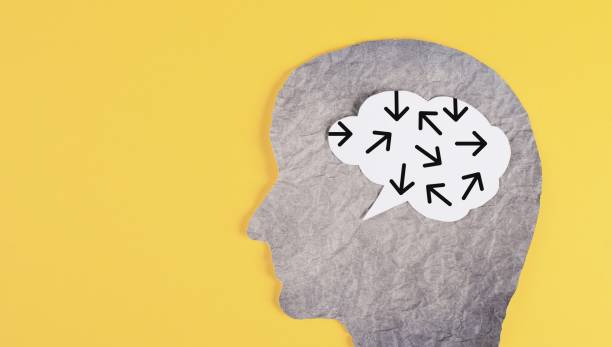
But why does this feel so unnatural? The answer lies in how our brains process probability. We tend to treat new evidence as if it rewrites the entire situation from scratch, discarding the history of how that evidence was generated. This is known as the base rate neglect or the failure to update prior probabilities. In the game show, the host’s action is not a random reveal; it is a deliberate, rule-bound action that carries information about what is behind the doors. Yet our gut instinct sees only two remaining doors and assumes symmetry. Doubt whispers, “It must be even odds.” That doubt is not your enemy—it is the starting point for a more rigorous form of thinking.
Developing a probabilistic and evidence-based mindset means learning to sit with that discomfort and ask a better question: “What process produced this evidence?” In the Monty Hall problem, the process is everything. A host who always opens a goat door, regardless of your choice, yields one outcome. A host who randomly opens a door and happens to reveal a goat yields a different probability. The distinction matters in medicine, law, finance, and every field where evidence arrives through filters of human design. A positive test result, a witness testimony, a news headline—each is a door opened by someone or something with its own rules. To interpret it correctly, you must understand the generative process behind it.
This is where doubt becomes a superpower rather than a weakness. Healthy doubt asks: What are the prior odds before this evidence? What is the likelihood of observing this evidence under alternative explanations? Am I confusing the probability of the evidence given a hypothesis with the probability of the hypothesis given the evidence? These are Bayesian questions, but you don’t need to run equations to think this way. You need only to cultivate a habit of assigning ranges of plausibility instead of binary true-or-false categories. When you hear a claim, pause. Instead of asking “Is this true?” ask “How likely is this to be true, and what additional information would shift that likelihood?”
The Monty Hall problem also exposes the illusion of certainty. After the host opens a goat door, many contestants feel a surge of confidence in their original choice. That confidence is not based on new evidence—it is based on a psychological attachment to a decision already made. The same attachment appears in everyday life. We cling to political views, health beliefs, or conspiracy theories not because the evidence supports them, but because changing our mind feels like admitting defeat. A probabilistic mindset reframes this. Changing your belief when probabilities shift is not a loss of face; it is an act of intellectual integrity. The most confident people are those who can say, “My certainty is calibrated. Here is the probability I assign, and here is what would change it.”
In the end, the Monty Hall problem is a mirror. It shows you your own resistance to counterintuitive evidence. But if you can walk through that resistance—if you can allow doubt to prompt a deeper investigation rather than a defensive retreat—you unlock a powerful mode of thinking. You begin to see the world as a series of uncertain, updating signals. The car may be behind a different door than you first thought. The goats are everywhere. But that’s okay. The glory is not in always picking right. The glory is in learning to update, to recalibrate, and to embrace the probabilistic nature of truth itself.