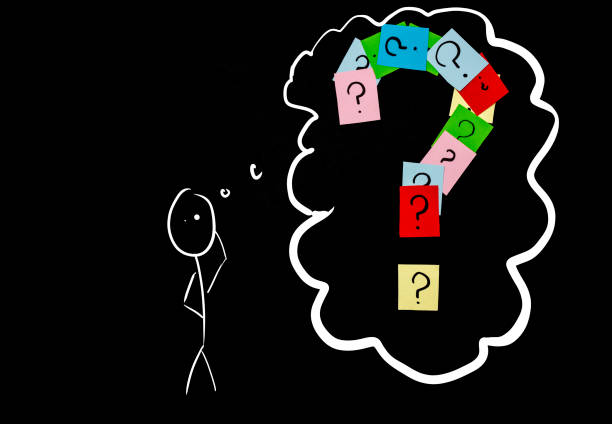
Every schoolchild learns that Columbus sailed the ocean blue, that the Industrial Revolution was an unbroken arc of progress, and that the American Civil War was fought solely over states’ rights. These tidy narratives feel solid because they have been repeated for generations, stamped into textbooks and carved into monuments. But beneath their polished surfaces lie omissions, distortions, and choices made by people with particular interests. The first step toward genuine historical literacy is not memorizing dates and names, but doubting the completeness of the story we have been handed.
History is not what happened; history is what has been selected, arranged, and narrated about what happened. The archive is never neutral. What survives from a past era depends on who had the power to write, print, preserve, and destroy. For centuries, the voices of colonized peoples, women, enslaved individuals, peasants, and dissidents were systematically excluded from the official record. When a historian writes about the “age of exploration,“ the word itself reveals a perspective: exploration for whom? The people whose shores were approached, whose resources were extracted, and whose societies were dismantled did not call it exploration. They called it invasion. The accepted narrative does not simply describe events; it encodes a set of values that elevate certain actors and erase others.
Consider the myth of the “Dark Ages.“ For generations, students were taught that the fall of Rome plunged Europe into centuries of ignorance, superstition, and stagnation, only to be rescued by the Renaissance. This narrative survives because it flatters the modern West and frames its own intellectual traditions as the triumph of light over shadow. Yet a closer examination reveals a vibrant world of Islamic scholarship, Celtic art, Byzantine diplomacy, and Slavic trade networks. The “Dark Ages” were dark primarily because later scholars chose not to look, or looked through lenses designed to make certain regions and cultures invisible. The accepted timeline was not discovered; it was constructed to support a particular origin story for modern Europe.
The same dynamic shapes national histories. Every country has its founding myths: the noble revolution, the virtuous war, the inevitable expansion across a “wilderness.“ These stories serve a powerful social function, forging unity and inspiring loyalty. But unity purchased through selective memory is fragile and costly. When the shadow side of a nation’s past emerges, the confrontation can trigger denial, rage, and a sense of betrayal. This is why “revisionism” has become a slur in popular discourse, as if revisiting history with new evidence and broader perspectives were a form of treachery. In reality, all honest history is revisionist. The discipline grows by correcting its own oversights. A narrative that cannot be questioned is not history; it is dogma.
Doubt, then, is not the enemy of historical understanding. It is the very mechanism by which understanding deepens. When we ask who wrote the source, who funded the archive, or who benefits from a particular interpretation, we are not attacking the past. We are honoring its complexity. Doubt compels us to seek out the silences. It pushes us to read against the grain, to notice what a chronicler took for granted, and to imagine the experiences of those who left no written trace. It reminds us that a single document can be read as an artifact of its time, not as a transparent window onto reality.
But there is a hazard. In a digital age saturated with conspiracy theories, it is tempting to reject all established knowledge as corrupt and to embrace a counter-narrative that feels more empowering. That is not critical thinking; it is the same reflexive credulity wearing a different mask. True historical doubt requires rigor. It demands that we evaluate evidence, weigh competing interpretations, and accept uncertainty without surrendering to cynicism. The goal is not to believe nothing, but to believe the best-supported account while holding space for its incompleteness. This is an uncomfortable position, because it means living without the comfort of absolute certainty. Yet that discomfort is precisely where maturity is born.
When we examine the construction of historical narratives, we also awaken to our own biases. Each generation rewrites the past in its own image, and we are no exception. The questions we ask today about race, empire, gender, and climate shape which aspects of the past we notice and which we ignore. Future historians will look at our textbooks and see the blind spots we cannot perceive. This realization should humble us, but it should also liberate us. If history is always partial, then there is always room for new voices, new sources, and new interpretations. There is always room for us to participate in the ongoing work of remembering.
The accepted story is not the whole story. Behind every official version lies a forgotten alternative, a suppressed detail, a silenced witness. To doubt the narrative is not to reject the past, but to meet it with the respect it deserves. It is to recognize that the people who came before us were as complex, contradictory, and full of possibility as we are. In that recognition lies the foundation of a truly critical spirit, and an unshakeable confidence rooted not in certainty, but in the courage to keep asking questions.