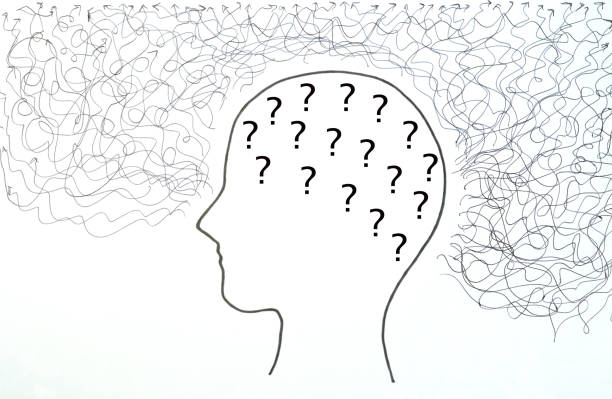
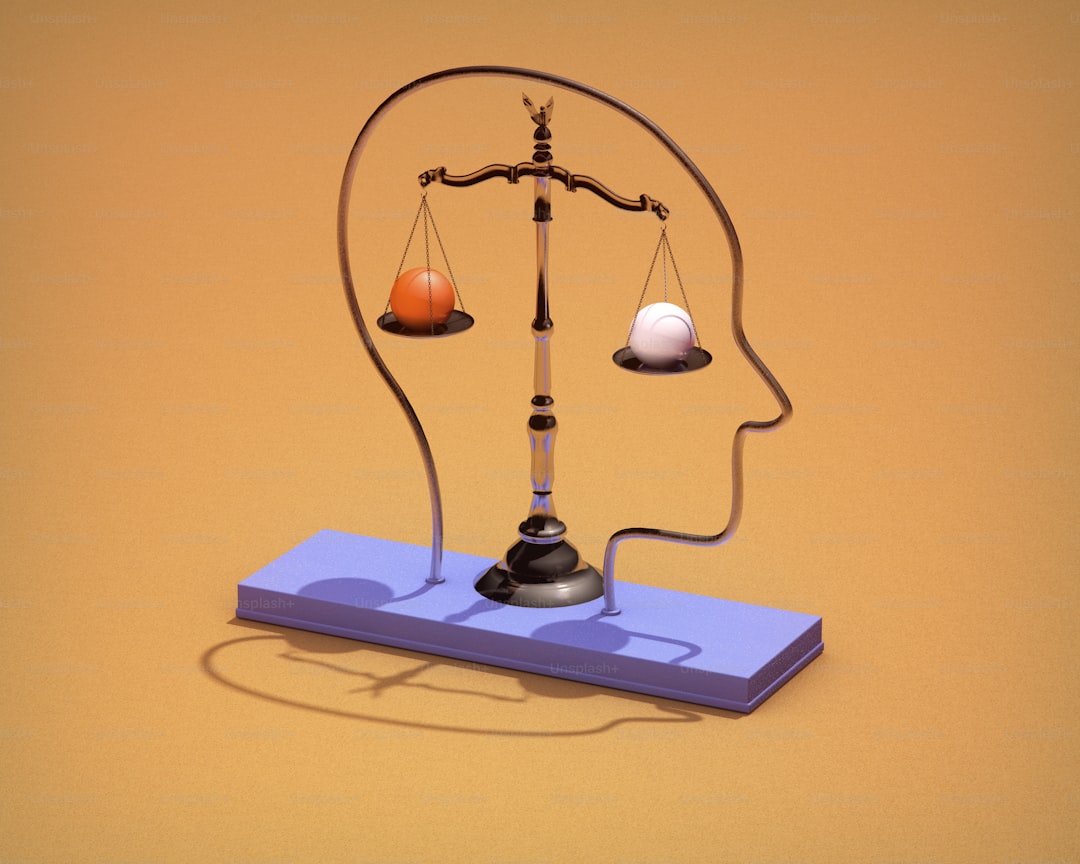
The question of who we are has haunted philosophers for millennia, but perhaps no modern insight has destabilized our sense of self more than the discovery that identity is not a fixed essence but an ongoing narrative. We tell stories about ourselves—to ourselves, to others, in diaries, in therapy sessions, in the quiet moments before sleep. These stories feel like the bedrock of our being. Yet when we doubt their truthfulness, when we question whether we are the author or merely the character, we stumble into a profound existential vertigo that shakes free will and consciousness to their foundations.
The narrative self is a compelling model. Psychologists like Dan McAdams have shown that humans naturally construct life stories that provide coherence, purpose, and continuity. We organize memories, aspirations, and failures into a plot with a protagonist—me—who learns, grows, and strives. This narrative gives us a sense of agency: I am the one who chose that career, who fell in love, who made mistakes and will try again. But here is the doubt that gnaws at the edges: how much of that story is written by forces beyond our control? Genetics, upbringing, culture, trauma, unconscious biases, and the sheer randomness of circumstance all contribute to the raw material of our lives. The story I tell myself about why I am shy, or brave, or ambitious may be a post-hoc rationalization, not a true act of authorship.
This doubt intensifies when we consider consciousness itself. If the self is a story, who is the storyteller? The conscious mind often feels like a narrator sitting in a private theater, observing thoughts and deciding which ones to voice. But neuroscientific evidence suggests that many of our decisions are made unconsciously before we become aware of them. The famous experiments by Benjamin Libet and later work by John-Dylan Haynes indicate that brain activity predicting a choice can precede conscious awareness by several seconds. If my brain has already decided before I “choose,” then my sense of free will may be a narrative illusion—a story I tell afterwards to maintain the fiction of control. The narrator is not the author; the narrator is the last to know.
This is where the debate over identity becomes particularly dizzying. If I am not the author of my choices, then am I even the author of my self? Consider the concept of “revision.” We constantly update our life stories—a new relationship recasts a past heartbreak as growth; a therapy session reframes childhood neglect as resilience. These revisions feel like acts of self-determination: I am reclaiming my past. But each revision is itself shaped by present circumstances, biases, and social pressures. The narrative self is not a fixed text but a living, shifting manuscript—and the editor is as much influenced by environment as by any inner core.
Yet doubt about authorship does not necessarily lead to nihilism. Paradoxically, embracing the constructed nature of identity can be liberating. If the self is a story, then we have some creative latitude. We are not bound by a single definitive version. We can experiment with new plots, adopt new metaphors, and reframe our struggles as chapters in a larger arc of learning. This is not the radical free will of a Cartesian soul making choices from outside the causal chain; it is a constrained agency—what philosopher Daniel Dennett calls the “center of narrative gravity.” We are the point around which the story organizes, even if we did not write all the lines.
The deepest doubt, however, remains: if the self is a narrative, what happens when the narrative breaks? Mental illness, trauma, or profound identity crises can shatter the coherence of the story. A person with dissociative identity disorder lives multiple, conflicting narratives. A stroke victim may lose the ability to weave memories into a continuous sense of self. These cases reveal that identity is fragile, contingent, and dependent on biological and psychological machinery that can malfunction. They force us to ask: if the story can be broken, was there ever a real “I” beneath it? Or is the self merely a useful fiction, a ghost in the narrative machine?
Philosophically, this points to a middle ground between absolute free will and pure determinism. We are co-authors of our lives, not sole authors. We inherit a plot—our biology, history, culture—and we improvise within its constraints. Consciousness allows us to reflect on our story, to notice when we are repeating old patterns, and to attempt new directions. The doubt that arises from this process is not a weakness but a tool. It prevents us from mistaking our narrative for absolute truth. It humbles us, reminding us that we are works in progress. And it empowers us: if the story is not finished, we can still revise.
Ultimately, debating free will, consciousness, and identity through the lens of the narrative self reveals that doubt is not an enemy of confidence. It is a necessary condition for authentic agency. To doubt is to question whether the story we tell is true—and in that questioning, we become more honest narrators. We may never be the sovereign authors of our identity, but we can be conscientious editors, aware of our biases, open to new chapters, and willing to rewrite when the old plot no longer serves us. That is the unshakeable confidence that comes not from certainty, but from the courage to keep asking.