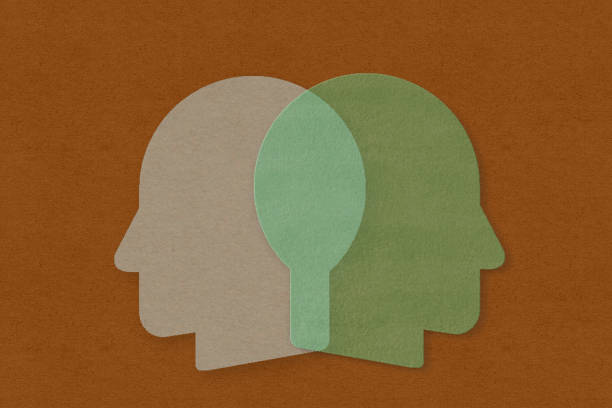
The human mind is a battlefield where two ancient generals wage a quiet war. On one side stands the skeptic, armed with logic, evidence, and a relentless demand for proof. On the other side stands the intuitive self, guided by gut feelings, pattern recognition, and the silent knowing that cannot always be explained. For anyone building a healthy identity as a questioner, the challenge is not to choose one general over the other, but to recognize that both are essential allies. The true art of thinking lies in integrating these two forces, allowing them to inform one another without letting either dominate. This integration is neither a compromise nor a truce; it is a dynamic dance that transforms doubt from a source of paralysis into a catalyst for deeper understanding.
Skepticism, in its purest form, is not cynicism. It is the disciplined habit of withholding judgment until sufficient evidence is examined. It is the engine of science, the bedrock of critical thinking, and the shield against manipulation. When we question a claim, a belief, or even our own motives, we engage the skeptical mind to test for consistency, plausibility, and factual grounding. This process protects us from falling for conspiracy theories, scams, or self-deception. Yet skepticism alone can become a prison. If we demand absolute certainty before we act, we may never act at all. The skeptic who refuses to trust any intuition, any first impression, or any leap of faith runs the risk of analysis paralysis, forever waiting for a perfect dataset that never arrives.
Intuition, on the other hand, is the mind’s rapid-processing system, built from years of experience, emotional memory, and unconscious pattern recognition. It is the whisper that says something feels wrong about a person or a decision, even when all the visible facts align. Intuition is not magic; it is the brain’s way of shortcutting through complexity. It can alert us to danger, spark creative insights, and guide us toward choices that logic alone cannot justify. But intuition is also fallible. It is vulnerable to biases, emotional states, and social conditioning. The intuitive self can be seduced by a charismatic narrative, misled by stereotypes, or blinded by wishful thinking. Left unchecked, it can lead us into confirmation bias or conspiracy thinking, where we feel certain about something that evidence refutes.
The integration of these two modes requires a practice of conscious dialogue. Imagine a courtroom inside your mind. The skeptic is the prosecutor, demanding evidence and cross-examining every claim. The intuitive self is the witness, offering testimony based on lived experience and felt sense. The judge—your conscious awareness—must weigh both contributions. A healthy identity as a questioner does not silence one voice in favor of the other. Instead, it asks: What does the evidence say? And what does my inner knowing tell me about this situation? When these answers conflict, the tension itself becomes data. The conflict is a signal to investigate further, not to shut down.
For example, suppose you encounter a new idea that feels intuitively exciting, but your skeptic finds little supporting data. Rather than dismissing the intuition as foolish or the skepticism as cold, you can hold both in suspension. You might ask: Why does this idea feel true to me? Is it because it aligns with past experiences, or because it satisfies an emotional need? Meanwhile, you ask: Is the lack of evidence due to the idea being false, or simply because the evidence is not yet available? This nuanced inquiry prevents premature conclusions. Similarly, when your skeptic rejects a possibility that your intuition insists on, you might explore the source of that gut feeling. Could it be a buried memory, a pattern your conscious mind hasn’t yet recognized? By treating the conflict as a puzzle rather than a tug-of-war, you honor both sides.
Building this integrated identity also means accepting that certainty is a spectrum, not a binary. The skeptic wants black and white; the intuitive lives in shades of gray. A mature questioner learns to hold probabilistic thinking, acting on imperfect information while remaining open to revision. You can trust your intuition enough to take a step forward, while using your skeptical mind to test the ground as you go. This is the essence of adaptive confidence—the kind that allows you to question yourself without undermining your ability to act.
Ultimately, the goal is not to eliminate doubt but to channel it. Doubt that arises from the skeptic’s critique can refine your intuition, making it sharper and more reliable. Doubt that stems from intuitive unease can prompt your skeptic to look deeper for hidden flaws. When these two voices learn to speak to each other, they produce a third voice—a wisdom that is neither purely rational nor purely emotional, but a synthesis of both. This is the voice of the integrated questioner, who knows that the most powerful questions are those that embrace paradox rather than flee from it. In that embrace, doubt becomes not an enemy to conquer, but a partner in the lifelong pursuit of truth.