We live in an age that worships certainty. From viral social media posts to political campaign slogans, from self-help gurus to corporate mission statements, the message is relentlessly the same: be confident, know your truth, and never look back. To hesitate is to appear weak. To question is to reveal incompetence. To admit uncertainty is to invite judgment. Yet buried beneath this cultural obsession with unwavering conviction lies a profound and liberating truth. The deepest strength does not come from the absence of doubt, but from the willingness to sit with it, to examine it, and to let it reshape what you think you know.
The most powerful thinkers in human history did not achieve greatness because they silenced their inner skeptic. They achieved greatness because they listened to it. Socrates, the very foundation of Western philosophy, was considered the wisest man in Athens not because he had all the answers, but because he was acutely aware of what he did not know. His strength lay in his intellectual humility. He understood that the posture of questioning is not a sign of a deficient mind, but a sign of a growing one. True confidence, paradoxically, requires the courage to say “I might be wrong” and the curiosity to explore that possibility.
This capacity to embrace doubt is not the same as being indecisive or perpetually uncertain. It is a deliberate practice of holding your beliefs lightly while remaining deeply engaged with them. It is the difference between a closed fist and an open hand. A closed fist can grasp a single idea tightly, but it cannot receive anything new. An open hand can hold an idea firmly while still allowing new information to enter. The most resilient people are not those who never experience self-doubt, but those who have learned to treat doubt as a signal rather than a threat. When doubt arises, it is not an attack on your identity. It is an invitation to examine your foundations.
Consider how this principle applies to one of the most challenging forms of doubt encountered in the modern world: the pull of conspiracy theories. A person who has built a healthy identity as a questioner does not respond to a conspiracy with either immediate dismissal or immediate acceptance. Instead, they investigate the machinery of their own hesitation. They ask themselves why a particular claim feels compelling. They examine the emotional payoff of believing it versus not believing it. They weigh the evidence with an awareness of their own cognitive biases. This is doubt as a diagnostic tool. The person who can do this is not easily manipulated. The person who cannot is vulnerable to any narrative that offers the seductive comfort of absolute certainty.
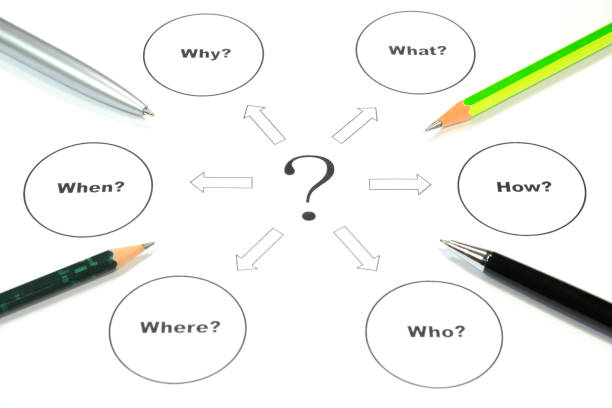
The process of building this identity begins with a simple but radical shift in perspective. Instead of viewing doubt as an enemy to be defeated, see it as a companion on the journey of growth. When you feel the familiar tightening in your chest, the nagging thought that you are not good enough or that you do not know enough, resist the urge to immediately push it away. Take a breath and ask it a question in return. What exactly am I doubting? Is this doubt based on fact or fear? What would it mean to be wrong? The goal is not to eliminate the doubt, but to understand its source. Often, what feels like a personal failing is actually the necessary friction of learning.
This is where true confidence is forged. It is not the brittle confidence that shatters under scrutiny. It is the flexible confidence that bends in the wind of new information and springs back, stronger for having been tested. A person who has reconciled their identity with their capacity for uncertainty becomes immensely difficult to manipulate. They are not moved by slogans, not swayed by fear mongering, and not paralyzed by the possibility of making a mistake. They understand that making a mistake is not a verdict on their worth as a person. It is simply data, information to be integrated and learned from.
In a world that increasingly demands that we choose sides and dig trenches, the ability to hold healthy doubt is a form of resistance. It is resistance against the tyranny of false simplicity. It is resistance against the pressure to have all the answers before you have fully understood the questions. The greatest gift you can give yourself is the permission to not know, combined with the discipline to keep asking. That is not weakness. That is the foundation of unshakeable strength.