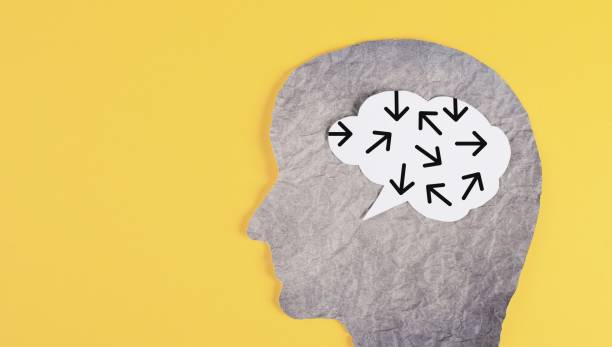
The impulse to find a community of fellow questioners is a natural and powerful one. When you have spent months or years wrestling with doubt—whether about your own abilities, the narratives fed to you by institutions, or the very nature of reality—the longing for kindred spirits becomes almost physical. You dream of a room full of people who will finally understand, who will nod along as you deconstruct every assumption, who will validate your skepticism as a sign of intelligence rather than a character flaw. But this longing carries a hidden danger. A community built solely on shared doubt can, if you are not careful, morph into something far more insidious: an echo chamber that replaces one set of unexamined beliefs with another. The healthiest communities of questioners are not those that agree on what to doubt, but those that actively cultivate productive disagreement among themselves.
The fundamental challenge arises from the very nature of doubt itself. Doubt is a dynamic, restless energy. It does not sit still. When a group of questioners gathers, they are drawn together by a common enemy: dogma, certainty, complacency. Yet once that enemy is identified, the group risks defining itself by what it opposes rather than by a shared commitment to the process of questioning. This is where the paradox emerges. A community that forms around a shared set of doubts—say, skepticism of mainstream media, distrust of government overreach, or rejection of traditional career paths—will quickly develop its own orthodoxy. The unspoken rule becomes: We all agree that these things are dubious. And suddenly, anyone who questions that shared skepticism is seen as a traitor to the cause. The questioners become the questioned, and the group fractures or hardens.
To avoid this fate, a thriving community of questioners must build its identity not on the content of its doubts but on the practice of doubting itself. This requires deliberate structural choices. The most effective such communities operate as what I call “Socratic salons”—spaces where the goal is not consensus but clarity. In these spaces, members are trained to value the quality of a question over the comfort of an answer. A member who challenges the group’s foundational skepticism about vaccines, for example, should not be met with suspicion but with genuine curiosity: What evidence leads you to reconsider? How did you arrive at that position? This is deeply uncomfortable. It requires vulnerability and intellectual humility. But it is precisely this discomfort that prevents the group from calcifying into a new dogma.
Another critical element is the deliberate inclusion of perspectives that the group finds alienating. A community of questioners that only includes people who question from the same political or philosophical angle is not a community of questioners at all; it is a club for the likeminded. A healthy community actively recruits and welcomes those who doubt different things for different reasons. The atheist and the mystic can both be fellow questioners—not because they agree on the nature of the divine, but because they both refuse to accept an inherited worldview without examination. The left-leaning conspiracy debunker and the right-leaning institutional skeptic can both find common ground in their commitment to evidence-based inquiry, even as they arrive at radically different conclusions. This kind of diversity is not a threat to community cohesion; it is the very thing that keeps the community alive and growing.
Furthermore, a community of questioners must recognize that doubt is not an end in itself but a tool for building a more robust relationship with truth and action. Some members may eventually move beyond doubt into a provisional confidence—a confidence that remains open to revision but is solid enough to act upon. This should be celebrated, not mourned. The goal of the community is not to keep everyone in a permanent state of paralysis, but to equip each member with the intellectual and emotional tools to navigate uncertainty and then to act in good faith. When a member finds a stance they can stand on, even temporarily, the community should honor that choice while also gently reminding them to keep one foot in the river of uncertainty.
Finally, the healthiest communities of questioners develop rituals that reinforce their commitment to process over product. They might begin each meeting with a “review of blind spots”—a practice where members name something they have not questioned recently, something they have taken for granted. They might employ a rotating “devil’s advocate” role, where one member is assigned the task of defending the most unpopular position in the room. They might keep a “collection of discarded certainties”—a digital or physical archive of beliefs that members once held strongly and later abandoned. These rituals serve as constant reminders that the community’s purpose is not to find a final resting place for the mind, but to keep the mind moving.
In the end, the paradox of shared doubt is that it must always be undone from within. You cannot build a fortress for your skepticism without it becoming a prison. The community of fellow questioners that will truly empower you is not the one that echoes your voice back to you, but the one that challenges your voice to grow stronger through conflict and collaboration. It is a community where you are loved not for what you doubt, but for how deeply and honestly you doubt. And that is a love worth cultivating, a home worth building, a journey worth taking together.