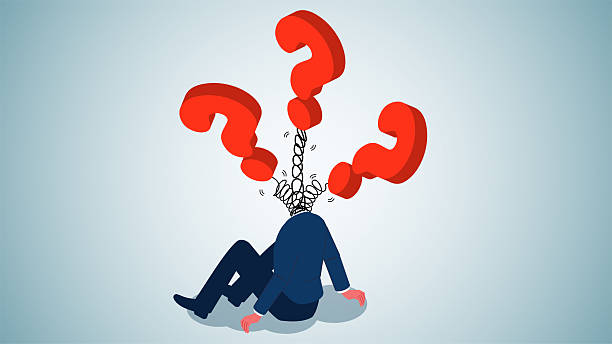
In every close relationship, a silent question lingers beneath the surface: If they truly knew me, would they still want me here? This is the doubt of authenticity—the fear that our real self, once revealed, will be met with rejection rather than acceptance. We often treat vulnerability as the solution to this doubt, as if simply opening up will dissolve uncertainty. Yet the most honest path to connection involves not erasing doubt but learning to move through it. When we examine the role of doubt in building authenticity with others, we discover that vulnerability is not the absence of uncertainty but the courage to act despite it.
The desire to be genuinely known is one of our deepest human needs. We crave relationships where we can drop the performance, set aside the carefully curated version of ourselves, and simply exist as we are. But this desire clashes with a powerful protective instinct. Our minds are wired to scan for threats, and social rejection is one of the most ancient dangers we face. Every time we consider sharing something raw—a fear, a failure, a hidden opinion—the brain fires a warning signal. What if they use this against me? What if they see me as weak? What if they leave? This is the doubt that holds authenticity hostage.
Many self-help frameworks advise us to silence this doubt entirely, to push past it with brute force. But this approach overlooks something crucial: doubt is not the enemy of vulnerability; it is its necessary companion. Without doubt, vulnerability would require no courage. It would be merely transparency, a mechanical exposure without emotional risk. The value of being vulnerable comes precisely from the fact that we do not know the outcome. We choose to share even when we cannot guarantee safety. That uncertainty is what makes the act meaningful to both giver and receiver. When someone trusts us with their doubt-filled vulnerability, we recognize the gift because we know what it cost them.
The problem arises when doubt becomes paralyzing rather than informing. In relationships, this manifests as a chronic withholding of the self. We learn to smile through sadness, to agree when we disagree, to hide our insecurities behind walls of competence. We convince ourselves that we are protecting the relationship, but in reality, we are starving it. Authenticity cannot grow in the absence of risk. A relationship built on selective disclosure is like a house with only the front wall painted—it looks acceptable from one angle but crumbles under inspection. The doubt that prevents us from showing our full selves is the same doubt that eventually convinces us we are alone even when surrounded by people.
To break this cycle, we must reframe how we experience doubt in social contexts. Instead of viewing it as a warning to retreat, we can see it as a signal that we are approaching something important. That flutter in the chest when we consider telling a partner about a past mistake is not a stop sign; it is a compass pointing toward deeper intimacy. Every relationship has a threshold of trust that expands only when we dare to cross it. The first time we share a deeply embarrassing story and are met with compassion rather than mockery, the doubt shrinks—not because it disappears, but because we have built evidence that we can survive revelation.
However, it is equally important to recognize that not all doubt should be ignored. Our instincts sometimes warn us about genuine danger, such as when a person has repeatedly proven untrustworthy. The key is to distinguish between the doubt that arises from past trauma or perfectionism and the doubt that arises from a legitimate threat to our wellbeing. This requires self-awareness and a willingness to examine our own fears. Are we afraid of being rejected because of a realistic assessment of the other person’s character, or because we have internalized an old message that we are not good enough? Answering this question honestly is itself an act of vulnerability with ourselves.
Building authenticity with others is not a one-time event but a recursive process. Each moment of courageous sharing reshapes the relationship, creating a small pocket of safety that makes the next revelation easier. Over time, the doubt does not vanish, but it becomes less dominant. We learn to hold it alongside our desire for connection, allowing both to exist without one silencing the other. This is the paradox of vulnerability: the very uncertainty we try to escape is the force that deepens our bonds. A relationship that has weathered doubt is stronger than one that has never been tested, because both parties know they have chosen each other freely, despite the risks.
In the end, the goal is not to become fearless in relationships but to become brave enough to move forward with fear present. We never fully know how another person will respond to our honesty. That is the nature of genuine connection—it requires surrender to the unknown. The doubt that accompanies this surrender is not a flaw to be eliminated but a feature of authentic human intimacy. When we embrace it, we discover that vulnerability does not weaken us. It reveals the strength that was always there, hidden beneath the armor we no longer need.