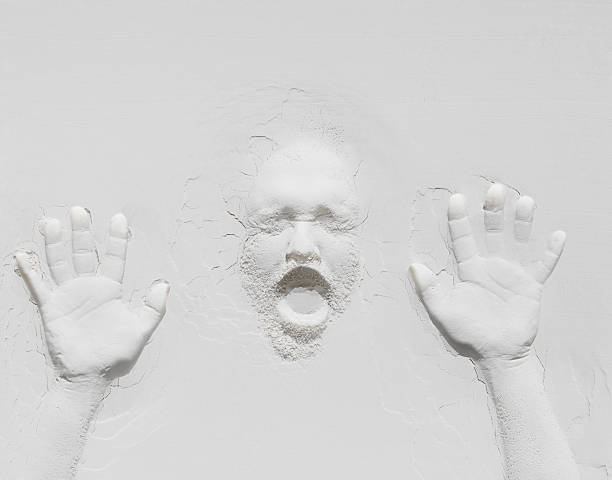
Every person carries within them a hidden architecture of beliefs so deeply ingrained that they feel like the furniture of the world rather than choices we have made. These core beliefs shape how we interpret experience, how we react to uncertainty, and how we define our very sense of self. Yet most of us never examine this foundation. We live atop it, never asking whether the ground beneath our feet is solid or whether we built it on shifting sand. Radical self-inquiry through philosophical doubt offers a rigorous method for doing just that: digging down to the bedrock of our assumptions and testing each one for stability.
The first step in this exercise is to recognize that the vast majority of what we consider “truth” is actually inherited. We absorb beliefs from parents, teachers, culture, and media, often before we possess the critical tools to evaluate them. These inherited beliefs become the invisible filters through which we perceive every new situation. A person raised to believe that hard work always leads to success will interpret failure as a personal moral failing, while someone raised with a more systemic view will see structural barriers. Neither person consciously chose their lens, but both live inside its constraints. The radical inquiry begins by asking: What if the lens itself is flawed? What if the core belief that feels most certain is actually the very thing holding you back from deeper understanding?
One powerful philosophical exercise for unmasking these core beliefs is borrowed from Descartes, but applied not to abstract skepticism about the external world but to the intimate landscape of your own identity. Set aside an hour in a quiet space. Write down, without judgment, the five or six statements that feel most true about yourself. These might be things like “I am not good with people” or “I am naturally anxious” or “I am the kind of person who always finishes what I start.” These statements feel like facts because you have repeated them to yourself for years. Now, for each statement, ask the following: How would I know this is true? What evidence would I accept as proof that it might be false? If I had been raised in a completely different family or culture, would I still hold this belief? This is not an exercise in replacing beliefs with their opposites. It is an exercise in loosening their grip, in recognizing that what feels like a solid floor is actually a network of stories you have chosen to believe again and again.
A deeper layer of this practice involves confronting existential doubt directly. Consider the possibility that many of your core beliefs are coping mechanisms designed to shield you from the terror of radical uncertainty. The feeling that you know who you are, that you have a stable identity, is itself a belief that can be interrogated. Who are you when all your roles are stripped away? Who are you when you are not a parent, worker, friend, or any label? This line of questioning can provoke anxiety, but that anxiety is not a sign that you are doing something wrong. It is a sign that you are brushing up against the raw material of existence before it has been packaged into comfortable categories. The philosopher Søren Kierkegaard called this the dizziness of freedom—the vertigo that comes when you realize that you are constantly choosing who you become, and that no external authority can relieve you of that responsibility.
To make this exercise practical, commit to a weekly “doubt diary.” Each week, choose one belief you hold about yourself, about others, or about the world. Write it down. Then spend fifteen minutes actively arguing against it, as if you were a skilled skeptic debating your own conviction. Look for counterexamples from your own life. Imagine a version of yourself who holds the opposite belief and describe how that version would navigate a typical day. The goal is not to abandon the belief but to hold it more lightly, to recognize that it is a hypothesis rather than a fact. Over time, you will begin to notice that even your most cherished certainties have a provisional quality. This is not a weakening of your sense of self but a strengthening of your capacity to adapt. The person who can examine their deepest assumptions without shattering is the person who can face any life circumstance with resilience.
The ultimate reward of this radical self-inquiry is not a final answer but a new relationship with doubt itself. Instead of viewing doubt as a weakness to be overcome, you learn to see it as a tool for continuous growth. Each doubt becomes a doorway into a more nuanced understanding of yourself and the world. The unshakeable confidence that emerges from this practice is not the brittle confidence of someone who never questions their foundations. It is the fluid, dynamic confidence of someone who knows that their foundations are strong enough to be examined, revised, and rebuilt again and again. That is the kind of confidence that cannot be shaken, because it no longer depends on the fiction of absolute certainty. It rests instead on the courage to keep asking, keep questioning, and keep becoming.