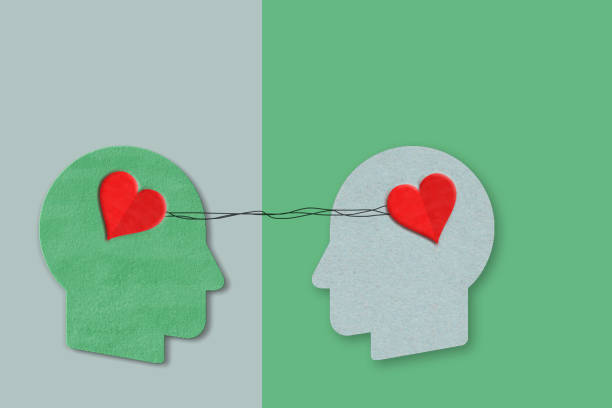
We often treat trust and doubt as opposites, but they are partners in a delicate dance. The question is not whether to trust or doubt, but when to deploy each for deeper connection. The person who never doubts becomes vulnerable to manipulation; the person who doubts everything becomes isolated. The skill we need is calibrated doubt—a discernment that honors both instinct and evidence.
The first principle of wise trust is to focus on patterns, not isolated events. A single lie does not destroy a relationship, but a repeated pattern of deception does. One act of kindness does not establish loyalty, but a consistent history of reliability does. When doubting others, ask: What does this person do when they think no one is watching? That reveals character more than any apology. Trust built on patterns is sturdy; trust built on moments is fragile. So when words and actions diverge, that is not a signal to withdraw but to observe more closely. Doubt, in this sense, is attentive observation, not suspicion.
Another crucial distinction is between reasonable doubt and pathological doubt. Reasonable doubt arises from incomplete information or conflicting cues. Pathological doubt arises from unresolved fears within ourselves, projected onto others. When you doubt someone, first ask: Am I seeing them clearly, or my own past traumas? If you have been betrayed before, your mind scans for betrayal. That is not reliable for judging a new person. The remedy is not blind trust but communicated transparency. Say, “When you cancel at the last minute, I feel uncertain about whether I can count on you.“ Naming your doubt turns it into a conversation, not a verdict. In healthy relationships, doubt invites dialogue, not attack.
Social dynamics also require a third distinction: contexts that reward trust versus those that reward doubt. In close friendships, false doubt costs more than false trust. Constantly suspecting a loyal friend erodes the bond. In professional settings, the cost of false trust can be severe. So calibrate your threshold based on stakes. Low risk? Trust liberally. High risk? Require more evidence. This is prudent, not cynical. You would not presume a friend guilty without cause, but you understand why a bank asks for proof of income. Both responses are legitimate.
Moreover, trust is not all-or-nothing. You can trust someone with your friendship but not your finances, with your secrets but not your car. When we say “I don’t trust this person,“ we usually mean in a specific domain. Clarifying that domain opens the door for nuance. A charismatic colleague may be excellent at ideas yet unreliable with deadlines. Trust their creativity while doubting their punctuality. That combination is accurate, not contradictory. This is harnessed doubt: it sharpens perception instead of blurring everything into general suspicion.
Finally, see doubt as a tool for empowerment, not anxiety. When you doubt another, you are also evaluating your own boundaries. Every doubt carries a message about what you need to feel safe. If you doubt a friend will keep a confidence, confidentiality is a core value for you. If you doubt a partner will prioritize your needs, you value mutual care. Honor these doubts as data. Then decide how to respond—share your need, adjust expectations, or walk away. Naming your doubt transforms you from passive victim into active architect of your social world.
In conclusion, the path from self-doubt to confidence does not require eliminating doubt about others. It requires fluency in the grammar of trust. Trust when patterns align with values, when stakes are low, when communication is open, and when evidence is partial but not contradictory. Doubt when actions repeatedly oppose words, when risk is high, when transparency is refused, and when your intuition signals consistently after checking your biases. The person who trusts everything learns little. The person who doubts everything grows nothing. But the one who calibrates both becomes unshakeable. That is the reward: embracing doubt as a delicate instrument. This precision turns uncertainty into a guide rather than an enemy, making doubt a skill you practice daily until it becomes the quiet confidence that needs no certainty, only awareness. Trust that. To trust wisely is to doubt precisely, and to doubt precisely is to love truthfully.