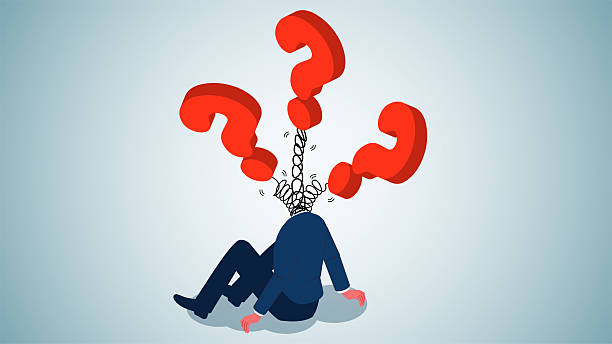
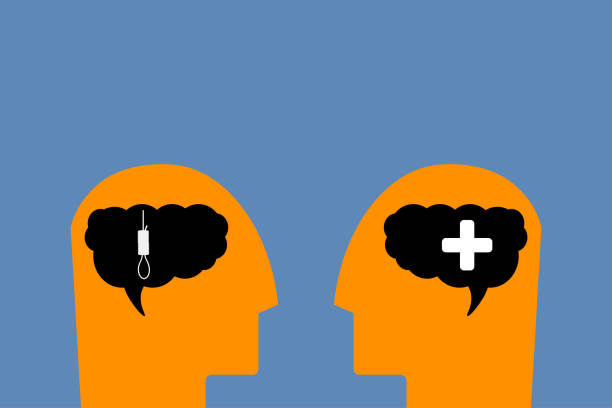
The human mind is not a purely logical machine, but a complex organ shaped by evolution, emotion, and social necessity. When confronted with strong counter-evidence to a deeply held belief, people often do not update their views rationally. Instead, they double down, finding ways to dismiss, distort, or discredit the challenging information. This phenomenon, far from being a simple sign of stubbornness, is rooted in fundamental psychological and social mechanisms that protect our sense of self, our worldview, and our place within our communities.
At the core of this resistance is a concept known as cognitive dissonance, the mental discomfort experienced when holding two conflicting ideas. The belief that one is intelligent and moral clashes painfully with the new evidence suggesting one has been wrong. To resolve this tension, the path of least resistance is often to reject the new evidence rather than overhaul a foundational belief. This protects our self-esteem and preserves a coherent narrative of our lives. Admitting a profound error, especially on a belief tied to our identity—be it political, religious, or personal—can feel like a form of psychological self-annihilation. It is less painful to believe that a climate scientist is part of a conspiracy than to accept that our lifestyle contributes to a planetary crisis, thereby implicating our own choices.
Furthermore, our beliefs are not isolated data points but interconnected parts of a larger worldview, a kind of mental model for understanding reality. Challenging one core belief can threaten to topple an entire network of associated ideas. For instance, questioning a single tenet of a political ideology may force a reckoning with one’s entire political identity, social circle, and source of meaning. The brain, seeking cognitive efficiency and stability, instinctively defends this framework. We engage in what is called “motivated reasoning,” where we scrutinize opposing evidence with extreme skepticism while accepting confirming evidence with little scrutiny. We seek out information that comforts us—a behavior amplified in the digital age by algorithmically curated echo chambers that constantly reinforce our existing views.
The social dimension of belief is equally powerful. Humans are profoundly social creatures, and our beliefs are often passports to belonging. Our convictions about politics, religion, or even health practices can be central to our relationships, family ties, and community standing. Abandoning a group’s core belief risks ostracism, loss of status, and a rupture in our support network. The fear of social isolation can be a far stronger motivator than an abstract commitment to factual accuracy. When a community collectively dismisses counter-evidence, it strengthens in-group solidarity, creating a shared identity defined against a misinformed or malicious out-group. In this context, changing one’s mind is not an intellectual virtue but an act of betrayal.
Finally, the very nature of evidence itself is often contested. In complex modern issues, from vaccine safety to economic policy, few individuals have the expertise to evaluate primary data. We therefore rely on epistemic trust—deciding which authorities, institutions, or media figures we believe. When evidence comes from a source deemed hostile or untrustworthy by our group, the messenger is discredited along with the message. This is why presenting “facts” from scientific institutions or media outlets viewed with suspicion often backfires, entrenching opposition rather than alleviating it. The belief becomes insulated from evidence because the sources of that evidence are preemptively rejected.
Ultimately, clinging to beliefs in the face of counter-evidence is a deeply human, if frustrating, trait. It is a defense mechanism for the psyche, a safeguard for a coherent worldview, and a glue for social bonds. Overcoming this inertia requires more than superior data; it requires empathy, trust-building, and an understanding that for many, changing a belief feels less like an update and more like a loss. Recognizing these underlying forces is the first step toward fostering a more open, yet compassionate, dialogue in an increasingly polarized world.