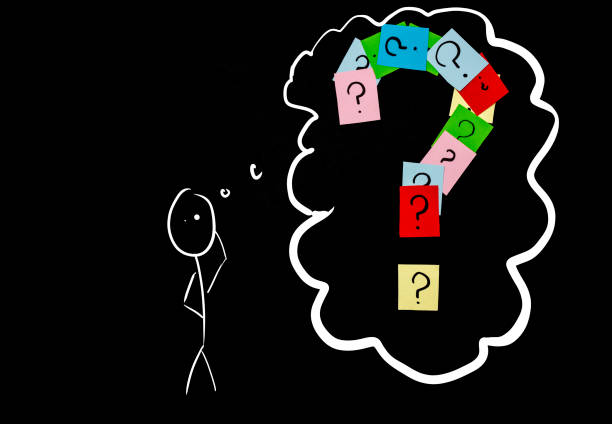
Every parent knows the moment—the child looks up, eyes wide, and asks, “Why is the sky blue?” or “Why do we have to go to school?” The instinct is to answer, to satisfy, to move on. But the deeper opportunity lies not in the answer itself, but in the questioning. How we respond to a child’s doubt shapes whether they become a person who accepts reality passively or one who engages with it actively. The goal of modeling healthy skepticism is not to turn children into perpetual contrarians, but to teach them that doubt is a doorway, not a dwelling place.
The first lesson is to distinguish between doubt as a weapon and doubt as a tool. A child who learns to question everything from a place of distrust grows into an adult who dismisses expertise, rejects nuance, and finds comfort in conspiracy. Conversely, a child who never questions anything grows into an adult who is vulnerable to manipulation, whether by authority figures, advertisements, or ideological echo chambers. The healthy middle ground is what philosophers call epistemic humility—the recognition that our current beliefs are provisional, open to revision, but not so fragile that they collapse at the first challenge. To model this, parents must demonstrate their own willingness to say, “I don’t know, let’s find out together.” This simple act transforms doubt from a private anxiety into a shared adventure.
One practical approach is the “three-question rule” used in many classrooms, adapted for home. When a child expresses doubt about a fact or a rule, the parent can guide them through: What do you think you know? How do you think you know it? And what would change your mind? This does not mean every rule must be renegotiated at bedtime. It means that the process of examining assumptions becomes a family habit. For example, if a child doubts that vegetables are good for them, instead of merely asserting “because I said so,” a parent can acknowledge the doubt as valid, then explore the evidence together—not to coerce, but to invite the child into the scientific mindset. The child learns that doubt is not a sign of disrespect, but a sign of engagement.
Yet there is a crucial distinction between skepticism and cynicism. Skepticism asks for evidence and remains open to persuasion. Cynicism assumes the worst and refuses to be persuaded. Children are remarkably attuned to the emotional tone behind a question. If a parent constantly mocks authority figures, dismisses experts, or rolls their eyes at every official statement, the child absorbs the message that doubt equals superiority. Modeling healthy skepticism requires a visible respect for the process of inquiry itself. When a child questions a teacher’s grading, the parent can help them draft a respectful email asking for clarification, rather than simply agreeing that the teacher is unfair. This teaches that doubt can be expressed with civility and that the goal is understanding, not victory.
Another powerful tool is the deliberate use of “productive uncertainty.” When reading a story, watching a movie, or even discussing current events, parents can pause and ask, “What might be left out of this account? Whose voice are we not hearing?” This invites children to see that every narrative is partial, but that partiality is not the same as falsehood. It builds a tolerance for ambiguity, which is the bedrock of critical thought. A child who can hold two conflicting ideas without panic is a child who will not easily be radicalized by conspiracy theories, which offer the seductive comfort of absolute certainty.
At the same time, children need to see doubt directed inward. The most important skepticism is self-skepticism. Parents who openly say, “I used to believe this, but then I learned otherwise,” demonstrate that changing one’s mind is a sign of strength, not weakness. This is especially vital in an age of algorithmic echo chambers, where the greatest cognitive risk is not falsehood but confirmation bias. By modeling the joy of being wrong—by celebrating when a child catches a mistake in our reasoning—parents frame doubt as the engine of growth. A child who is praised for saying, “Wait, that doesn’t add up,” becomes an adult who can revise their own beliefs without shame.
But we must also honor the limits of doubt. There is a difference between productive questioning and pathological paralysis. A child who doubts everything to the point of inaction is not being skeptical; they are being anxious. Healthy skepticism comes with a corresponding commitment to provisional trust. We can doubt the weather forecast and still carry an umbrella. We can doubt a doctor’s recommendation and still seek a second opinion, rather than abandoning medicine entirely. Teaching this balance means helping children know when to act despite uncertainty. The greatest gift we can offer is not a set of certain answers, but a reliable method for navigating uncertainty—a method that includes weighing evidence, tolerating risk, and making decisions with imperfect information.
Ultimately, modeling healthy skepticism is a practice of presence. It means resisting the temptation to give easy answers, but also resisting the temptation to glorify doubt as an end in itself. The child who asks “Why?” is not just seeking information; they are seeking a relationship with the world. When we meet that question with genuine curiosity, we say: your mind is respected, your doubt is welcome, and your journey is shared. That is how we raise children who are neither gullible nor cynical, but truly free—able to question deeply and still commit to what is good, true, and beautiful.