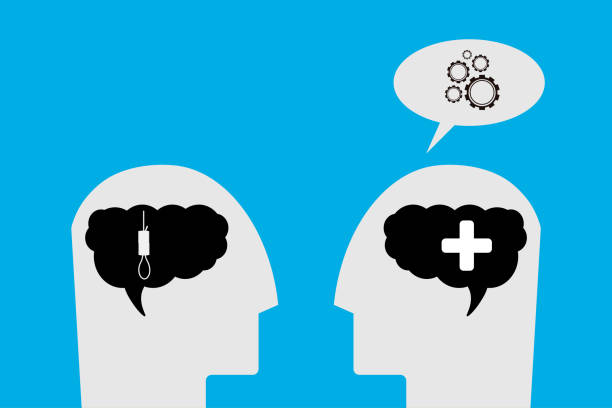
The inner critic has a remarkable talent for rewriting history. It can turn a decade of steady competence into a blur of awkward moments, forgotten deadlines, and lukewarm praises. It convinces you that the promotion you earned was luck, the project you completed was easier than everyone else’s, and the compliment you received was merely politeness. Meanwhile, every mistake—no matter how small or ancient—gets stored in high definition, complete with surround-sound replay. This asymmetry is not a moral failing; it is a neural default. The human brain evolved to prioritize threats over rewards, and social failures feel like survival threats. That is why you remember the one cringe-worthy sentence from a meeting and forget the eleven insightful ones you delivered. To quiet this lopsided narrator, you need something outside your unreliable mind. You need a proof file.
A proof file is a deliberate, physical collection of tangible evidence that counteracts the inner critic’s selective amnesia. Unlike a mental list of achievements—which evaporates under stress—a proof file is a concrete archive you can touch, flip through, and stare at when doubt threatens to drown you. It is not a brag book or a trophy shelf. It is a forensic record of your own competence, built from the same raw material the critic uses against you: actual events, actual dates, actual outcomes. The act of assembling it changes how you process your past, and the act of consulting it changes how you face your future.
Start by choosing a medium that feels durable and accessible. A physical notebook works beautifully because it forces you to write by hand, which deepens encoding in memory. A digital folder is equally valid, provided you name it something emotionally neutral like “Evidence” or “Archive” rather than “Greatness” (which invites skepticism). Then begin collecting. The obvious items go first: performance reviews with positive remarks, thank-you notes from colleagues, certificates of completion, and screenshots of successful project launches. But do not stop at formal accolades. Include micro-proofs—anything that demonstrates your persistence or skill. For example, a draft of a difficult email you rewrote three times before sending, which ultimately resolved a conflict. A photo of a whiteboard where you outlined a complex problem at work. A text from a friend asking for your advice because “you always know how to untangle things.” These small artifacts are often more persuasive to the doubting mind than awards, because they feel authentic and unrehearsed.
The true power of the file emerges when you review it deliberately. The inner critic operates in the present tense, telling you, “You cannot handle this,” “You are not ready,” “You will fail.” Your proof file answers in the past tense: “You handled that,” “You learned that,” “You succeeded here.” This is not mere positive thinking; it is evidence-based reasoning. When you are about to give a presentation, instead of replaying the one time your voice cracked, you flip to the page where you recorded a similar talk that earned a standing ovation—or even just a round of applause and good questions.
One reason the proof file works is that it externalizes your memory. Psychologists call this the “Google effect” or cognitive offloading. When you write something down, your brain relaxes its grip on the details, knowing the record exists. By externalizing your successes, you free up mental energy that was previously spent trying (and failing) to recall them under pressure. Moreover, the act of categorizing and rereading your proofs forces a narrative shift. You begin to see patterns: how many times you overcame a difficulty, how often you were underestimated, how consistently you recovered from setbacks. The file becomes a story of resilience rather than a scrapbook of vanity.
This is where the deeper transformation occurs. A proof file does not merely silence your inner critic temporarily; it retrains your interpretive style. When you encounter a new setback, your instinct is no longer “Here we go again, another failure to add to the pile.” Instead, you recall the file’s contents and think, “Setbacks are part of my pattern too—but so is recovery.” Over time, you develop what researchers call an “internal locus of control,” the belief that your actions matter. You become less afraid of making mistakes because you have documented proof that mistakes are consistently followed by corrections and progress.
A common objection is that a proof file feels hollow or self-congratulatory. But consider that you are not celebrating yourself—you are merely recording facts. The same person who writes down “I closed a deal” is also writing down “I flubbed a pitch” in their ordinary memory. The file simply balances the ledger. Another objection is that past success does not guarantee future success. True. But future success is vastly more likely when you approach it with grounded confidence rather than fear-based amnesia.
Begin today with one item. The first entry might be a tiny win: you finished a task you had been postponing for three days. Write it down. Then, tomorrow, add another. In a week, you will have seven proofs. In a month, thirty. Your inner critic will still speak—it always will—but it will no longer be the only voice with evidence. Your proof file gives the quieter, truer version of you a microphone, and that changes everything.