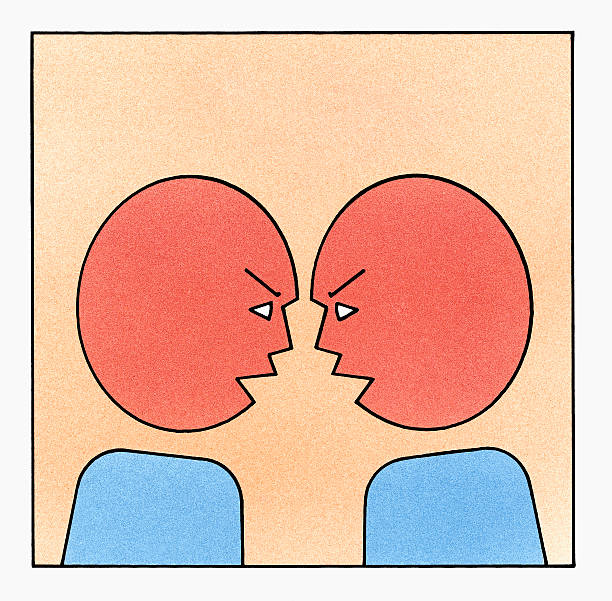
Every social circle hums with an unspoken demand: agree. When friends nod in unison, when colleagues rally behind a shared opinion, when a partner insists on a certain interpretation of events, doubt becomes an uncomfortable intruder. Yet this very discomfort is a signal of health. The individual who can pause, question, and hold uncertainty in the face of collective enthusiasm is not a malcontent or a traitor to the group. They are, in fact, the one offering the greatest gift to that group: an alternative to the seductive spiral of unanimous error. Navigating social pressure and groupthink does not require the annihilation of doubt. It requires the reclamation of it. The ability to say, internally or aloud, “I am not sure this is right,“ is the first line of defense against the erosion of personal truth, and ironically, it is also the foundation of deeper, more honest relationships.
Groupthink thrives on the suppression of dissent. It is the quiet collapse of critical thinking that occurs when the desire for harmony overrides the willingness to challenge a prevailing view. The classic symptoms feel almost familiar: the illusion of invulnerability, the collective rationalization of flaws, the stereotyping of outsiders, and the self-censorship that proceeds from a false sense of loyalty. In romantic relationships, groupthink can manifest as one partner steamrolling the other into accepting a shared narrative, not because it is true, but because challenging it threatens the emotional equilibrium. In friendship groups, it appears as a sudden, unanimous disdain for a mutual acquaintance, with anyone hesitating to voice a contrary perspective branded as disloyal. In workplaces, it is the meeting where every head nods at a flawed proposal, because no one wants to be the one to ask the difficult question. In every case, the pressure is not overt coercion but a subtle, pervasive atmosphere that whispers: do not be the one to disrupt the peace.
This is where doubt, properly understood, becomes an act of courage rather than a sign of weakness. Doubt is not cynicism; it is not a refusal to believe anything. It is a refusal to believe anything without sufficient evidence. When social pressure turns belief into a performance, doubt becomes the only honest response. The person who doubts is not rejecting the group. They are rejecting the group’s demand for blind conformity. By holding their ground in a space of uncertainty, they introduce a necessary friction into the social machine. That friction can be uncomfortable, even painful, but it is also generative. It forces the group to slow down, to re-examine its assumptions, and to either reaffirm its position with stronger reasoning or admit that the consensus was built on sand. In this way, a single doubter can rescue an entire circle from a costly mistake, whether that mistake is an unjust accusation, a reckless decision, or a shared fantasy that is about to collapse.
To harness doubt in the face of groupthink, one must first learn to distinguish between doubt that is informative and doubt that is paralyzing. The former asks, “What evidence am I missing?“ The latter asks, “What if everything I think is wrong?“ Only the first is useful. A person under social pressure can practice this distinction by focusing on specific facts and logical inconsistencies rather than on global feelings of anxiety. For example, when a group begins to vilify someone, the doubter can ask for concrete examples of misbehavior. When a partner insists that “everyone” feels a certain way, the doubter can ask who exactly and in what context. These questions are not attacks on the group’s emotional state. They are requests for data. And data, unlike emotion, can be examined without being contaminated by the desire for belonging.
Moreover, embracing doubt in social dynamics offers a paradoxical route to confidence. Real confidence is not the absence of doubt but the ability to act despite it. The person who never questions their own judgment is not confident; they are delusional. The person who can say, “I might be wrong, but here is what I see,“ is demonstrating a mature self-trust that does not depend on external validation. This kind of confidence is unshakeable precisely because it is not built on the shaky ground of always being right. It is built on the solid ground of being honest about one’s own epistemic limits. When social pressure mounts, this confidence allows an individual to stand alone if necessary, not out of arrogance, but out of a deep commitment to integrity.
The relational benefits of this approach are profound. Relationships that allow for doubt are far more resilient than those that demand certainty. A partnership where both parties can say “I am uncertain about this” without fear of reprisal is a partnership grounded in reality. A friendship where one person can voice a dissenting opinion without being cast out is a friendship that can weather real storms. By bringing doubt into the social sphere, we do not weaken our bonds; we strengthen them by ensuring they are based on authentic agreement rather than coerced consensus. The goal is not to become a perpetual contrarian, but to be a person who can think clearly in a crowd. That clarity is rare, and it is precious. It begins with the simple, brave act of not knowing, and refusing to pretend otherwise. In a world that celebrates certainty, the doubter may seem out of place. But it is the doubter who keeps the group honest, keeps the relationship real, and keeps the self intact. That is a quiet power worth cultivating.