In the quiet of a Dutch winter in 1619, a young French philosopher sat alone in a stove-heated room, determined to tear down every belief he had ever held. René Descartes was not suffering a crisis of faith; he was conducting an experiment in radical doubt. His goal was not to remain in a state of perpetual uncertainty, but to discover whether any belief could withstand the most ferocious scrutiny. By putting doubt at the very center of his method, Descartes demonstrated something profound: the path to unshakeable confidence does not bypass doubt but instead walks directly through its fire.
Descartes lived in an age when the foundations of knowledge were cracking. The heliocentric model of Copernicus had challenged centuries of Ptolemaic astronomy, the Protestant Reformation had shattered the unified authority of the Church, and new worlds across the ocean had revealed that ancient maps were fundamentally wrong. People everywhere were haunted by the question: if so much of what we once believed is false, what can we truly know? Descartes recognized that pretending to be certain when one is not is a recipe for intellectual cowardice. The only honest response was to face doubt head-on.
His method, laid out in the Meditations on First Philosophy, is deceptively simple. He resolved to accept as true only those propositions that were so clear and distinct that they could not be doubted. To test this, he invented the idea of a malicious demon—a powerful deceiver who could trick him into believing that two plus two equals five, that the sky is green, or even that his own body exists. By imagining the worst-case scenario of deception, Descartes stripped away everything that could be questioned. The senses? They occasionally deceive, so they must be discarded. Mathematical truths? The demon could manipulate them. Even the existence of the external world was up for grabs.
What remained after this systematic demolition was a single indubitable fact: Cogito, ergo sum—I think, therefore I am. In the very act of doubting, Descartes discovered something that could not be doubted: the existence of a thinking self. This was not a shallow conclusion. It was a hard-won foundation built from the rubble of dismantled assumptions. The doubt itself had become the evidence for certainty. From this starting point, Descartes rebuilt his entire system of knowledge, eventually proving the existence of God, the reliability of clear and distinct perceptions, and the reality of the physical world. Radical doubt did not destroy knowledge; it purified it.
For the modern individual navigating a landscape of conspiracy theories, misinformation, and personal uncertainty, Descartes offers a timeless lesson. Doubt is not the enemy of confidence but its necessary precursor. The person who never questions their beliefs is not confident; they are fragile, one challenge away from collapse. True confidence—the kind that does not crumble under scrutiny—is built by deliberately subjecting ideas to the harshest tests. This is why Descartes’ approach remains the foundation of the scientific method: every hypothesis must survive rigorous falsification before it earns provisional acceptance.
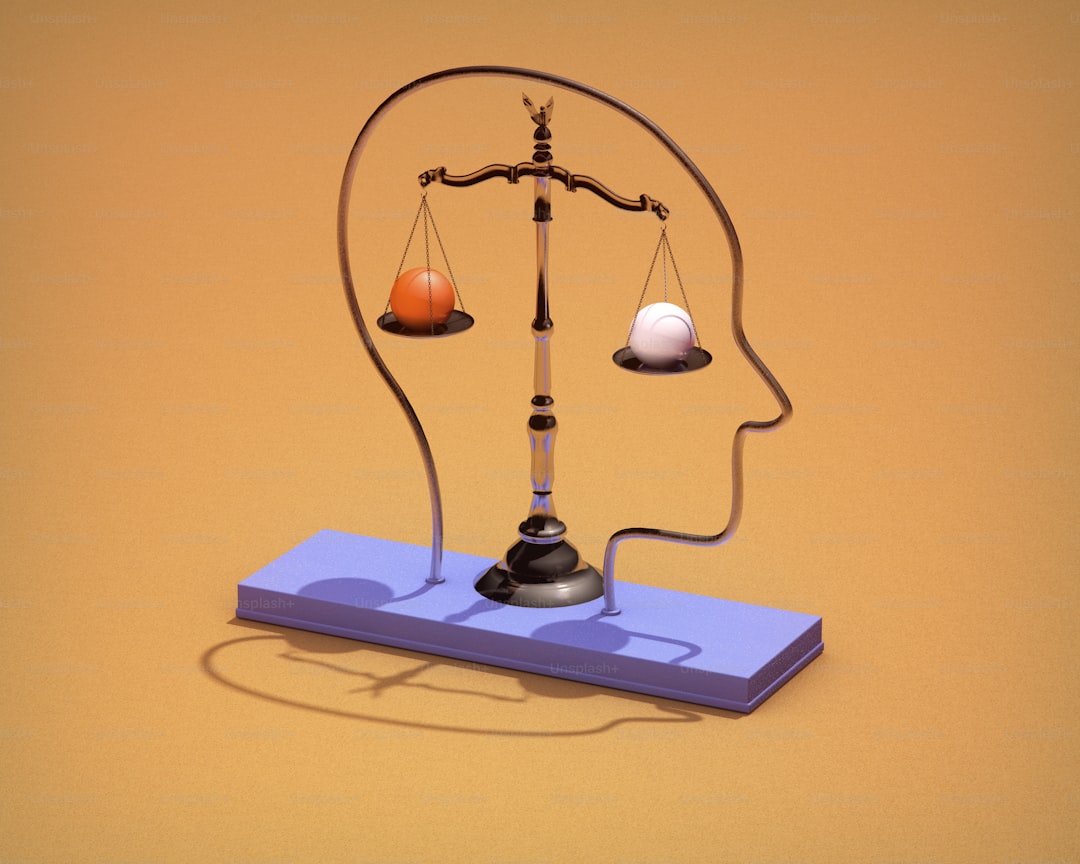
Historical skeptics like Descartes understood that doubt has two faces. One face is paralyzing, leading to endless indecision and cynicism. The other face is generative, clearing away intellectual debris so that new, stronger structures can rise. The difference lies in how we wield doubt. When doubt becomes an end in itself, it becomes a prison. But when we use doubt as a tool—as Descartes did, systematically and with a clear goal—it becomes a key. The goal is not to doubt forever, but to doubt in order to arrive at that which cannot be doubted.
This is especially relevant when confronting conspiracy theories. The doubter who says “I question everything” but never questions their own questioning is merely trading one set of beliefs for another. Descartes’ method demands that we also doubt our doubts. That means testing the sources of information, examining our own emotional attachment to an idea, and being willing to discard even our most cherished convictions if they fail the test of clarity and distinctness. Such a discipline builds intellectual humility—the awareness that our current knowledge is provisional—while simultaneously building intellectual courage, the willingness to act on what appears most rational after rigorous examination.
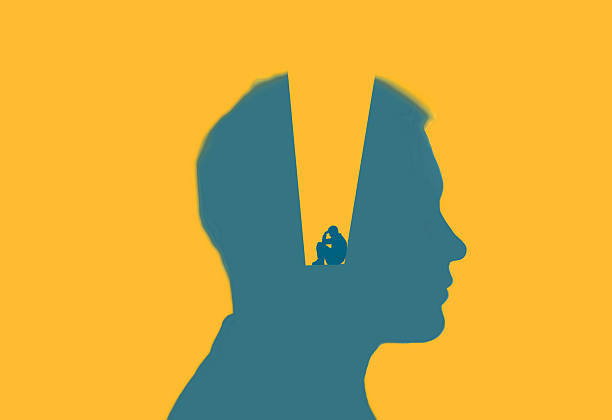
The personal application is just as powerful. Self-doubt, that persistent whisper that says “you are not good enough,” often feels like an enemy. But Descartes shows us that the very act of doubting oneself implies a self that is aware, thinking, and capable of evaluation. That thinking self is the ground of all potential growth. By questioning the source of self-doubt—asking “What evidence do I have for this belief about myself?” and “Is this thought clear and distinct, or is it the product of a deceptive demon like past failure or social pressure?”—we can separate constructive self-criticism from paralyzing negativity. The doubter who learns to doubt their own doubts becomes the architect of a resilient identity.
In the end, Descartes’ legacy is not a set of static conclusions but a dynamic method. He teaches us that the path to unshakeable confidence runs through the valley of radical doubt. We must be willing to burn down the house of uncritical belief, knowing that from the ashes we will salvage the stones of genuine certainty. In a world drowning in noise and competing claims, that willingness is not a weakness—it is the highest form of intellectual strength.