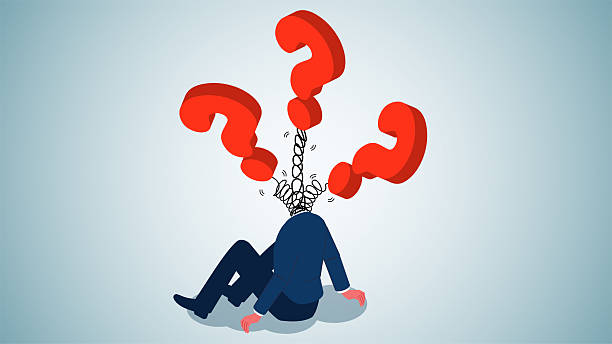
The inner critic does not speak in abstractions. It whispers specific accusations: You got lucky that time. Anyone could have done what you did. That success was a fluke, and you will never repeat it. These are not philosophical doubts—they are claims about reality. And like any claim, they can be tested against evidence. A Proof File is your personal archive of that evidence: the emails of praise, the finished projects, the metrics that climbed, the problems you solved. But the file is more than a scrapbook of past wins. It is a neurological intervention designed to reshape how your brain estimates your own capabilities, a direct countermeasure to the cognitive distortions that keep self-doubt alive.
The psychological mechanism at work here is self-efficacy—the belief in your ability to execute the behaviors necessary to produce specific outcomes. Albert Bandura, the psychologist who pioneered this concept, demonstrated that the most powerful source of self-efficacy is mastery experience. Each time you complete a difficult task, your brain encodes that event as a data point. Over time, these data points aggregate into a stable expectation: I can handle situations like this. The Proof File accelerates this process by making those data points instantly retrievable, bypassing the natural decay of memory that favors negative events.
Memory is not a faithful recorder. It is a biased editor that prioritizes emotionally charged moments. Failures and embarrassments produce stronger neural traces than quiet successes because the amygdala flags them as relevant for survival. Without an external record, your brain will systematically undercount your achievements. The Proof File corrects this imbalance. By revisiting concrete evidence of competence, you force your prefrontal cortex to update its model of your abilities with fresh input. Neuroscientific research on prediction error shows that when the brain encounters evidence that contradicts its current beliefs—such as I am a fraud—it must either ignore the evidence or revise the belief. The Proof File makes ignoring harder by presenting the contradiction in vivid, undeniable form.
To build an effective Proof File, you must overcome the inner critic’s favorite tactics: minimization and disqualification. The critic will tell you that a success does not count because it was easy, or because you had help, or because the outcome was partly luck. Recognize these as thought patterns, not facts. Include the success anyway. Include the project where you struggled but still delivered. Include the compliment you dismissed as politeness. Over time, the sheer volume of entries becomes a statistical argument against the critic’s narrative. If you have fifty pieces of evidence that you can do hard things, the claim that you are incapable becomes statistically improbable.
The format of your Proof File matters less than its existence. Some people use a physical box filled with thank-you notes, certificates, and printed screenshots. Others maintain a digital folder or a running note on their phone. What matters is accessibility: the file should be within arm’s reach when the inner critic flares up—before a presentation, after a rejection, during a moment of impostor syndrome. At that exact moment, your brain is in a state of high neuroplasticity, primed to learn from experience. Reading your Proof File at that moment does not merely cheer you up; it trains your brain to associate the trigger situation with evidence of competence, weakening the conditioned fear response over time.
But the Proof File is not a static trophy case. It should be actively maintained and periodically reviewed. As you grow, your past successes may start to feel trivial—a natural effect of rising standards. Do not delete old entries. Instead, add new ones that reflect more recent challenges. The juxtaposition of old and new entries demonstrates a trajectory of growth, which is more powerful than any single achievement. Your brain learns not just that you succeeded in the past, but that you are the kind of person who learns and adapts—a meta-belief that generalizes across domains.
Ultimately, the Proof File transforms self-doubt from an obstacle into a signal. When the inner critic speaks, you do not need to argue with it. You simply open the file. The evidence does the arguing for you. And in that moment, you reclaim the confidence that was never missing—only forgotten.