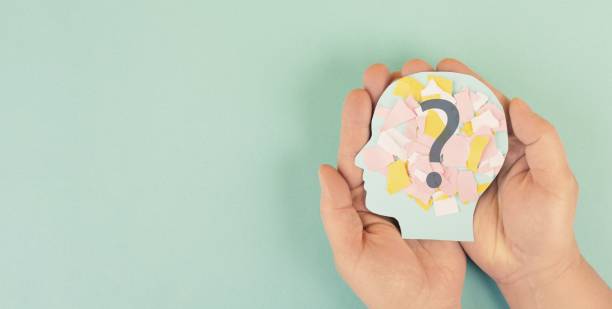
The human mind craves certainty the way a desert craves rain. When faced with a confusing world full of contradictory headlines, a simple explanation feels like relief. Junk science thrives because it offers exactly that relief. It wraps itself in the language of research, numbers, and authority, then delivers a story so clean and satisfying that questioning it feels like an act of self-harm. Yet the path to genuine understanding lies in resisting that comfort and embracing a more uncomfortable companion: doubt.
The most common gateway to junk science is the anecdote. A friend swears that a certain supplement cured their chronic fatigue. A viral video shows a former engineer explaining why a common food is poisoning us all. These stories are persuasive because they are concrete, emotional, and human. But a single anecdote is not data. It is a data point, and an unmeasured one at that. The human brain is wired to notice patterns and to remember vivid cases, especially those that confirm what we already suspect. We forget the thousands of people who tried the same supplement and saw no change, just as we forget the millions of people who ate the common food without harm. The silence of the unaffected is not newsworthy. The absence of evidence becomes invisible.
This is where confirmation bias does its quiet work. Once a person believes a claim, they subconsciously seek out supporting evidence and ignore or rationalize away everything that contradicts it. Junk science is perfectly designed to feed this loop. It offers a villain, a hidden truth, and a simple solution. It makes the believer feel special and enlightened. In contrast, real science is messy. It says “maybe,” “probably,” and “under certain conditions.” It changes its mind when new evidence arrives. That lack of theatrical conviction makes the honest scientist sound less confident than the charlatan, even though the charlatan’s confidence is built on sand.
A powerful way to resist this pull is to ask the question: what would it take to prove this wrong? This is the core of scientific falsifiability. A claim that cannot be tested, or that is designed to explain every possible outcome, is not science; it is theater. For example, if a healing crystal works only when you truly believe in it, then your lack of healing can always be blamed on your doubt. That unfalsifiable loop protects the claim from reality. Genuine science, by contrast, actively invites testing. It publishes its methods, shares its data, and welcomes replication. Junk science hides from scrutiny.
Another critical tool is understanding base rates. A sensational headline might claim that a certain chemical doubles your risk of a rare cancer. Doubling sounds frightening, until you learn that the base rate is one in ten million, making the actual increase minuscule. Junk science loves relative risk because it sounds dramatic. Real science also reports absolute risk, effect size, and confidence intervals. Without those, a number is little more than a rhetorical weapon.
Then there is the problem of cherry-picking. Every field has outliers and contradictory studies. A dishonest source can find one paper that supports its agenda and present it as proof, while ignoring the hundred studies that reached the opposite conclusion. This is especially common in nutrition and medicine, where coverage of a single observational study gets blasted across the internet as a definitive verdict on coffee, wine, or eggs. The next year, another study says the opposite. The result is not a more informed public but a more cynical one. Too much exposure to junk science makes people distrust all science, which is exactly what the worst actors want.
What about the researchers themselves? Even well-intentioned scientists can fall into sloppy practices. P-hacking, where researchers tinker with their analysis until a weak result crosses the arbitrary threshold of statistical significance, is a real and widespread problem. So is the selective publication of only positive results. These are structural flaws in how science is funded and communicated, but they are not reasons to abandon science. They are reasons to demand transparency and replication, and to view any single study as one tile in a mosaic rather than the whole picture.
The most powerful mindset for navigating misinformation is epistemic humility. This is not the weakness of believing everything or believing nothing. It is the strength of saying, “I might be wrong, and here is what would change my mind.” It means trusting the scientific consensus when it is broad and rigorous, while remaining open to the possibility that new evidence could shift it. It means recognizing that the expert on one topic is not an expert on another, and that charisma, eloquence, and confidence are not evidence.
Doubt, in this sense, is not the enemy of knowledge. It is the engine of learning. The person who asks “How do we know that?” and “What are we not being told?” is far closer to the truth than the person who clings to a comforting illusion. Junk science will never disappear, because the desire for easy answers will never disappear. But with the right tools, you can meet it with curiosity instead of fear, and with questions that are more powerful than the loudest false certainty.