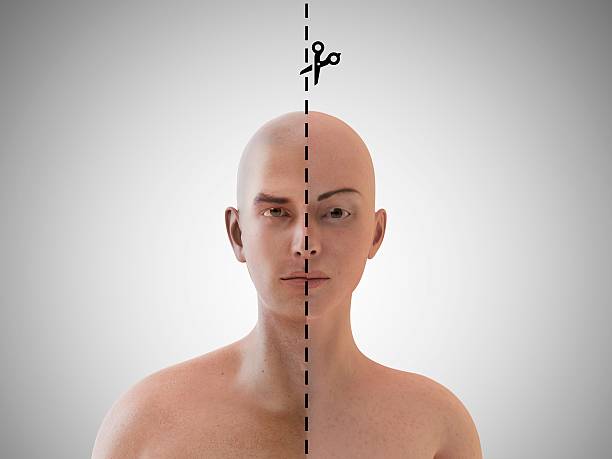
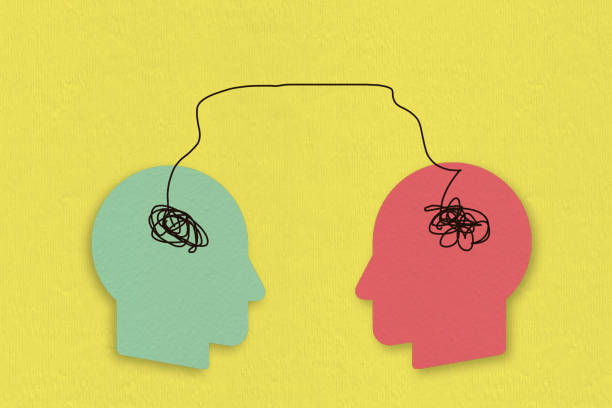
Every decision we face arrives wrapped in a haze of internal signals. A flutter in the stomach, a tightening in the chest, a sudden rush of second-guessing that freezes action. The challenge lies not in hearing these signals but in naming them correctly. The human mind constantly confuses three distinct experiences—fear, intuition, and self-doubt—yet the consequences of mislabeling them are profound. While intuition is a quiet guide born from accumulated wisdom, fear is a survival alarm that can be either protective or outdated, and self-doubt is a learned habit of distrusting one’s own competence. Understanding how these three forces intertwine and diverge is the first step toward transforming self-doubt from a prison into a prompt for growth.
The most insidious trick that self-doubt plays is borrowing the voice of intuition. Intuition arrives without emotional fanfare—it is a calm, bodily knowing that something is right or wrong, often without immediate logical explanation. It feels like a gentle nudge, not a shout. Self-doubt, by contrast, is noisy and repetitive. It asks questions that never settle: “Are you sure? What if you fail? What will they think?” When a person has lived with chronic self-doubt, they become conditioned to treat every hesitation as a wise inner voice. Over time, the fragile whisper of genuine intuition gets drowned out by the chatter of insecurity. The result is paralysis disguised as prudence. To differentiate them, one must observe the emotional quality of the signal. Intuition leaves a sense of clarity even when it goes against the grain; self-doubt leaves a residue of confusion, anxiety, and shame.
Fear, on the other hand, has a physiological signature that is easy to recognize when we pause to check. Fear triggers a fight-flight-freeze response—racing heart, shallow breathing, sweaty palms—that is designed for immediate physical threats. Yet in modern life, this same response is triggered by social rejection, public speaking, or making a career change. This is where the confusion deepens. A person might feel the exact same bodily sensation when facing a genuine danger as when facing an unfamiliar opportunity. The key is to ask: “What am I afraid of losing?” Fear often concerns loss of safety, reputation, or control. Intuition concerns alignment with values. Self-doubt concerns imagined inadequacy. For example, consider a talented artist offered a major exhibition. Fear might whisper about public humiliation. Intuition, if cultivated, might sense that the gallery feels right despite nerves. Self-doubt will chime in with a list of past failures and reasons they are not ready. The difference lies in the narrative attached to the feeling.
A deeper layer of complexity arises because early childhood experiences wire these responses together. A child who was criticized for making mistakes learns to associate any risk with danger. Their fear response becomes fused with self-doubt. Later in life, even a small decision like sending an email can trigger the same bodily alarm as walking into a predator’s den. The intuition they might have had about a creative idea gets buried under conditioned fear. Untangling this knot requires revisiting the original learning. Was that feeling of hesitation truly a wise warning, or was it the echo of a parent’s disapproval? Was the racing heart a signal of danger, or simply the excitement of growth? We often mistake the discomfort of stretching beyond our comfort zone for a sign to retreat.
One practical way to tease apart these threads is to examine the outcome of following each signal. When intuition is heeded, it tends to lead to a sense of rightness, even if the path is hard. When fear is heeded, it often leads to immediate relief but sometimes regret for lost opportunities. When self-doubt is heeded, it leads to stagnation, avoidance, and a deepening of the belief that one is not capable. Over time, patterns emerge. A journal of decisions, noting the feelings before and after, can reveal which internal voice belongs to what. Another tool is the “friend test”: imagine a trusted friend described the exact same situation with the exact same hesitation. Would you call it intuition, fear, or self-doubt? The distance of perspective often clarifies things.
Ultimately, the goal is not to eliminate any of these voices. Fear has kept humans alive for millennia. Intuition is a rapid pattern-recognition system honed by experience. Even self-doubt, when recognized for what it is, becomes a signal that something unresolved within us needs attention—perhaps a skill to learn, a belief to question, or a boundary to set. The problem arises only when we mistake one for the other. By learning to differentiate fear, intuition, and self-doubt, we reclaim the ability to choose which voice to listen to. We stop being victims of our own inner noise and become compassionate observers of our own psychology. And in that clarity, doubt transforms from a saboteur into a teacher.