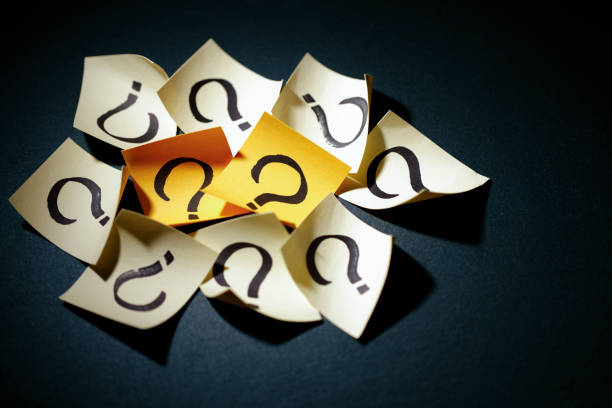
In the bustling agora of ancient Athens, a man with a persistent, probing demeanor would approach citizens, politicians, and poets alike, asking a simple but devastating question: “What do you mean by that?” That man was Socrates, and his relentless questioning did not merely annoy his contemporaries—it exposed the fragile foundations upon which their most cherished beliefs were built. Socrates understood something that remains profoundly relevant today: doubt is not an enemy to be silenced but a companion to be embraced. His method, known as the Socratic method, offers a timeless blueprint for transforming uncertainty into clarity, skepticism into wisdom, and confusion into confidence.
Socrates himself was not a teacher in the conventional sense. He claimed no special knowledge and famously declared that he was wise only because he knew that he knew nothing. This admission of ignorance was not a weakness but a starting point. By acknowledging the limits of his own understanding, Socrates opened himself to genuine inquiry. He treated doubt as a door rather than a wall. When a young man named Euthyphro confidently claimed to know the nature of piety, Socrates did not contradict him outright. Instead, he asked for definitions, then tested those definitions with counterexamples, revealing hidden contradictions. The young man’s confidence unraveled, but in its place came something more valuable: a recognition of the complexity of the topic and a motivation to think more deeply. This pattern—questioning assumptions, exposing inconsistencies, and refining ideas—is the heart of the Socratic method.
Why does this matter for anyone wrestling with doubt today? Because doubt, whether in the form of self-doubt about one’s abilities, uncertainty about life decisions, or suspicion toward widely accepted narratives, often paralyzes us. We fear that doubt means weakness or failure. Socrates shows us otherwise. He demonstrates that doubt is the engine of intellectual growth. Each unanswered question is an invitation to investigate further. Each moment of confusion is an opportunity to separate what we truly know from what we merely assume. By adopting the Socratic stance, we can transform the uncomfortable feeling of not knowing into a disciplined practice of inquiry.
Consider how this applies to self-doubt. When we think, “I am not good enough to pursue this career,” the Socratic approach demands we ask: “What evidence supports this belief? Did I fail a specific task, or am I generalizing from a single setback? What would it mean to be ‘good enough,’ and who defines that?” By breaking down the vague, intimidating cloud of self-doubt into concrete, testable claims, we begin to see that many of our doubts rest on shaky assumptions. The same method works for more complex doubts, such as skepticism toward historical narratives or conspiracy theories. Instead of dismissing a troubling claim outright, the Socratic thinker asks: “What is the source of this information? What would need to be true for this claim to hold? Are there alternative explanations that fit the evidence equally well?” This process does not guarantee easy answers, but it ensures that our conclusions are grounded in reason rather than fear or conformity.
Historical skeptics like Socrates were often met with hostility. He was ultimately sentenced to death for “corrupting the youth” and “impiety”—charges that essentially punished him for encouraging people to think for themselves. Yet his legacy endures precisely because he refused to let doubt be silenced. In every era, those who challenge entrenched beliefs face resistance. Galileo was condemned for questioning geocentrism. Descartes began his philosophical journey by doubting everything he could possibly doubt, even his own existence, only to find a foundation in the certainty of his own thinking. These thinkers demonstrate that doubt, when channeled through a rigorous method, leads not to nihilism but to stronger, more resilient knowledge.
The modern world bombards us with conflicting information, competing truths, and endless voices insisting that they alone are correct. In such an environment, doubt can feel overwhelming. But the Socratic method offers a lifeline. It teaches us to slow down, to question our own assumptions before questioning others’, and to view doubt not as a problem to be solved but as a process to be lived. Every skeptic in history who made a lasting contribution understood this: the goal is not to eliminate doubt but to refine it. By engaging with doubt as Socrates did—with humility, persistence, and a commitment to truth—we can turn uncertainty into a source of intellectual strength. We become not people who are never unsure, but people who know how to navigate being unsure with grace and rigor.
Embracing the Socratic method means accepting that we will never have all the answers. It means admitting that our current beliefs may be wrong. It requires courage, because questioning sacred ideas—whether personal, cultural, or political—can be uncomfortable. But the reward is an unshakeable confidence that is not based on certainty but on the reliable process of inquiry itself. When we know how to doubt well, we no longer fear doubt. We wield it as a tool for clarity, growth, and ultimately, a deeper understanding of ourselves and the world.