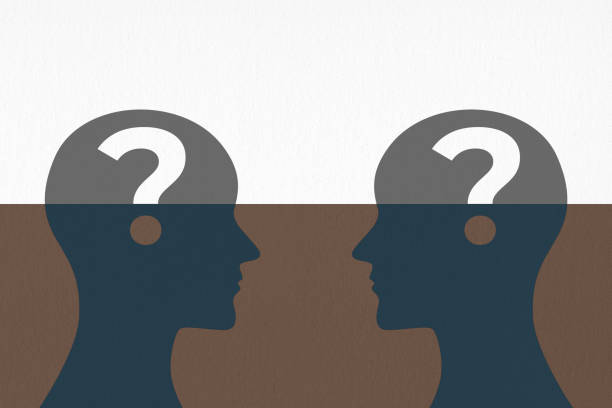
To stand in the shadow of Socrates is to confront a paradox that still unsettles the modern mind. He was declared the wisest man in Athens not because he had accumulated answers, but because he alone admitted he knew nothing. This unsettling confession forms the bedrock of the Socratic method, a practice that transforms doubt from an affliction into an engine of intellectual and moral growth. In an age that often equates confidence with omniscience and certainty with strength, revisiting the life and death of Socrates offers a radical counterpoint: doubt is not weakness; it is the beginning of wisdom. By examining how this ancient skeptic wielded questioning as a tool for clarity, we can reclaim doubt as a constructive force in our own lives.
Socrates never wrote a single word. What we know of him comes through the accounts of Plato and Xenophon, yet his method remains one of the most enduring contributions to Western thought. The Socratic method is fundamentally a dialogue built on systematic questioning. It begins not with a thesis to defend, but with a state of acknowledged ignorance. Socrates would approach citizens—politicians, poets, craftsmen—and ask them to define a virtue like justice or courage. Their confident answers would then be met with a series of gentle but relentless queries that exposed contradictions, assumptions, and hidden flaws. The goal was not to humiliate, but to reveal that what people believed they knew was often only half-formed opinion. In this process, doubt acted as a solvent, dissolving false certainties so that genuine understanding might crystallize.
What makes Socrates instructive for us is his emotional relationship with doubt. He did not despair when his questions dismantled a cherished belief; he celebrated it. In the Apology, he recounts his mission as a divine calling to test the wisdom of others, concluding that the unexamined life is not worth living. This phrase is often quoted but seldom fully absorbed. An examined life is one that constantly invites doubt, that refuses to settle for dogma, and that treats every certainty as provisional. For Socrates, doubt was not a failure of nerve but a discipline of the mind. It required courage to admit ignorance, and even more courage to persist in questioning when society pressures us to conform.
The historical context of Socrates’ death amplifies this lesson. He was tried and executed by a democratic Athens that saw his relentless questioning as a threat to social order, religious tradition, and the education of youth. The charges—impiety and corrupting the young—were essentially accusations of sowing doubt. Athens, like many societies then and now, preferred the stability of shared belief to the turbulence of critical inquiry. Socrates chose hemlock over silence. His death became the ultimate testimony that the pursuit of truth through doubt is worth more than life itself. For anyone navigating the murky waters of self-doubt or the seductive pull of conspiracy theories, this story is a reminder that doubting the right things—authority, consensus, our own biases—is not a sign of disloyalty but of integrity.
Modern psychology supports what Socrates intuited. Cognitive biases, confirmation bias, and the Dunning-Kruger effect all show that unexamined certainty is a recipe for error. People who are most confident in their knowledge are often the least competent. Those who entertain doubt, who question their own premises, are more likely to revise their beliefs in the face of evidence. This is the essence of intellectual humility, a quality that Socratic skepticism cultivates. When we encounter a conspiracy theory, for instance, the instinct to immediately reject it with counter-assertions often backfires. A Socratic approach would be to ask: What evidence would change your mind? What assumptions underlie this belief? By directing doubt inward, we strengthen our own reasoning; by directing it outward with genuine curiosity, we open the door to dialogue.
The value of historical skeptics like Socrates lies not in their specific conclusions, but in their method. They teach us that doubt is a muscle to be exercised, not a poison to be avoided. In a world flooded with misinformation, polarization, and manufactured certainty, the ability to hold questions open is a survival skill. Socratic doubt is not paralysis; it is a dynamic, iterative process that moves from ignorance to provisional knowledge, and then back to deeper questioning. It is the opposite of cynicism, which doubts everything for the sake of detachment. Socratic doubt engages, tests, and refines.
We can apply this today in small, practical ways. When a friend voices a conspiracy, we can ask not “How can you believe that?” but “What led you to that conclusion?” When we feel self-doubt creeping in, we can examine whether the doubt is about our competence or about a specific flawed assumption. The greatest gift of historical skeptics is the permission to be uncertain without being weak. Socrates showed that the wisest person is not the one who knows all, but the one who knows how to question wisely.
In an era that often mistakes conviction for character, the Socratic legacy stands as a quiet revolution. It invites us to embrace doubt not as an enemy to conquer, but as a companion on the path to unshakeable confidence—the confidence that comes not from having all the answers, but from being brave enough to ask the right questions.