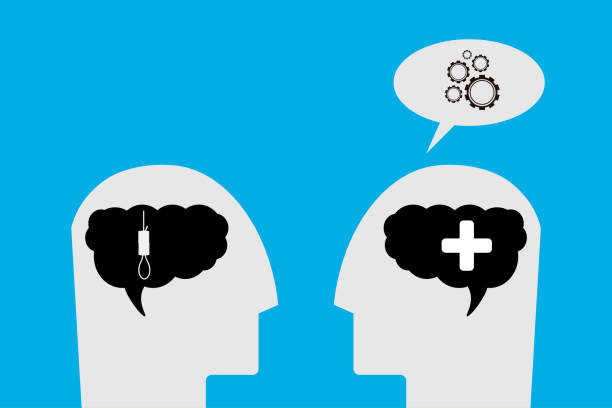
It is a quiet, unsettling paradox of the human experience: the applause fades, the achievement is secured, and yet, a familiar, critical whisper persists within. Why do we doubt ourselves even after success? This phenomenon, far from being a sign of failure, is a deeply human response rooted in our psychology, our past, and the very nature of how we perceive our accomplishments. Understanding this disconnect is not about eliminating doubt, but about learning to navigate its presence alongside our proven capabilities.
One of the most powerful engines of post-success doubt is the shifting of goalposts. Before an achievement, our focus is singular—reach that summit. Once we arrive, however, our perspective instantly broadens. The new summit comes into view, often higher and more daunting. The successful project raises questions about whether we can do it again; the promotion highlights the new skills we must now master. Success, therefore, becomes less a final destination and more a doorway to a new, more complex set of challenges. Our self-assessment pivots from “I did that” to “Can I do what’s next?“ leaving the past victory feeling strangely irrelevant to the present anxiety. This is compounded by what psychologists call the “hedonic treadmill,“ where we quickly adapt to our new level of achievement and it becomes our new normal, stripping it of its power to confer lasting confidence.
Furthermore, our brains are wired with a negativity bias, an evolutionary holdover that prioritizes scanning for threats and shortcomings over savoring victories. This means the memory of a single minor mistake in an otherwise flawless presentation can loom larger than the standing ovation that followed. We internalize criticism with far greater efficiency than we absorb praise. A single piece of constructive feedback can echo for years, while a hundred compliments evaporate by morning. This neural predisposition ensures that self-doubt has a fertile ground in which to grow, regardless of external evidence to the contrary.
Our personal histories and the environments we inhabit also lay the groundwork for this doubt. For many, early experiences—a caregiver who offered conditional praise, an educational system that emphasized comparison over growth, or early failures that felt catastrophic—plant seeds of an “imposter syndrome.“ This is the persistent fear of being exposed as a fraud, a belief that our success is due to luck or timing rather than our own skill. In this mental framework, success does not disprove the imposter feeling; it actually heightens the risk of being “found out.“ Every achievement is seen not as proof of competence, but as another layer of a façade that could crumble at any moment. We become waiting for the other shoe to drop, interpreting each new success as a temporary reprieve rather than a building block of a capable identity.
Finally, the nature of success itself is often misunderstood. We tend to view it as a stable state of being—a “confident person”—rather than a series of actions taken despite uncertainty. The reality is that competent, successful people do not operate in a state of doubt-free certainty. They have simply developed a different relationship with their doubt. They have learned to acknowledge the whispering fear while taking the next step anyway. They understand that self-doubt is not the opposite of confidence; it is often its companion. True assurance comes not from the absence of uncertainty, but from the accumulated evidence of having proceeded in the face of it.
Therefore, doubting oneself after success is not an anomaly or a personal flaw. It is a testament to our complexity, our awareness of growth, and our brain’s ancient protective systems. The path forward lies not in seeking to vanquish doubt with more accolades, but in changing our internal narrative. It requires consciously integrating our successes into our self-concept, accepting that the goalposts will always move, and recognizing that the voice of doubt is just one voice in the chorus—not the conductor. Our achievements are not invalidated by the doubt that follows them; if anything, they are made more authentic by it, proving that we are capable of building meaningful things not from a place of unwavering certainty, but from a very human blend of skill, fear, and perseverance.