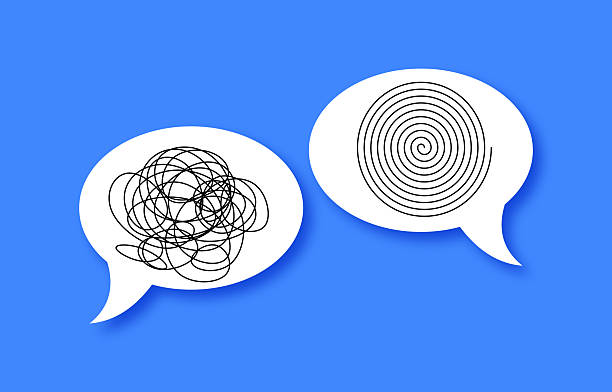
Every parent and teacher has witnessed the moment a child’s brow furrows, their pencil pauses, and they look up with a question that begins with “But why?” That tiny tremor of doubt is often met with a rush to provide a tidy answer, to erase confusion as quickly as possible. Yet in that rush we may be robbing young minds of one of the most powerful engines for growth: the productive discomfort of not knowing. Teaching children to embrace uncertainty, rather than flee from it, is not just an academic exercise—it is a life skill that builds resilience, sharpens critical thinking, and transforms doubt from a threat into a trusted guide.
The instinct to avoid uncertainty is deeply human. Children, like adults, crave clarity and predictability because the unknown feels unsafe. When a child encounters a math problem without an obvious solution or a historical account that contradicts what they have been told, their first reaction is often frustration or dismissal. The temptation for a well-meaning adult is to soothe that discomfort by providing the correct answer or simplifying the narrative. But this short-term relief comes at a cost: it teaches the child that doubt is a problem to be eliminated rather than a signal to investigate. Over time, children learn to seek only questions with predetermined answers, and they lose the capacity to sit with ambiguity long enough to think deeply.
The alternative is to reframe doubt as productive discomfort—a mental state that signals a gap in understanding, not a failure of intelligence. This reframing begins with modeling. When a parent says, “I’m not sure about that, let’s look it up together,” or a teacher admits, “That’s a great question—I don’t have the answer, but let’s explore,” they normalize the process of inquiry. The child sees that uncertainty is not a weakness but a starting point. The adult’s calm openness shows that not knowing can be exciting rather than frightening. This simple act of vulnerability creates a safe space where children can voice their own doubts without shame.
But modeling alone is not enough. Children need structured opportunities to practice sitting with uncertainty. One powerful method is the use of open-ended questions that have no single right answer. Instead of asking “What is the capital of France?”—which closes the conversation—ask “Why do you think people choose to live in cities?” or “If you could design a new planet, what rules would it have?” These questions invite multiple perspectives and require the child to weigh evidence, consider alternatives, and tolerate the absence of a definitive verdict. The discomfort of not having a neat answer becomes a creative force. Over time, the child learns that thinking is not about reaching a conclusion as fast as possible, but about exploring possibilities.
Another key practice is exposing children to conflicting information in a controlled way. A lesson on the American Revolution, for instance, can include both the standard colonial narrative and the perspectives of Loyalists, enslaved people, and Indigenous nations. The resulting cognitive dissonance pushes children to ask: Who gets to tell the story? What evidence supports each view? How do I decide what to believe? This is not an attempt to confuse them, but to show that knowledge is often messy and contested. When a child grapples with contradictory sources, they are developing the very skills needed to evaluate conspiracy theories, advertising claims, and social media rumors later in life. They learn that doubt is not the enemy of truth, but its companion.
Crucially, teachers and parents must resist the urge to resolve doubt prematurely. If a child asks a tough ethical question—“Is it ever okay to lie?”—the instinct might be to give a rule. Instead, the adult can say, “That’s a really hard question. Let’s think of times when lying might hurt someone and times when it might help. What do you think?” By leaving the question open, the adult invites the child to explore gray areas. The discomfort of not having a final answer is exactly the space where moral reasoning grows. Over repeated experiences, the child builds confidence in their own ability to navigate complexity—not because they always find the answer, but because they trust the process of questioning.
There is also a physical and emotional dimension to embracing uncertainty. Children who are taught to recognize the bodily sensations of doubt—a tight chest, a racing mind, a feeling of unease—can learn to interpret those signals as curiosity rather than danger. Simple breathing exercises, paired with the mantra “I don’t know yet,” can help a child stay engaged rather than shut down. This emotional literacy is the foundation of intellectual courage. When a child knows that the discomfort of doubt is temporary and navigable, they are far more likely to ask hard questions, challenge assumptions, and persist through complex problems.
Ultimately, teaching children to embrace uncertainty does not mean abandoning them to confusion. It means equipping them with tools to sort through confusion: how to ask better questions, how to evaluate evidence, how to hold two conflicting ideas in mind without jumping to a conclusion. It means helping them see that doubt is not a sign of weakness but a sign that they are thinking. In a world overflowing with misinformation, echo chambers, and oversimplified narratives, the ability to sit with productive discomfort and think critically is perhaps the greatest gift we can give. When a child learns to say, “I’m not sure, but I will figure it out,” they have discovered the engine of lifelong learning and unshakeable confidence.